
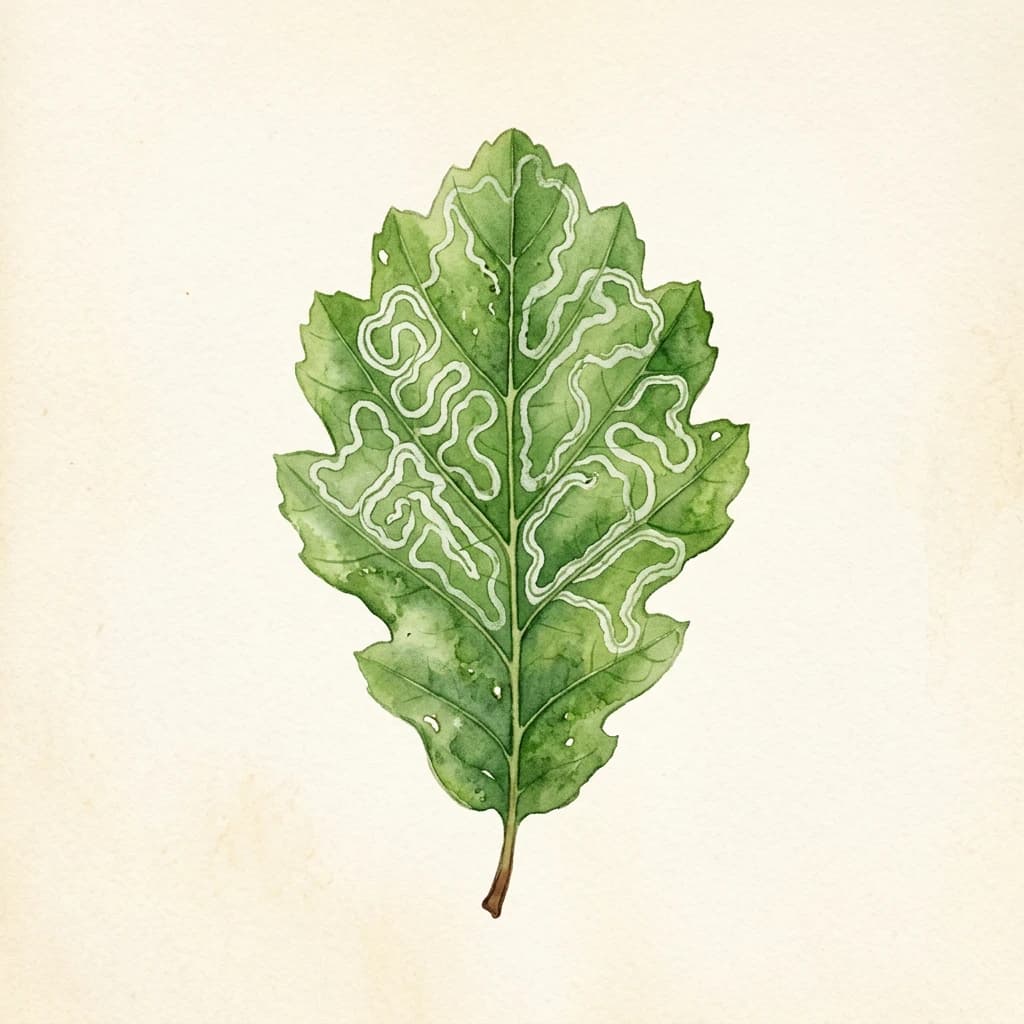
Leaf miners
Also known as: leaf miners, leafminer, leaf miner flies, serpentine leaf miner, Liriomyza
The larvae of small flies that dig winding, whitish tunnels inside the leaves. The damage is usually more cosmetic than serious, except in heavy attacks. The first step is to remove leaves with tunnels and hang yellow traps.
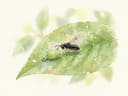
Its best ally
Parasitic wasp
A natural predator that helps to keep this pest under control. Tap to see how to attract it.

How to recognise it at every stage
Shares your gardenIt likes the leaves of your tomatoes, beans, chard and lettuces.
Life cycle: Complete metamorphosis: egg inside the leaf (2-4 days), larva digging a tunnel (4-7 days), pupa (1-2 weeks) and tiny adult fly. In warm weather, a cycle in 3 weeks; many generations a year.
Tap a stage to see it full size. The photos are AI reference images checked against real photographs; stages without a reliable photo are shown as text only.
Life-stage calendar
| Jan | Feb | Mar | Apr | May | Jun | Jul | Aug | Sep | Oct | Nov | Dec | |
|---|---|---|---|---|---|---|---|---|---|---|---|---|
| Eggs and feeding punctures | ||||||||||||
| Larva | ||||||||||||
| Pupa | ||||||||||||
| Tiny fly | ||||||||||||
| Winding tunnel |
Approximate months for mainland Spain; in cold areas they start later and in warm areas they last longer. Garden creatures this month
No reliable photo yet
1Keep an eye on itEggs and feeding punctures
· 0.2 mmThe eggs cannot be seen, but the punctures can: tiny white dots where the female feeds and lays.
- Where to find it
- On tender leaves.
- When: Apr–Oct
- What to do
- Lots of white dots on young leaves means tunnels soon. Hang a yellow trap.
- 2Protect your plants
Larva
· 2-3 mmA tiny yellowish maggot with no legs or head, visible against the light at the end of the tunnel.
- Where to find it
- Inside the leaf, in a winding white tunnel.
- When: Apr–Oct
- What to do
- Squeeze the tunnel where the larva is, or remove heavily mined leaves.
- 3Keep an eye on it
Pupa
· 2 mmA small oval golden-brown grain.
- Where to find it
- On the leaf at the tunnel exit, or dropped to the ground.
- When: Apr–Oct
- What to do
- Sweeping up fallen leaves reduces the next generation.
- 4Protect your plants
Tiny fly
· 2 mmA tiny black fly with bright yellow patches (especially one on the back between the wings).
- Where to find it
- Resting on leaves in the sun.
- When: Apr–Oct
- What to do
- Yellow sticky traps. The tiny wasps Diglyphus and Dacnusa are its allies: avoid insecticides.
Nests, egg clutches and shelters
- Keep an eye on it
Winding tunnel
A white or silvery line that winds across the leaf and slowly widens, like a scribble.
- Where to find it
- On tomato, bean, chard, lettuce, cucumber and ornamental leaves.
- When: Apr–Oct
- What to do
- A few tunnels do not affect the harvest. If there are many, remove those leaves.
- Often confused with
- Tomato leafminer mines (Tuta). Wide transparent patches with black droppings and a caterpillar with a head. See profile
Often confused with
- Tomato leafminer mines (Tuta). Wide transparent patches with black droppings and a caterpillar with a head. See profile
How to recognise it (symptoms)
- Fine, white, winding tunnels inside the leaf
- Speckling on the upper surface from the feeding punctures of the adult fly
- Leaves that turn yellow and dry out if the attack is heavy
Crops affected


What favours it
- Heat
- Too much nitrogen, which produces softer, more attractive leaves
- Overuse of insecticides, which kills its natural enemies
Prevention
- Yellow sticky traps for the adult flies
- Do not overuse insecticides, which wipe out the parasitoids that keep it in check
- Remove heavily mined lower leaves
- Keep nitrogen feeding balanced
Organic treatment
Always start here: these remedies are kind to the garden, the soil and pollinators.
- First: pick off the leaves with tunnels and put them in the rubbish bin, or squash the larva inside the mine with your fingers
- Encourage natural parasitoids (tiny wasps such as Diglyphus), which control it very well if you do not use broad-spectrum insecticides
- A registered neem product (at the rate on its label), which hinders egg-laying by the fly
- Yellow sticky traps to catch adults and monitor the pest
Chemical treatment (with caution)
It rarely justifies treatment. If you do treat, choose registered products that spare beneficial insects, so as not to make the pest worse.
Don't confuse it with…
With Tuta absoluta on tomatoes: leaf miners make fine, winding tunnels that do not reach the fruit, whereas Tuta tunnels are wide and irregular.
In-depth guide — leaf miners
Larvae that dig tunnels between the two surfaces of the leaf. On tomatoes they can be confused with Tuta at first: look for droppings inside the mine.
Identification
- A winding, translucent trail, often with a line of dark droppings.
- At first the leaf may stay green; later the mined areas dry out.
Removal by hand
Early on, squash the larvae inside the mine with your fingers, or remove the affected leaves and take them out of the garden. Avoid letting host weeds build up along the edges.
Biological control
Parasitoids usually keep moderate populations in check. Avoid broad-spectrum insecticides if you want to maintain the balance.
Telling it apart from Tuta
Tuta also mines the leaf, but it attacks the fruit and stem aggressively as well. If you see wide tunnels in tomatoes or holed fruit, follow the Tuta absoluta protocol.
Use plant protection products responsibly, even organic ones. Always read and follow the label, the doses and the harvest interval, and never treat plants in flower or while bees are flying, in order to protect pollinators. If in doubt, put prevention and organic methods first.

In the plant catalogue you'll see what to plant, how and when: a well-tended plant resists pests much better.