vuelta al huerto
Back to DIY builds
BiodiversityEasy

Nest boxes by species, with measurements

Also known as: nest box sizes, nest box dimensions, blue tit nest box, swift nest box, barn owl nest box, kestrel nest box, nest box hole sizes, bird box measurements

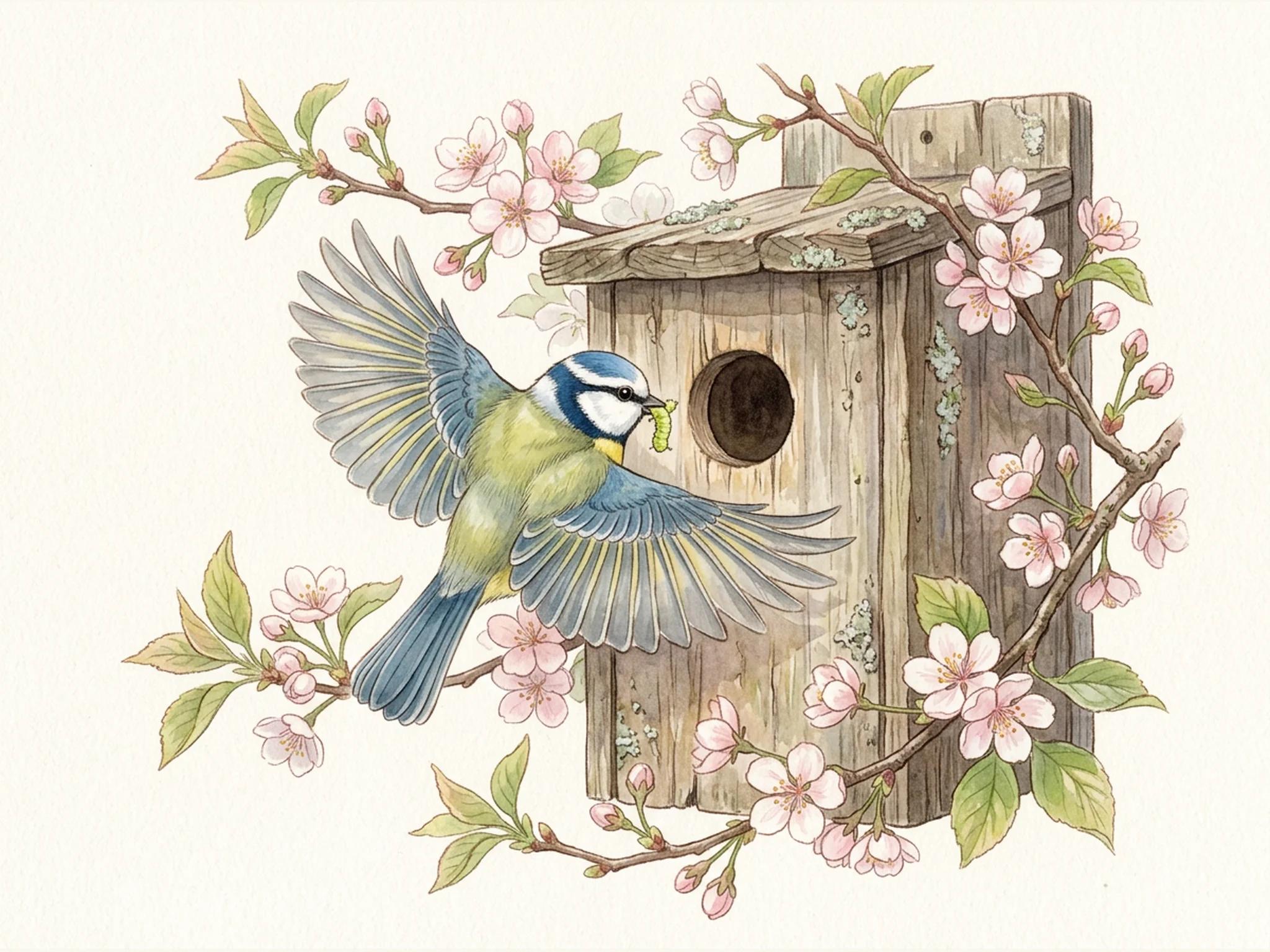
Each bird needs a different hole and box: 26–28 mm (1.02–1.1 in) for the blue tit, 32 mm (1.26 in) for the great tit, 45 mm (1.77 in) for the starling, a slot for the swift or a large box with a baffle for the barn owl. Here is the summary; the full measurements, the dimensioned diagrams and the cleaning are in the nest box guide.

Time
2–3 hours per box
Cost
8–30 € (barn owl and kestrel boxes cost a little more)
Steps
4
Nest boxes by species, with measurements

What is it for?

  • Give a home to the birds that eat the caterpillars and insects in the vegetable garden.
  • Choose the right type and hole diameter according to the species you want to attract.
  • Replace the hollows of old trees, which are increasingly scarce.

Read this before buying anything

Anything that touches your food or your animals should NOT be treated with polyurethane varnishes, solvent-based enamels or stains with fungicidal or insecticidal biocides. The soil leaches these products and they end up in your tomatoes or in the hens' feed. Use boiled linseed oil, beeswax + oil, or a water-based stain labelled “for garden use” or EN 71-3.

Safe materials

Keep your garden free of poisons

How to treat timber, insulate from the soil and what to avoid, without poisons. See the terms in the glossary.

Safe timber treatment

  • Untreated wood; linseed oil only on the outside, left to dry for a week before hanging the box.

Metal and fixings

  • Use stainless (A2/A4) or hot-dip galvanised fixings. Cheap zinc-plated screws rust within a year outdoors and stain the timber.
  • Tying wire: use stainless or plastic-coated wire. Never bare copper wire touching the soil (too much copper is toxic to the soil).

What NOT to use here

  • Solvent-based varnishes and paints, creosote and pressure-treated wood: they contain toxic products that the birds breathe inside the box.
  • Plywood, chipboard and chemically treated pallets: their glues and treatments are toxic and break down with damp.

Materials

  • Untreated wood of 15–20 mm (0.59–0.79 in) (pine, spruce, larch, chestnut)
  • Wood screws of 3.5 × 40 mm (1.57 in)
  • 1 small hinge for the openable lid
  • Stainless wire or wide strap for hanging it without nailing into the tree
  • Optional: linseed oil on the outside only

Tools

  • Saw
  • Drill with a hole saw of the hole diameter
  • Drill with a 5–6 mm (0.2–0.24 in) bit
  • Screwdriver
  • Sandpaper
  • Tape measure and pencil

Step by step

Step 1: Choose the species and copy its measurements
1

Choose the species and copy its measurements

Consult the table in the nest box guide: type of box, hole diameter, base, height, distance from the hole to the floor, hanging height and orientation. The same hole-box design works for blue tit, great tit, sparrow and starling by changing the hole diameter.
Step 2: Cut, drill and assemble
2

Cut, drill and assemble

Cut the pieces (the guide gives the measurements of each piece and dimensioned diagrams), drill the hole with a hole saw, make 4 drainage holes of 5–6 mm (0.2–0.24 in) in the base and ventilation holes high up, and screw together. Do not fit a perch below the hole: birds do not need one, and for cats and magpies it serves as a foothold to pull the chicks out. The roof is hinged so you can open it and clean it.

Step 3: Hang it between October and February
3

Hang it between October and February

At 2–4 m (6.6–13.1 ft) for the small ones (5 m, 16.4 ft or more for swift, barn owl and kestrel), facing between north-east and south-east, with a clear flight path in front and out of reach of cats. One or two well-spaced boxes are enough in a small vegetable garden.

Step 4: Clean it in autumn or winter
4

Clean it in autumn or winter

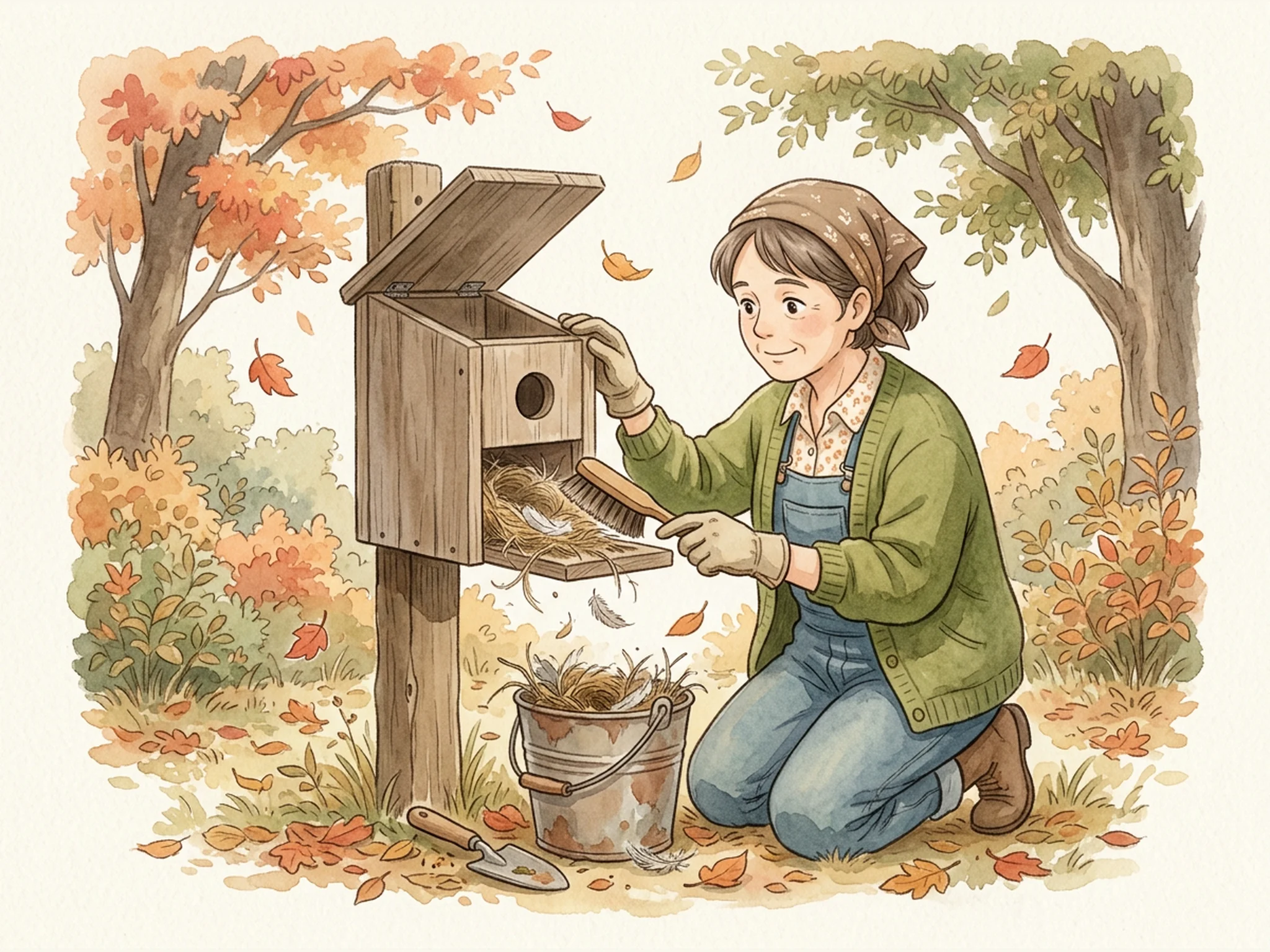
Once a year, from October to January and never with the box occupied: take out the old nest wearing gloves, brush it out and leave it to dry. All birds and their nests are protected: do not touch eggs or chicks.

Tips for this build

  • If no bird uses it in the first year, that is normal: many birds choose a site in winter and take a while to trust a new box. If it stays empty, it is usually because of too much sun, wind or cats nearby: change the tilt or the site in winter.
  • Leave the wood bare on the inside: the chicks grip it to climb up to the hole, and paints, varnishes and creosote give off toxic fumes inside such an enclosed space.
  • Also put out shallow water and leave one corner unpruned: the box alone is not enough, because the pair needs to drink and to find hundreds of insects a day near the nest to bring up the chicks.

Keep reading

More builds in this category

See all DIY builds