
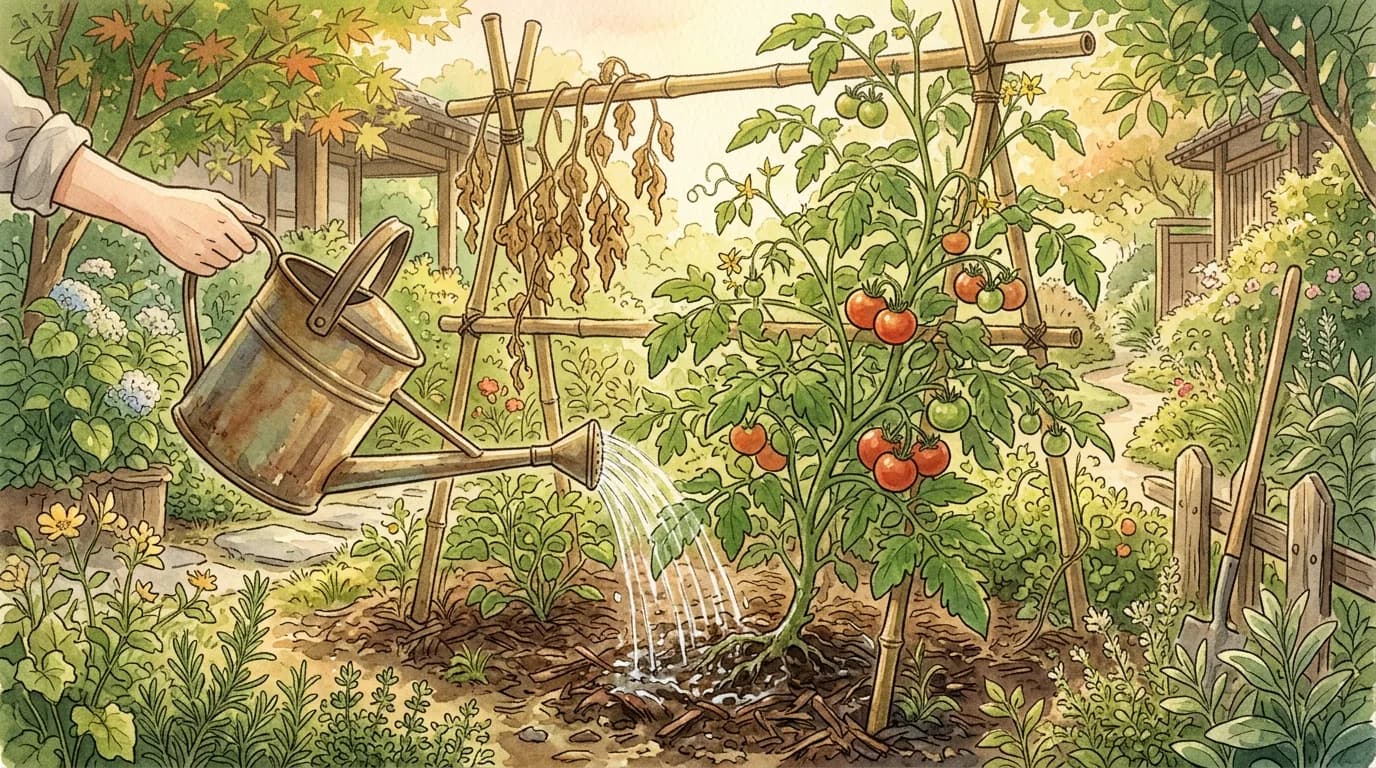
Water at the base and ventilate: preventing fungi without products
Keeping leaves dry, giving plants space and mulching is what reduces downy mildew, botrytis and powdery mildew the most.
Well established. The spores of most foliar fungi need free water on the leaf to germinate. Reducing leaf wetness is one of the measures best backed.
Before you start, read the precautions
You will need
- watering can
- drip hose
- straw
- scissors
When to use it
From transplanting, throughout the crop. Special attention in spring and autumn, with dews and rains, and in closed greenhouses.
Step by step
1Always water at the base of the plant, in the morning, with a long-spouted watering can or drip. Avoid roses on watering cans and sprinklers over the crop.
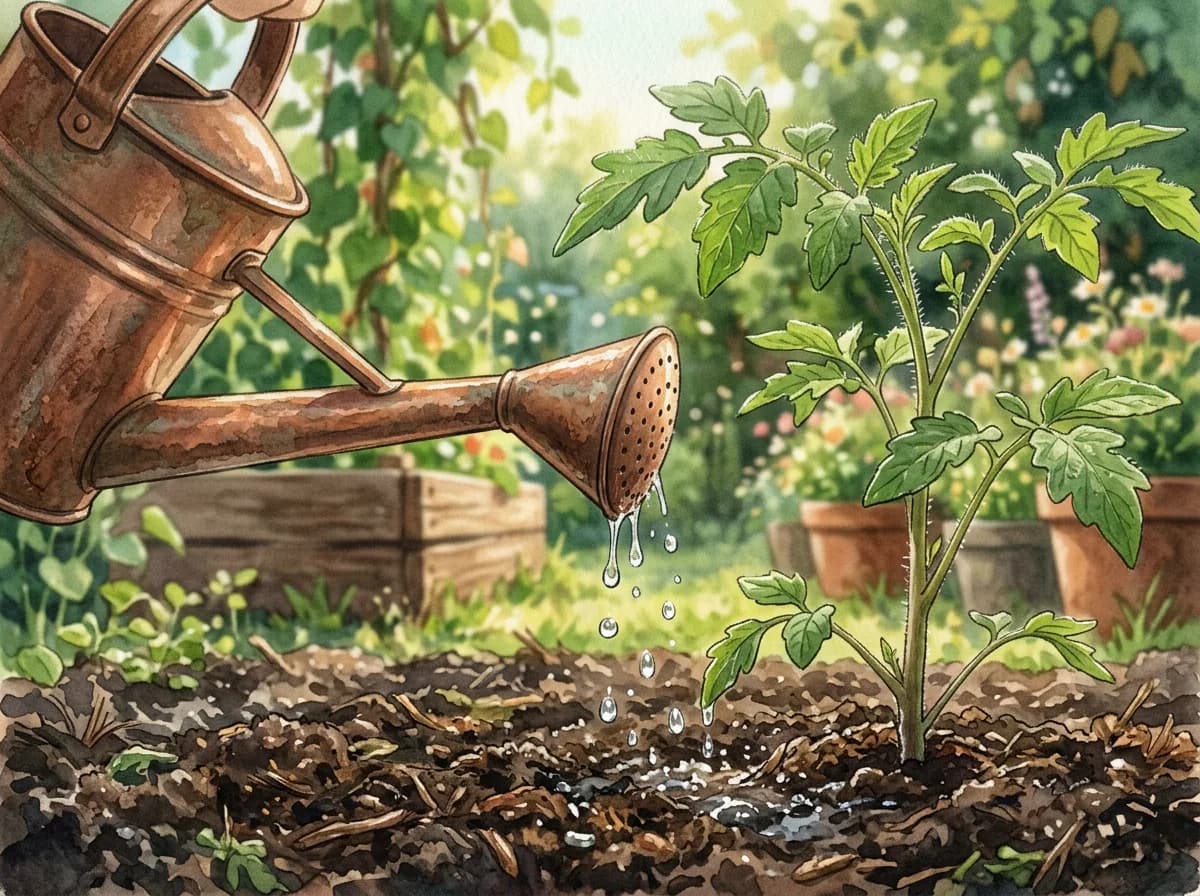
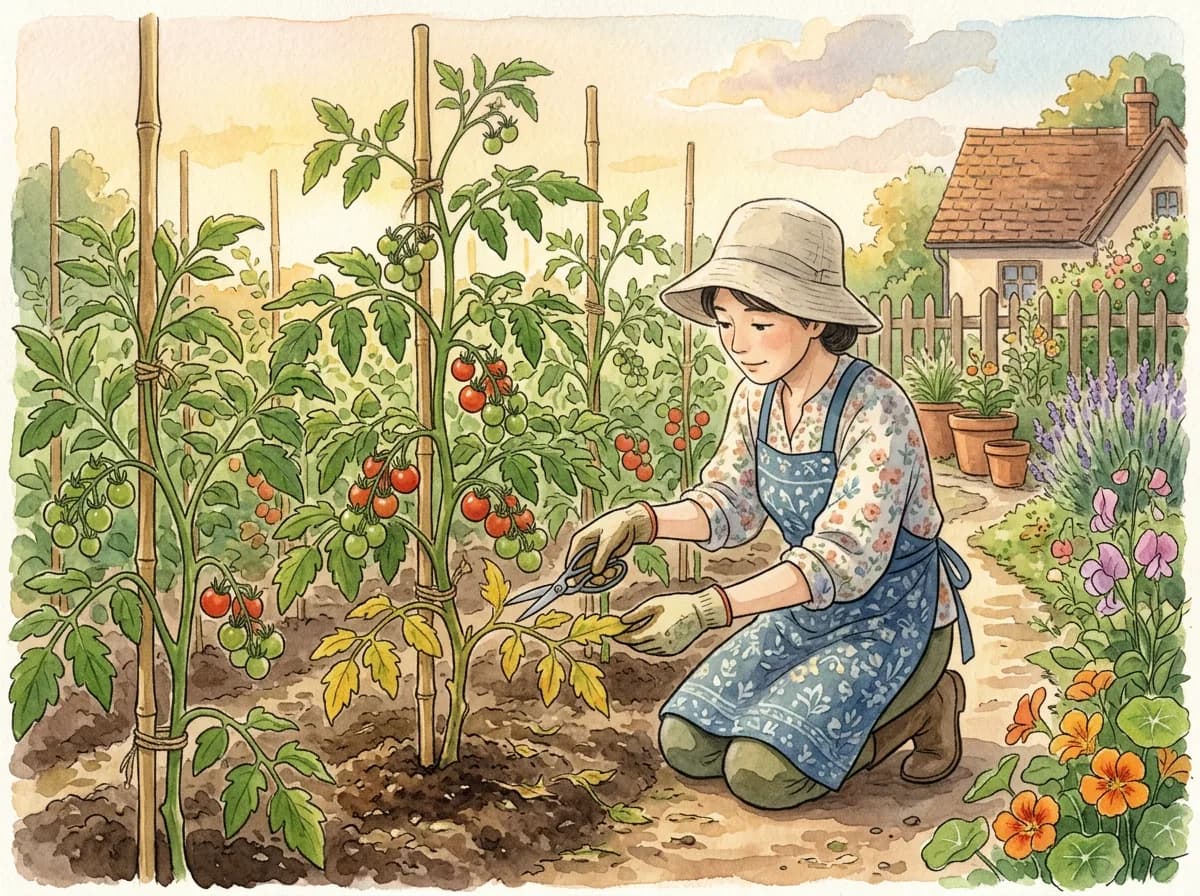
2Respect the planting distance (as a guide: 50–90 cm, 19.7–35.4 in between tomatoes; plants should not touch) and remove lower leaves that touch the ground so air circulates.
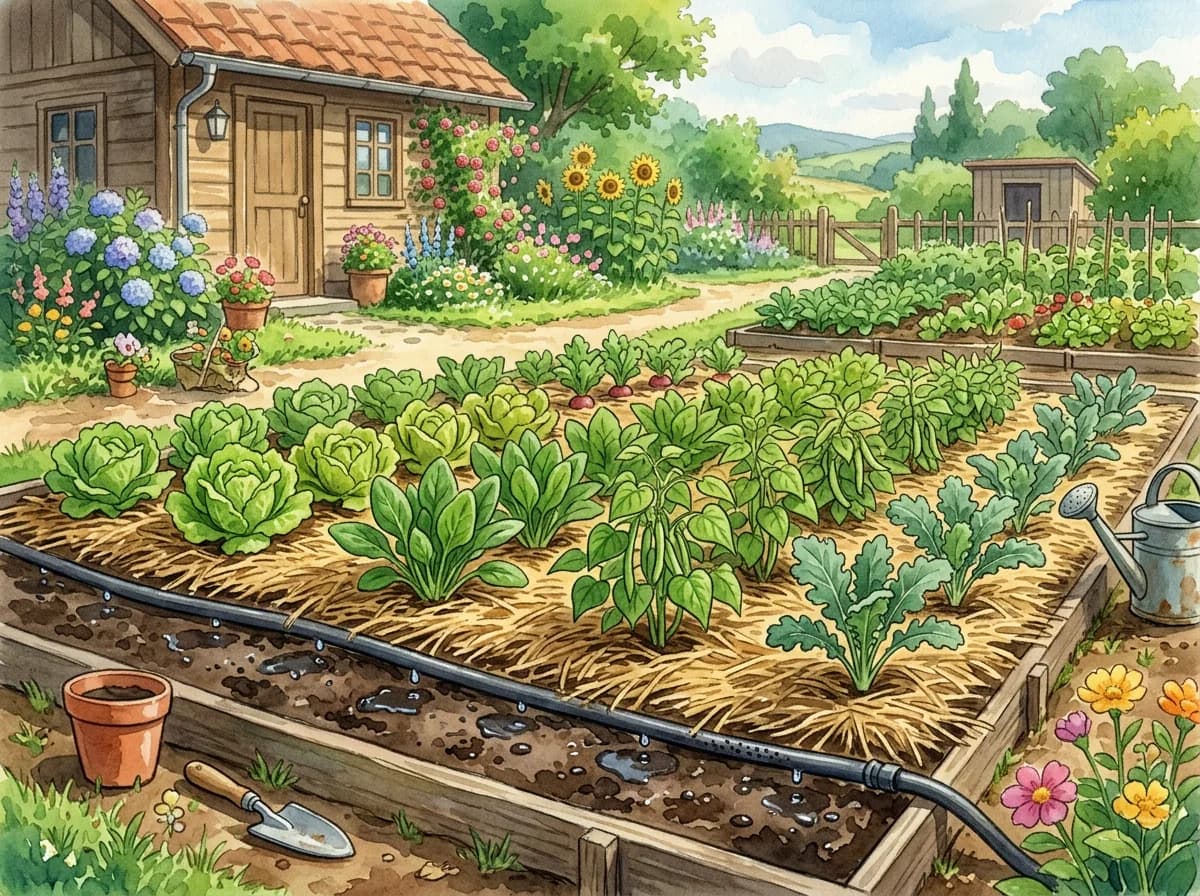
3Mulch the soil with straw or similar so that rainwater does not splash soil with spores onto the lower leaves, and use drip if you can.
4Stake and, in a greenhouse, open doors and windows in the morning to let the humidity out.
Which plants
Tomato, pepper, cucumber, courgette, strawberry, lettuce, vine and rose.
Plants mentioned in this remedy
 Tomato 'Marmande'Marmande tomato, flattened and ribbed, a good size for salads.
 Sweet pepper 'California Wonder'California Wonder pepper, a blocky bell type with thick flesh, for stuffing or eating fresh.
 Cucumber 'Marketmore'The 'Marketmore' cucumber is a classic salad cucumber resistant to several diseases.
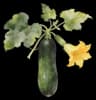 Courgette 'Nero di Milano'A cylindrical, very dark green courgette, productive and early, the classic bush type for continuous picking.
 Camarosa strawberryA strawberry with large, firm, deep red fruit, very productive and early.
 Cos lettuce (romaine)Cos lettuce, with a long, crisp heart.
 Italia table grapeA white grape with large, oval berries and a mild muscat flavour.
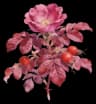 Rugosa roseA very hardy rose with distinctive wrinkled leaves, extraordinarily resistant to cold, salt and disease.
Precautions
- Do not prune more than a third of the leaves at once or in the middle of a heatwave: the sun scorches the fruit.
- Watering at the base should be deep and spaced out, not daily and shallow.
- In persistent rain this is not enough: add a preventive (horsetail, copper or sulphur depending on the case).
- Disinfect scissors when pruning plants with spots.
Why it works
By keeping leaves dry and air moving, the time the leaf stays wet is shortened, and many spores never germinate. Mulch also stops raindrops from splashing spores up from the soil.
Sources
- Clemson University Home & Garden Information Center: tomato diseases; watering at the base with drip or hose, mulch against splashing, spacing between plants, avoiding sprinkler irrigation
- Colorado State University Extension: early blight; water at the base in the morning so the foliage dries quickly, mulch and remove lower leaves