
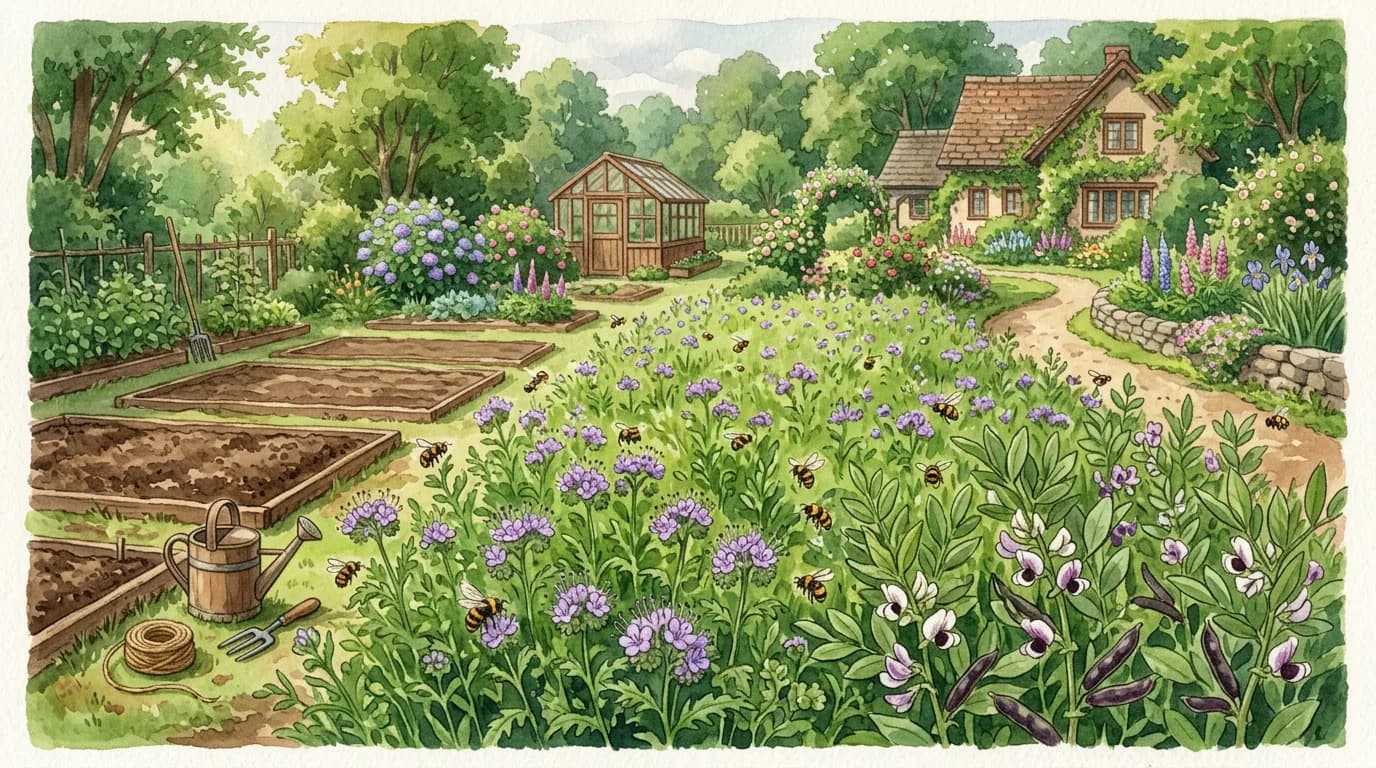
Green manures: sowing to feed the soil
Cover crops (legumes, oats, phacelia) that are cut before setting seed and return organic matter and nitrogen to the soil.
Well established. It is a classic technique: legumes fix atmospheric nitrogen and grasses supply biomass. The result depends on species, climate, inoculation with the right bacteria and cutting time. See also “Cut green manure as mulch”.
Before you start, read the precautions
You will need
- broad bean seeds
- vetch
- oats
- phacelia
- sickle
When to use it
In autumn (October–November) in a Mediterranean climate, after clearing the summer crops, to cut at the end of winter or the start of spring, 2–3 weeks before sowing.
Step by step
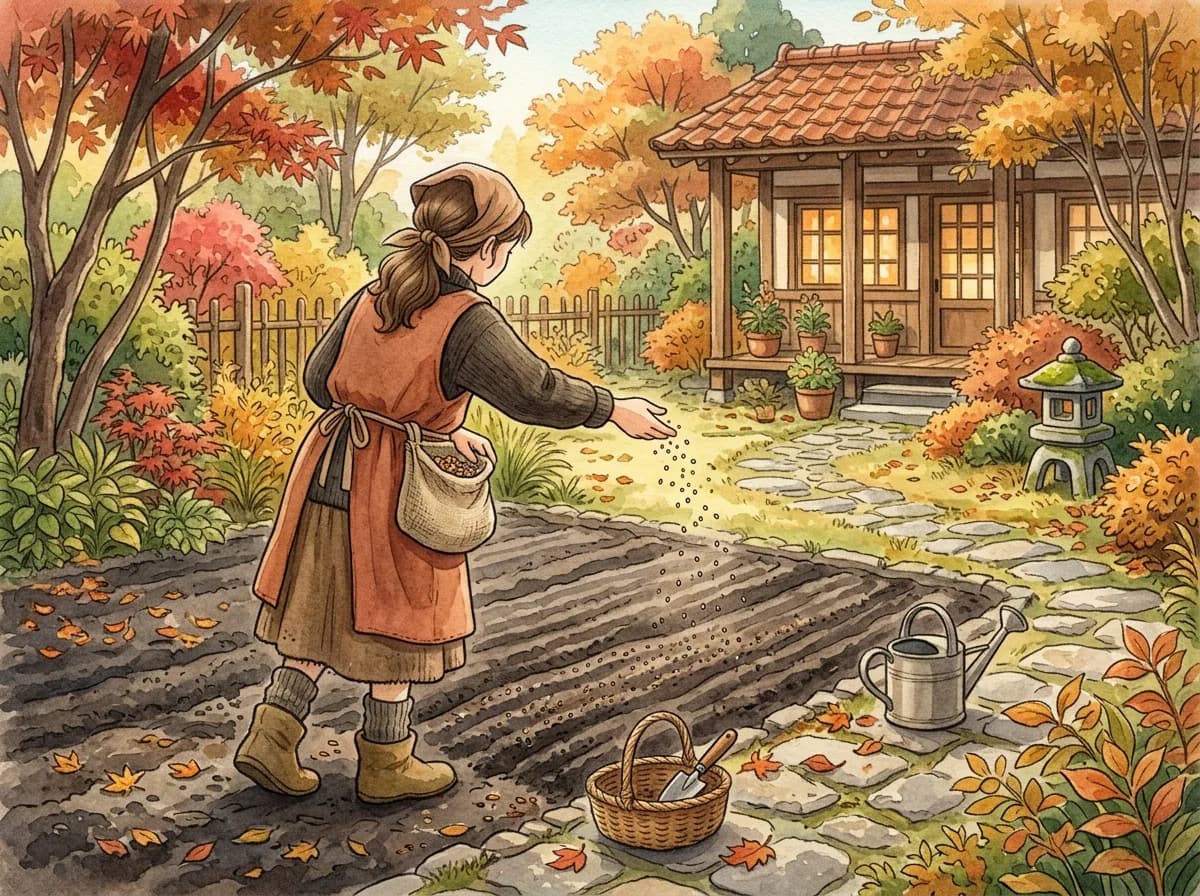
1Prepare the soil (finely raked) and broadcast a mix of a legume (broad beans, vetch or field pea) with a grass (oats).
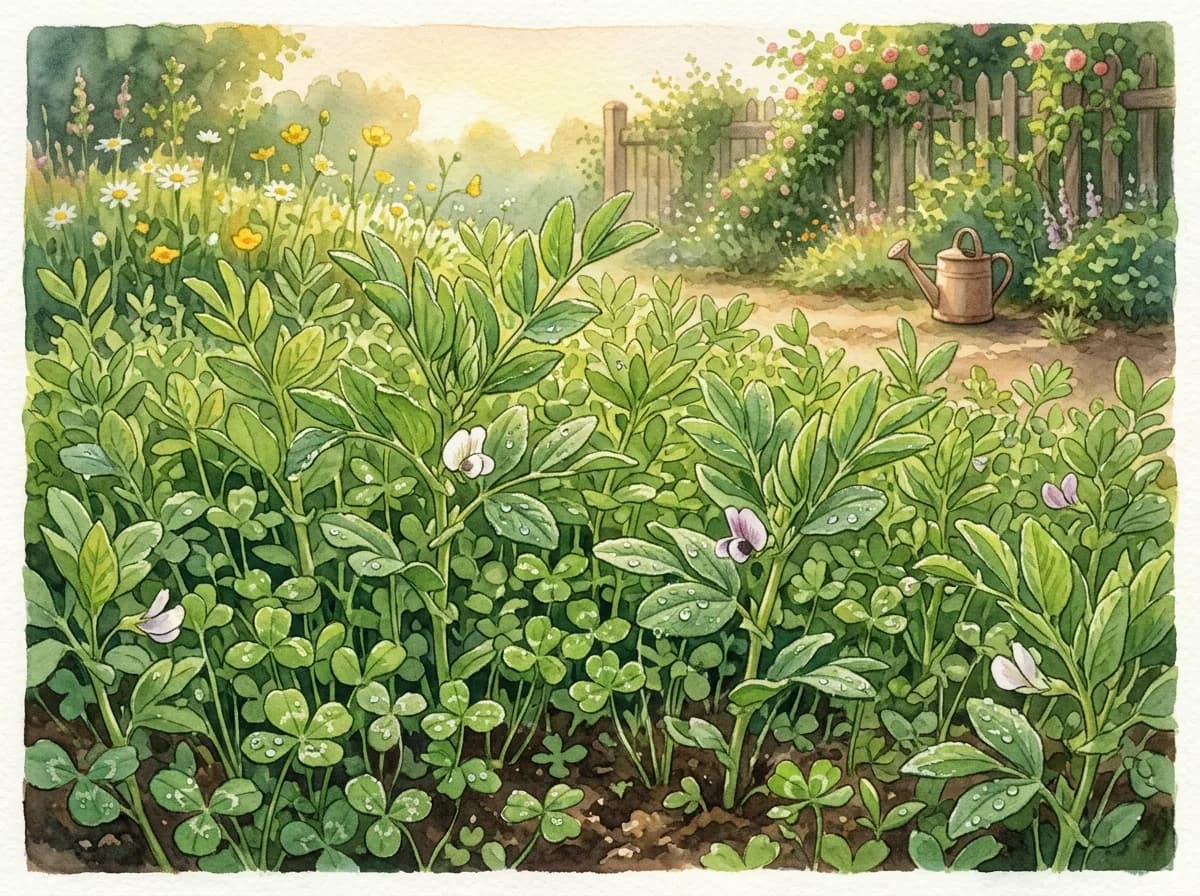
2Let it grow until the start of flowering (50 % in flower), before it sets seed.
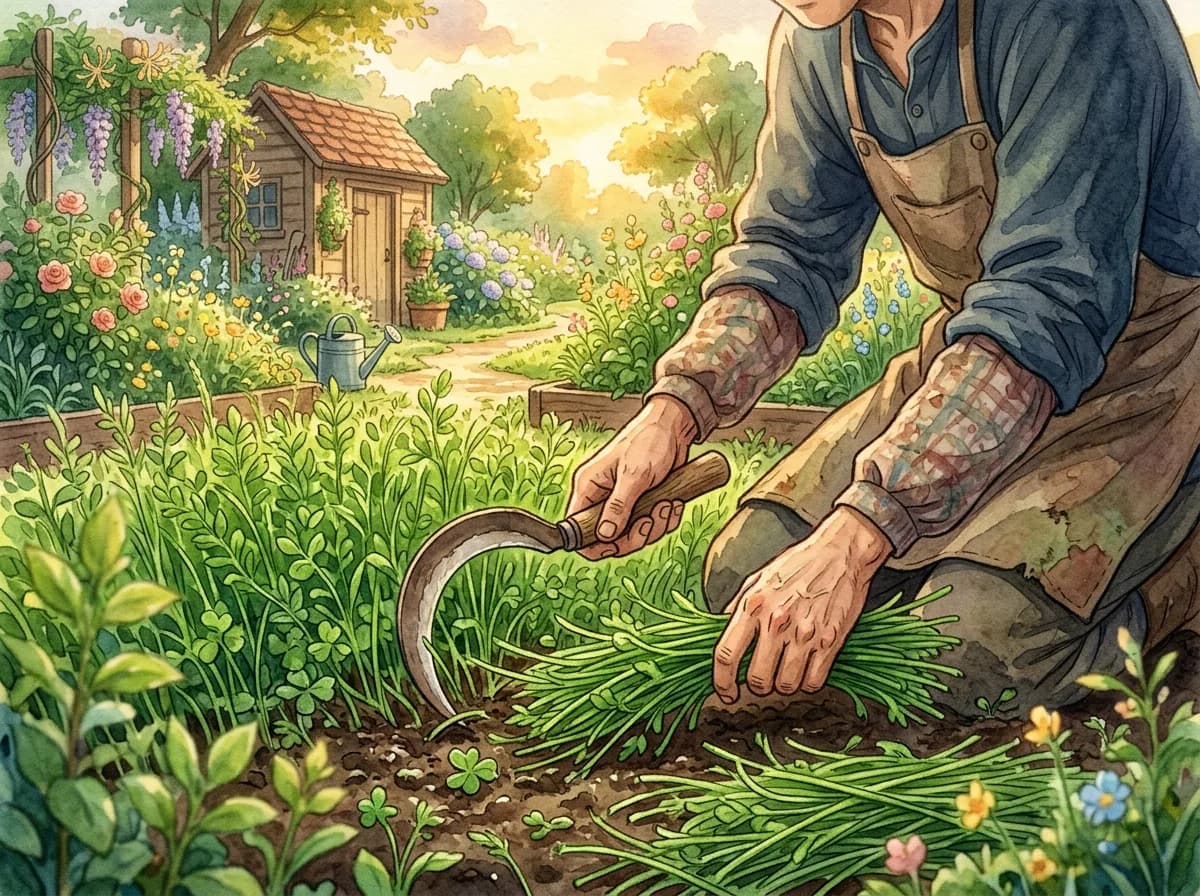
3Cut at ground level with a sickle and leave the remains on the surface as mulch, or work them in shallowly (5–10 cm, 2–3.9 in). Wait 2–3 weeks before sowing.
Dose
As a guide per m² (practical figures from suppliers; there is variation between sources): broad beans 15–20 g (0.5–0.7 oz), vetch 5–10 g (≈1–2 lb per 1000 ft²), oats 8–10 g (0.3–0.4 oz), phacelia 1.5–2 g (0.05–0.07 oz), crimson clover 2–3 g (0.07–0.11 oz). Adjust with the supplier and each seed's label.
Which plants
Beds for summer crops (tomato, courgette, pepper) or any poor, compacted soil or soil left bare in winter.
Plants mentioned in this remedy
 vezaCommon vetch.
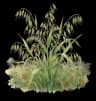 avenaA cover cereal for autumn and winter in a Mediterranean climate.
 faceliaA green manure with violet-blue flowers that grows fast and attracts bees like few other plants.
 Tomato 'Marmande'Marmande tomato, flattened and ribbed, a good size for salads.
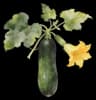 Courgette 'Nero di Milano'A cylindrical, very dark green courgette, productive and early, the classic bush type for continuous picking.
 Sweet pepper 'California Wonder'California Wonder pepper, a blocky bell type with thick flesh, for stuffing or eating fresh.
Precautions
- Cut before they set seed: otherwise they become weeds.
- Rotate families: do not sow a green manure of the same family as your next crop (e.g. mustard before brassicas).
- Do not work juicy residues in deeply: they can ferment and harm seedlings.
- In dry areas, consider whether the watering the cover needs is worth it.
Why it works
Legumes live in symbiosis with Rhizobium bacteria that fix nitrogen from the air. When they are cut, that nitrogen and carbon pass into the soil as they break down. Also, roots structure the soil and covers hold back erosion and weeds.
Sources
- University of Maine Extension: Cover crops and green manures
- Purdue Extension: feeding the soil with cover crops