
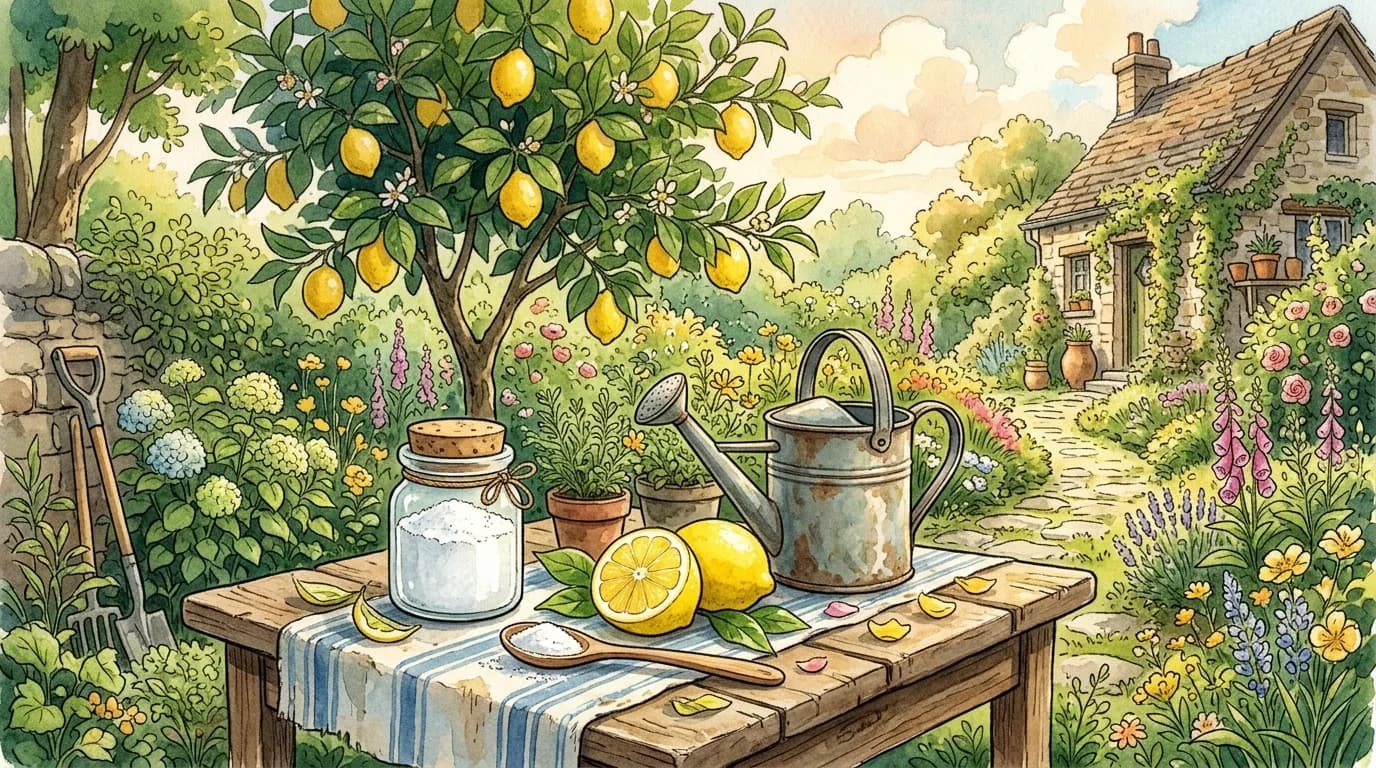
Citric acid to correct hard irrigation water
A pinch of citric acid in the watering can neutralises some of the water's bicarbonates; it also cleans limescale-clogged drippers.
Use with care. Citric acid is one of the acids used for neutralising water alkalinity (it supplies no nutrients). The dose depends on the alkalinity of your water, which you must measure, and if badly measured it can over-acidify. With low alkalinity it is not needed.
Before you start, read the precautions
You will need
- citric acid
- water
- pH test strips
When to use it
For watering acid-loving plants, seed trays or plants with chlorosis in areas of very hard water (Levante, Mediterranean coast), and for cleaning drip emitters with limescale.
Step by step
1Measure the pH of the water with a strip. If it is above 7.5–8, it is worth correcting it for sensitive plants.
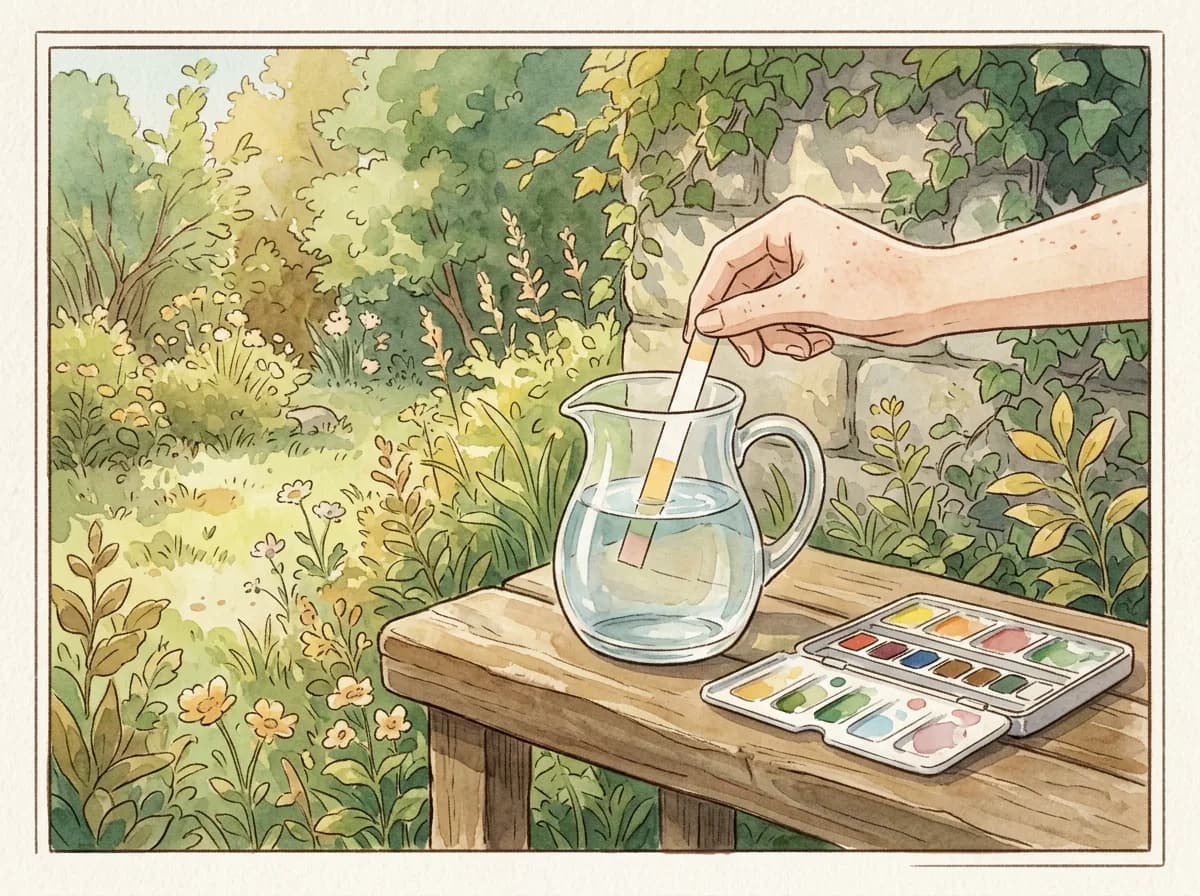
2Dissolve pure citric acid (not lemon juice) in a little water and add it to the watering can bit by bit, measuring the pH until 6–6.5.

3Water onto the soil, not onto the leaves, and do not repeat more than once a week if the growing medium is chalky.

Dose
As a guide, with no universal figure: A reference figure is about 26 g (0.9 oz) of citric acid (0.91 oz) per 100 gallons (≈0.07 g/L) for a particular alkalinity reduction. Start with 0.1 g (0 oz) per litre (a pinch on the tip of a teaspoon in 5 L, about 1.3 US gal), measure the pH and raise it little by little without going above 0.5 g/L. To clean drippers, follow the label of the descaling product; we have not verified a dose.
Which plants
Hydrangeas, blueberries, camellias, potted citrus, seed trays. Not needed for lime-tolerant plants.
Plants mentioned in this remedy
 Hydrangea (bigleaf hydrangea)A shrub with large flower heads whose colour depends on the soil pH: blue in acid soil, pink in alkaline soil.
 Legacy blueberryA late-ripening highbush blueberry with large, tasty berries.
 CamelliaA shrub with glossy evergreen leaves and large, elegant flowers in winter and early spring.
Precautions
- Lemon juice contains sugars and aroma that ferment; use pure citric acid.
- More is not better: over-acidifying damages roots and releases too much aluminium and manganese.
- Citric acid powder irritates eyes and throat: gloves and do not breathe it in.
- Do not mix it with bleach or chlorine: chlorine gas is released.
Why it works
Citric acid supplies protons that react with the bicarbonates of hard water, lowering its pH and alkalinity. It also chelates some of the calcium and iron, so it dissolves limescale built up in drippers.
Sources
- North Carolina State University Extension: acids for reducing irrigation water alkalinity (citric acid and vinegar; doses per 100 gallons)
- University of Massachusetts Amherst Extension: adjusting water alkalinity with acids