
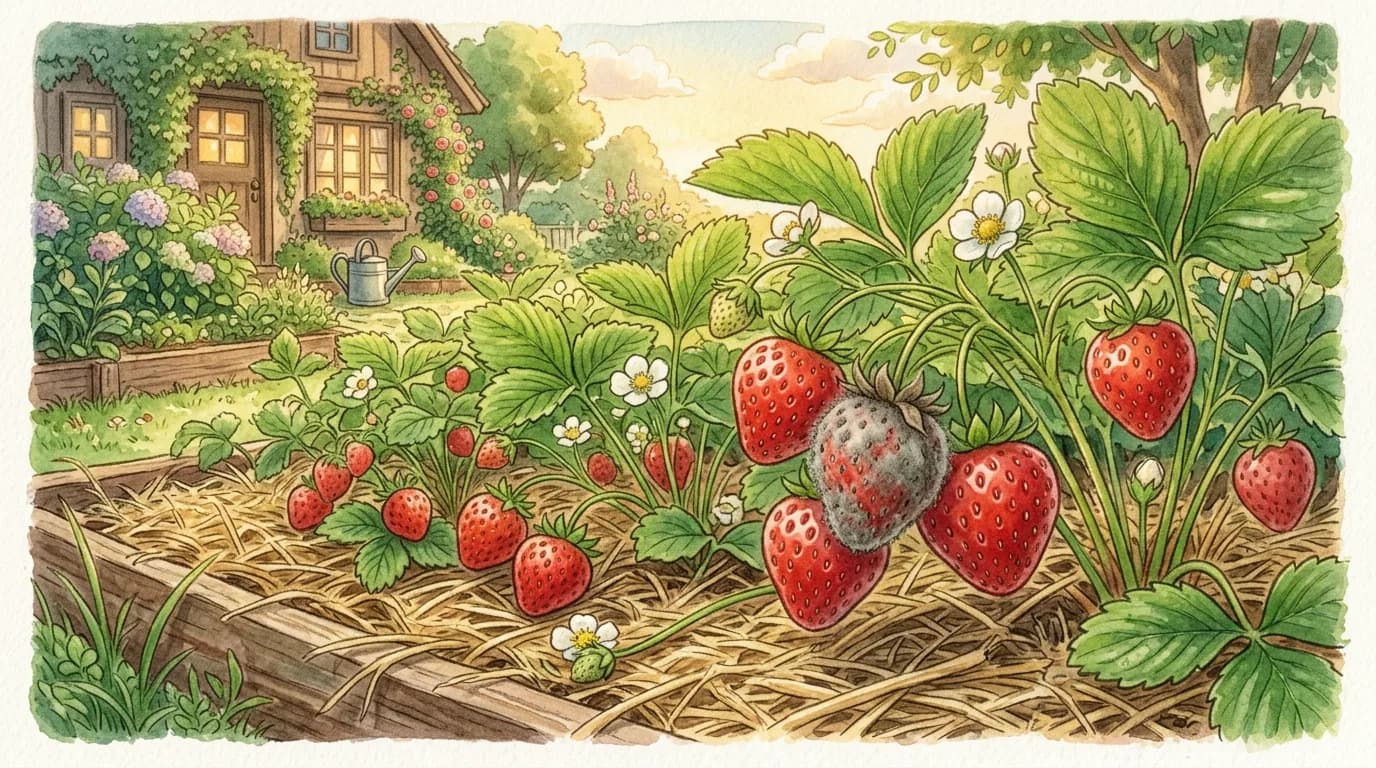
Botrytis (grey mould): strawberries and other vegetables
How to avoid the grey mould that rots strawberries, tomatoes and lettuces with cleanliness, space and ventilation.
Works in practice. Cultural practices (sanitation, spacing between plants, avoiding wetting the foliage) are the main defence against botrytis, and a fungicide is almost never needed. There is no proven home remedy for curing fruit that is already infected.
Before you start, read the precautions
You will need
- straw
- bucket
- scissors
When to use it
From flowering and especially in cool, rainy or very humid weather, and in poorly ventilated greenhouses.
Step by step
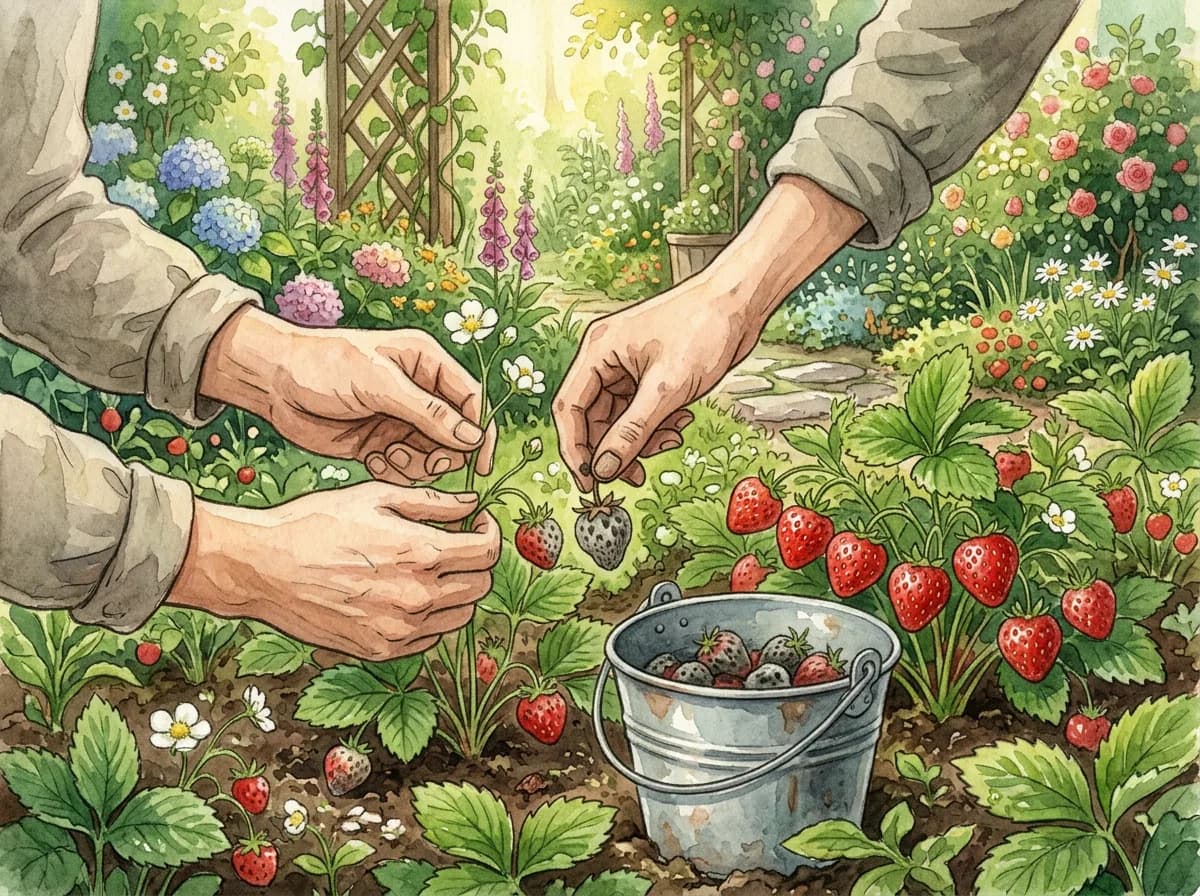
1Pick fruit with grey mould daily with care, without shaking it, and put it in a bucket with a lid; the spores spread easily.
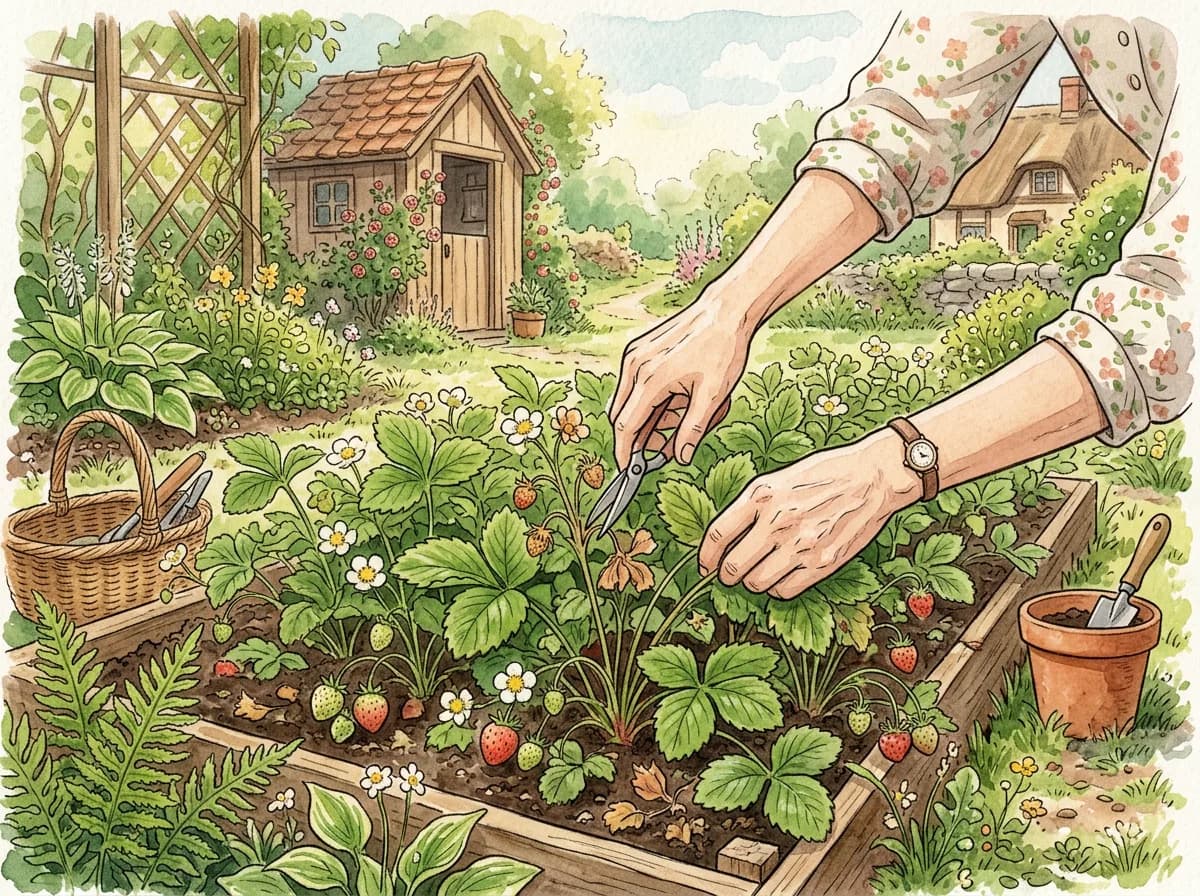
2Thin out very dense leaves, remove wilted flowers and dry remains and leave space between plants so that air circulates.
3Mulch with straw so that the fruit does not touch the damp ground and pick as soon as it ripens.
4In a greenhouse or tunnel, open doors and windows in the morning and avoid watering at the end of the day.

Which plants
Strawberry, tomato, grape, lettuce, cucumber, courgette, rose flowers and other ornamentals.
Plants mentioned in this remedy
 Camarosa strawberryA strawberry with large, firm, deep red fruit, very productive and early.
 Tomato 'Marmande'Marmande tomato, flattened and ribbed, a good size for salads.
 Italia table grapeA white grape with large, oval berries and a mild muscat flavour.
 Cos lettuce (romaine)Cos lettuce, with a long, crisp heart.
 Cucumber 'Marketmore'The 'Marketmore' cucumber is a classic salad cucumber resistant to several diseases.
 Courgette 'Nero di Milano'A cylindrical, very dark green courgette, productive and early, the classic bush type for continuous picking.
Precautions
- Do not compost mouldy fruit in a cold heap: keep the material for the waste bin.
- Excess nitrogen in spring produces dense leaves and favours botrytis.
- Wash fruit that looks healthy before eating it and discard any fruit with mould.
- Do not leave ripe fruit on the plant in persistent rain.
Why it works
Botrytis cinerea needs prolonged humidity and wounded or senescent tissue to infect. Removing diseased remains and fruit, ventilating and keeping fruit dry cuts its cycle.
Sources
- Clemson University Home & Garden Information Center: grey mould; remove wilted flowers and remains, do not overcrowd plants, avoid sprinkler irrigation, overripe fruit very vulnerable; neem oil is a weak fungicide
- University of Massachusetts Amherst: strawberry integrated pest management, gray mold (the page could not be opened, not verified)