
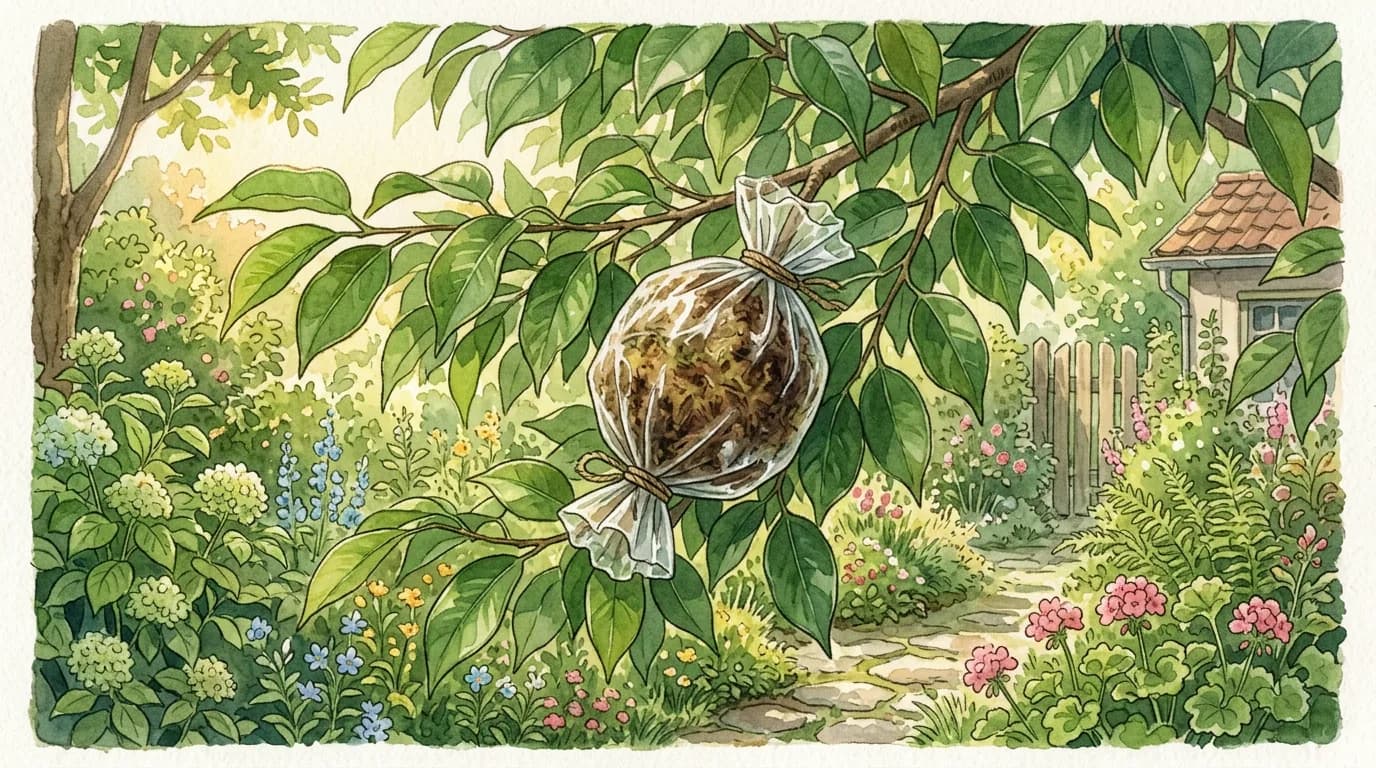
Air layering with moss and clear film
Getting a branch to form roots without separating it from the mother plant, wrapped in damp moss.
Well established. A classic technique. It is slower than a cutting, but useful for difficult woody plants because the branch keeps receiving water and nutrients from the mother plant.
Before you start, read the precautions
You will need
- sphagnum moss
- clear film
- clean knife
- tape or cable ties
When to use it
Spring (also autumn for deciduous plants). It suits ficus, magnolia, camellia, rhododendron, jasmine, lilacs, citrus and other shrubs or trees that are difficult to root from cuttings.
Step by step
1Choose a healthy branch of pencil thickness and cut a ring of bark 2 cm (0.8 in) wide (or an upward-slanting cut) at a node.
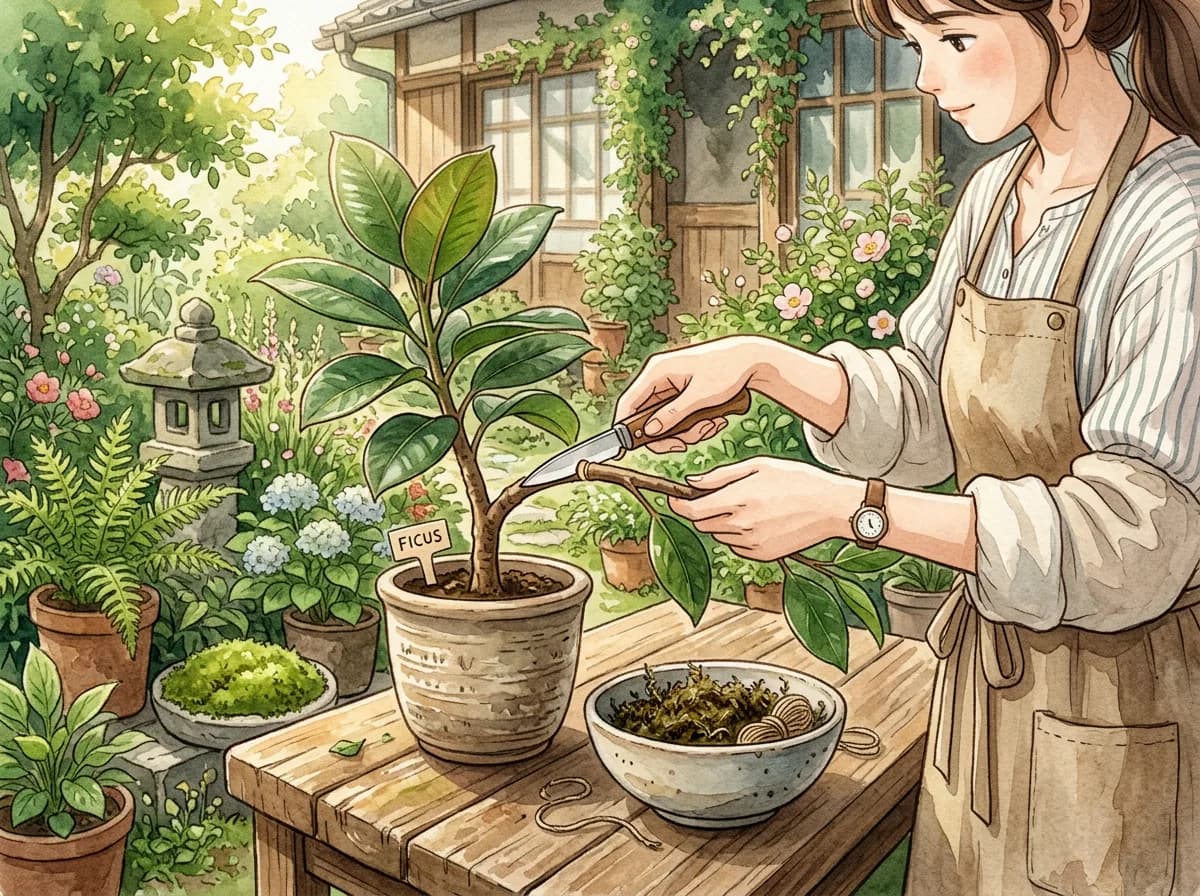
2Soak the moss, squeeze it out well and wrap the wound with a ball the size of a tennis ball.
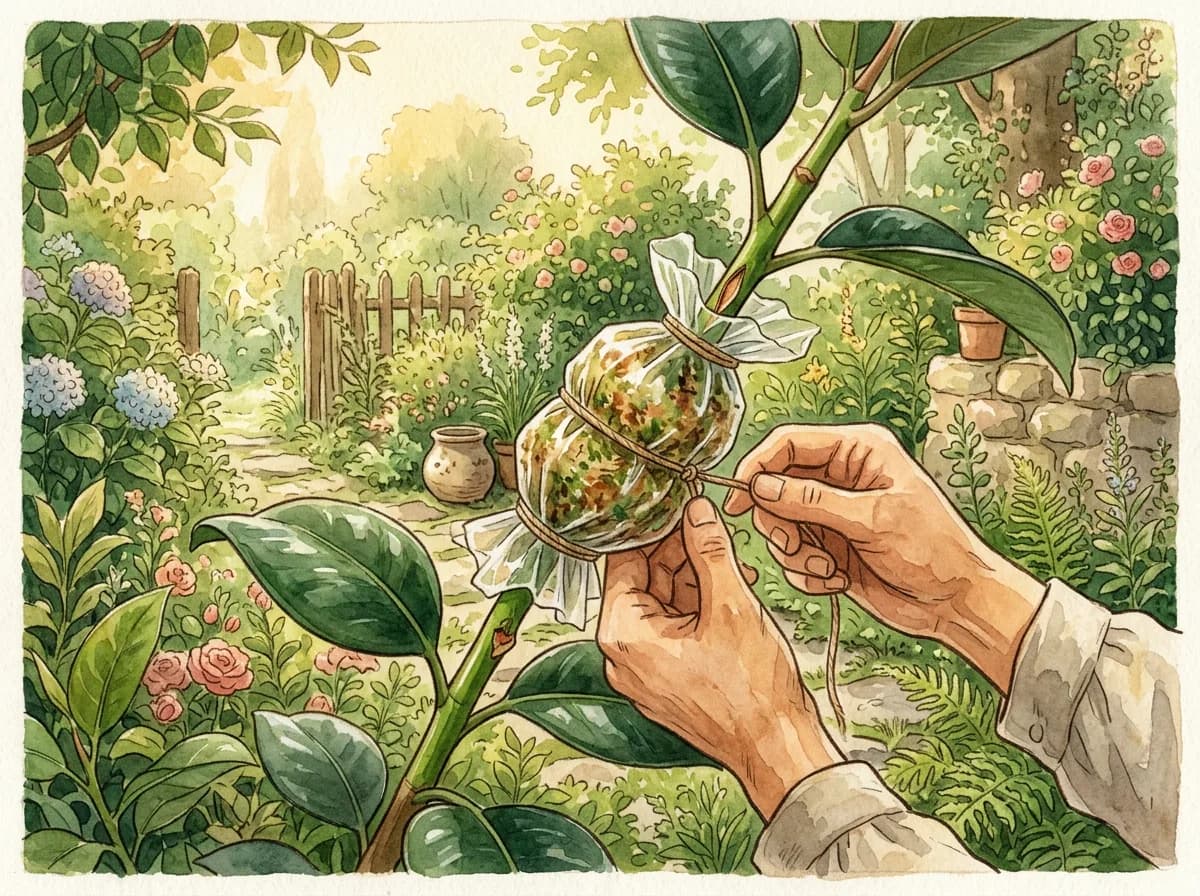
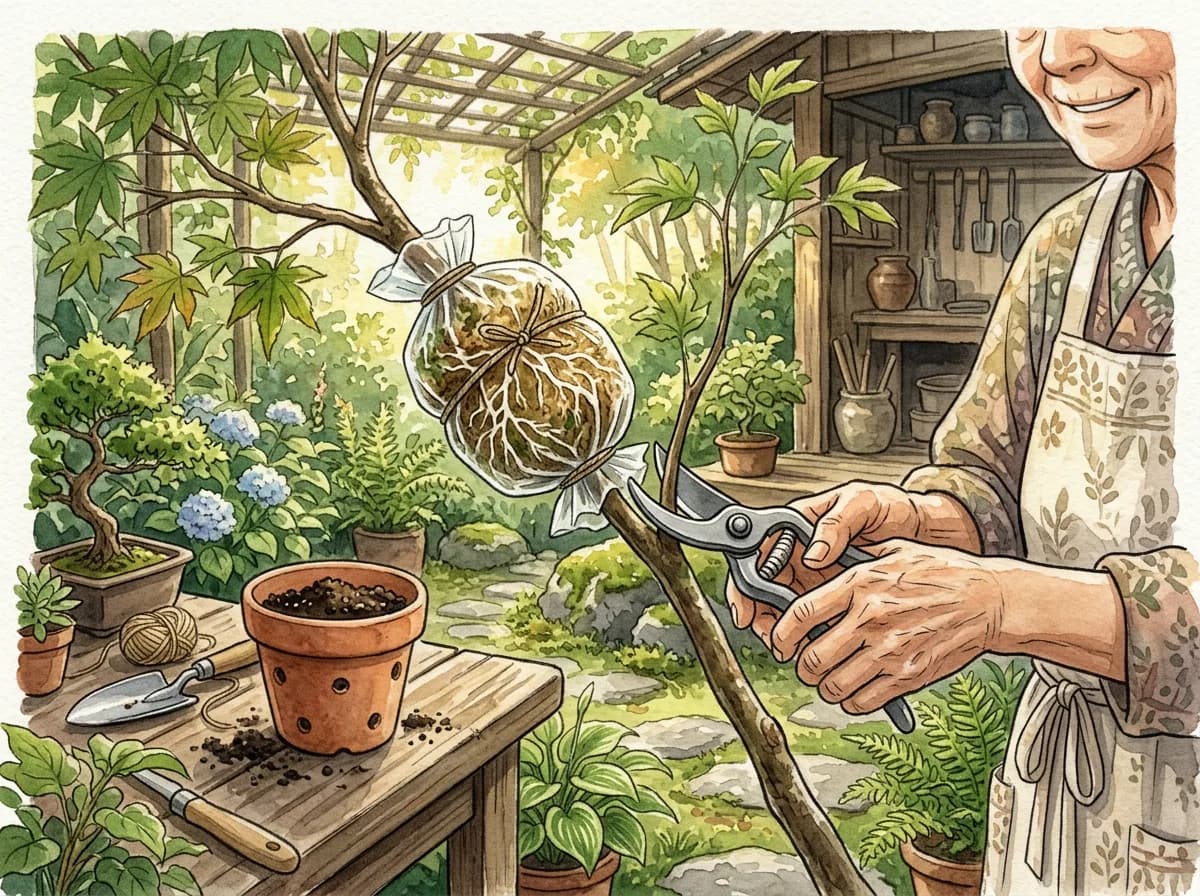
3Cover with clear film and tie both ends. When you see roots, cut below and pot up.
Dose
Damp moss, not soaked. Check every 2 weeks. A few weeks are enough for houseplants and several months for some species; on woody plants it can be left up to a year.
Which plants
Ficus, monstera, fig, magnolia, camellia, hydrangea, citrus. Ideal for plants that are difficult to root from cuttings.
Plants mentioned in this remedy
 musgo sphagnumA genus of peat mosses, which have no roots or flowers and form spongy cushions, light green…
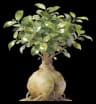 Ficus ginsengAn indoor bonsai with very distinctive swollen, exposed roots, which form on seed-raised plants of Ficus…
 Monstera 'Peru'A Monstera with thick, heavily textured leaves, without the holes typical of the genus, from Peru.
 Fig 'Verdal'A fig with green-skinned fruit and very honeyed red flesh, excellent for drying.
 CamelliaA shrub with glossy evergreen leaves and large, elegant flowers in winter and early spring.
 Hydrangea (bigleaf hydrangea)A shrub with large flower heads whose colour depends on the soil pH: blue in acid soil, pink in alkaline soil.
Precautions
- Use a clean, sharp knife; any tearing encourages fungi.
- If the moss dries out, open it and inject water with a syringe.
- After cutting off the rooted branch, treat it gently: shade and regular watering for the first weeks.
Why it works
Wounding or ringing the bark interrupts the downward flow and roots form in the damp zone of the moss, while the branch keeps receiving water and nutrients from the mother plant.
Sources
- Royal Horticultural Society: air layering of plants (spring or autumn; up to a year on woody plants)
- Iowa State University Extension: air layering (spring ideal; weeks to months)