Credits and licences
- #1 — vueltaalhuerto illustration
- #2 — vueltaalhuerto illustration
- #3 — vueltaalhuerto illustration
- #4 — vueltaalhuerto illustration
- #5 — vueltaalhuerto illustration
- #6 — vueltaalhuerto illustration
- #7 — vueltaalhuerto illustration
- #8 — vueltaalhuerto illustration
- #9 — vueltaalhuerto illustration
- #10 — vueltaalhuerto illustration
Thorny elaeagnus (Elaeagnus pungens)
and 2 more names
elaeagnus, variegated elaeagnusThorny elaeagnus (Elaeagnus pungens) is sown directly outdoors from October to November. It flowers from October to November. Grow it in full sun, 120 cm apart, with little watering. Dates are for a mild temperate climate in the northern hemisphere; the calendar below adjusts them to your zone.
What else to sow in October and November
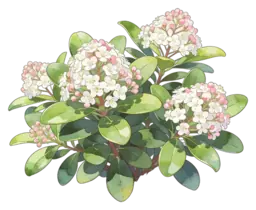
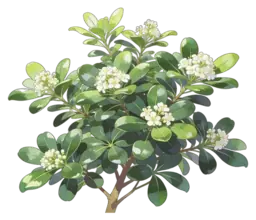
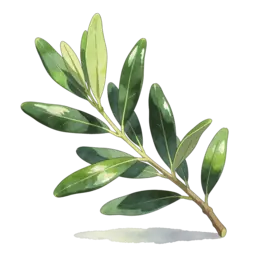
A dense evergreen shrub with long branches, 2 to 4 m tall, widely used for hedges and screens. It has oval, leathery leaves with wavy edges, glossy dark green above and silvery with brown scales beneath, and branches that are sometimes thorny. In autumn it produces small, silvery-white, bell-shaped, sweet-scented flowers that go almost unnoticed, and in spring oval reddish fruits speckled with silver. It is very tolerant of drought, wind and salt, is not fussy about soil, and fixes nitrogen with the help of bacteria in its roots. There are forms with variegated leaves, edged in gold or cream. It is also sold as a bonsai tree. In some warm, humid climates outside Spain it has naturalised, so it is best not planted next to natural areas.
Family and origin: Oleaster family (Elaeagnaceae) · native to East Asia (China and Japan) · More plants from Far East
01In your area
How will it do in your garden?
Year calendar
| Task | J | F | M | A | M | J | J | A | S | O | N | D |
|---|---|---|---|---|---|---|---|---|---|---|---|---|
| Direct sowingOct–Nov | no | no | no | no | no | no | no | no | no | yes | yes | no |
| Plant / transplantFeb–Mar, Oct–Nov | no | yes | yes | no | no | no | no | no | no | yes | yes | no |
| HarvestOct–Nov | no | no | no | no | no | no | no | no | no | yes | yes | no |
| FloweringOct–Nov | no | no | no | no | no | no | no | no | no | yes | yes | no |
| PruningMay, Sep | no | no | no | no | yes | no | no | no | yes | no | no | no |
| CuttingsJun–Aug | no | no | no | no | no | yes | yes | yes | no | no | no | no |
Its life cycle at a glance
Swipe and tap a stage to see its details.
02Planting
Where and how to plant it
Sow the seed 1.5 cm deep; leave 1.2 m between plants and 1.2 m between rows.
1.2 m between plants · 1.2 m between rows
Seed at a depth of 1.5 cm; seedlings go in with the root ball level with the soil.
- Transplanting
- Feb–Mar, Oct–Nov
- Direct sowing
- Oct–Nov
- Germination
- ~90 days
- TipPlant it about 120 cm apart for a hedge, and trim it twice a year, at the end of spring and the end of summer, to keep it dense; if left unpruned, it tends to throw out long branches in every direction.
- Common mistakePlanting too deep smothers the crown of the plant.
03Care
Care through the year
Sun and aspectFull sun · 8 h of sun · South or south-west, with nothing casting shade at midday
- Too little sun
- Ideal range
- Plenty of sun
South or south-west, with nothing casting shade at midday
Strong sun: Loves full midday sun and high temperatures.
It prefers full sun or partial shade: in full sun it is more compact and variegated forms keep their colours better, while in deep shade it gets leggy and flowers less. It stands up well to wind and sea breezes. Once established it withstands frosts of -10 °C or lower, and variegated forms are somewhat more delicate; the figure is approximate.
WateringLet it dry out between waterings · summer: every 5-7 days
- Summerevery 5-7 days3 L per plant/week
- Spring / Autumnevery 10-14 days1.2 L per plant/week
- Winteronly in extreme drought (once a month)0.5 L per plant/week
Let it dry out between waterings: A Mediterranean favourite: better thirsty than overwatered.
Water regularly in the first year so it roots well, and hardly at all after that: it copes with the Mediterranean summer drought with a few deep waterings. In a pot or as a bonsai it needs more frequent watering, whenever the surface dries. It cannot stand waterlogging. In shallow, limy soils it can turn yellow (chlorosis); add organic matter or apply iron chelate.
When to water? Push your finger 5 cm into the soil next to the base of the plant:
- Damp: soil sticks to your finger. Do not water yet. It has more than enough; wait for it to dry out more.
- Cool but clean, no mud. Wait another 1-2 days before watering.
- Dry and dusty. Water now, but moderately. Do not overdo it: it prefers thirst to excess.
- TipWater generously in the first year until it is established; after that it looks after itself.
Soil and feedingpH 5.5–8 · Deep soil with good drainage
Deep soil with good drainage.
Medium/high.
This plant prefers a pH between 5.5 and 8.0 (slightly acidic to alkaline).
- Water generously in the first year until it is established.
- A thick mulch all year round, not touching the trunk.
- TipIt needs almost no fertiliser.
PruningWhen: May, Sep
Pruning time for this plant: May, Sep.
- TipRemove suckers and any plain green shoots that appear on variegated forms, because they are more vigorous and eventually take over.
- TipAs a bonsai it needs pinching back and repotting every two or three years.
- TipThe fruits are described as edible but astringent and are not usually used; the thorns prick when pruning, so wear gloves.
- TipFormative pruning after flowering keeps the shape compact.
- Common mistakePruning at the wrong time removes the year's flower buds.
Common mistakes and tips
- TipHeights, timings and cold tolerance are approximate.
04Harvest
Harvesting and storing
Harvest in Oct–Nov.
05Propagation
Make new plants
It is easily propagated from semi-ripe cuttings, which is the usual method and the only one that keeps variegated leaves true, and also from seed. Take cuttings in summer, about 10 to 15 cm long, from the current year's shoots once they are fairly firm; remove the lower leaves, dip the base in rooting hormone and plant them in a mix of peat and perlite or sand, in a bright spot out of direct sun and with humidity; they root in about 6 to 8 weeks. Collect seed from the ripe fruits in spring, clean off the pulp and sow it in autumn, outdoors or after a period of moist cold; it germinates slowly and erratically, and seedlings may differ from the parent.
Seeds: how to germinate them~90 days
06Uses and health
What it is used for, and with what care
No serious poisonings are known. The fruits are considered edible, although eaten in quantity they can cause digestive upset, and there is no reliable data for young children. It is not known for certain whether it is toxic to dogs and cats, so keep them from chewing the plant or eating the fruits, and consult the vet if they do. The branches may have thorns: wear gloves when pruning. In some warm, humid climates outside Spain it has behaved as an invasive species; it is not regulated in the Spanish Catalogue or on the EU list, but it is best not planted next to natural areas.
- Properties
- A very tough ornamental shrub that serves as a hedge and windbreak, and whose fragrant flowers attract bees in autumn. It fixes nitrogen in the soil and improves poor ground. No medicinal properties are attributed to it.
- Uses
- The ripe red fruits are described as edible, with a sweet, astringent flavour, and in Asia they have been eaten fresh or preserved, but there are no safety guidelines and they are not used in everyday cooking. Here it is grown only as an ornamental: do not use the leaves, flowers or roots in infusions or remedies.
For guidance only; this is not medical treatment and does not replace advice from a doctor or vet.
07Companions and related plants