
Credits and licences
- #1 — vueltaalhuerto illustration
- #2 — vueltaalhuerto illustration
- #3 — vueltaalhuerto illustration
- #4 — vueltaalhuerto illustration
- #5 — vueltaalhuerto illustration
- #6 — vueltaalhuerto illustration
- #7 — vueltaalhuerto illustration
- #8 — vueltaalhuerto illustration
- #9 — vueltaalhuerto illustration
- #10 — vueltaalhuerto illustration
Cotyledon orbiculata (pig's ear)
and 3 more names
cotyledon, plakkie, varkoorCotyledon orbiculata (pig's ear) is sown in seed trays from March to May, and planted out from April to June and in September. It flowers from June to August. Grow it in full sun, 60 cm apart, with little watering. Dates are for a mild temperate climate in the northern hemisphere; the calendar below adjusts them to your zone.
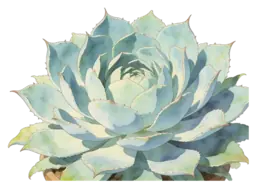
Pig's ear is a shrubby succulent 0.5 to 1.2 m tall, with somewhat woody stems and thick, oval or rounded leaves, greyish-green or bluish, covered in a white waxy bloom and often edged in red. In summer it sends up long stems with hanging, bell-shaped flowers in orange or red. It is very resistant to drought and dry air, and suits sunny pots, rockeries and coastal gardens. It is toxic if swallowed (see the health notice) and is not edible. Outside its native range, in warm climates, it has naturalised in some countries.
Family and origin: Stonecrop family (Crassulaceae) · native to South Africa, Namibia and southern Africa · More plants from Africa
01In your area
How will it do in your home?
Year calendar
| Task | J | F | M | A | M | J | J | A | S | O | N | D |
|---|---|---|---|---|---|---|---|---|---|---|---|---|
| Seed trayMar–May | no | no | yes | yes | yes | no | no | no | no | no | no | no |
| Plant / transplantApr–Jun, Sep | no | no | no | yes | yes | yes | no | no | yes | no | no | no |
| HarvestJun–Aug | no | no | no | no | no | yes | yes | yes | no | no | no | no |
| FloweringJun–Aug | no | no | no | no | no | yes | yes | yes | no | no | no | no |
| PruningApr | no | no | no | yes | no | no | no | no | no | no | no | no |
| CuttingsApr–Sep | no | no | no | yes | yes | yes | yes | yes | yes | no | no | no |
Its life cycle at a glance
Swipe and tap a stage to see its details.
02Care
Care through the year
Sun and aspectFull sun · 8 h of sun · South or south-west, with nothing casting shade at midday
- Too little sun
- Ideal range
- Plenty of sun
South or south-west, with nothing casting shade at midday
Strong sun: Loves full midday sun and high temperatures.
Full sun, or sun with a little shade during the harshest hours. It tolerates brief, light frosts if the potting mix is dry (down to about -3 or -5 °C depending on the source), but rots in cold, wet conditions: in frost-prone areas, keep it in a pot and under cover.
- Common mistakeLack of light makes them stretch and go soft (etiolation).
WateringLet it dry out between waterings · summer: every 5-7 days
- Summerevery 5-7 days0.2 L per plant/week
- Spring / Autumnevery 10-14 days0.1 L per plant/week
- Winteronly in extreme drought (once a month)0 L per plant/week
Let it dry out between waterings: A Mediterranean favourite: better thirsty than overwatered.
Water thoroughly in spring and summer, every 10 or 15 days, only when the potting mix is dry, and hardly at all in winter. It is best to water from below or at the base, without wetting the leaves, so as not to spoil the waxy bloom. Sandy, very free-draining potting mix: it is prone to root rot.
When to water? Push your finger 5 cm into the soil next to the base of the plant:
- Damp: soil sticks to your finger. Do not water yet. It has more than enough; wait for it to dry out more.
- Cool but clean, no mud. Wait another 1-2 days before watering.
- Dry and dusty. Water now, but moderately. Do not overdo it: it prefers thirst to excess.
Potting mix and feedingpH 6–7.5 · Very gritty, free-draining mix
Very gritty, free-draining mix.
30 % multi-purpose compost · 40 % coarse sand · 30 % perlite or pumice.
Very high: standing moisture rots them.
This plant prefers a pH between 6.0 and 7.5 (slightly acidic to slightly alkaline).
- Multi-purpose compost on its own with no drainage: rot sets in quickly.
- Watering the rosette or the leaves marks them and causes rot.
- TipPlant it in a pot with cactus compost mixed with coarse sand or volcanic grit, or in sandy, very free-draining soil, in full sun.
- TipFeed it once or twice between spring and summer with cactus fertiliser.
- TipVery free-draining mix (with sand/perlite) and pots with a drainage hole.
PruningWhen: Apr
Pruning time for this plant: Apr.
- TipIt is a toxic plant: wear gloves when pruning and wash your hands afterwards.
- TipDo not dump prunings in the countryside, because the pieces root on their own and the species can naturalise.
Common mistakes and tips
- TipCut off spent flower stems and shorten long branches in spring to keep its shape.
03Harvest
Harvesting and storing
Harvest in Jun–Aug.
04Propagation
Make new plants
It is propagated mainly from stem cuttings: cut pieces 8 to 15 cm long with a clean knife, leave them for a few days in the shade and dry until the wound has callused over, and plant them in coarse sand with a little soil, without watering for one or two weeks; they root within a few weeks in the warm season. Single leaves can also root, though with poorer results. It can also be raised from seed, as fine as dust, sown on the surface in spring on moist potting mix with gentle warmth; it germinates in two or three weeks, but the seedlings are delicate.
Seeds: how to germinate them~14 days
05Uses and health
What it is used for, and with what care
Toxic if swallowed. All parts contain bufadienolides, cardiac glycosides that in South Africa cause a cumulative poisoning in sheep and goats (known as ‘krimpsiekte’) and that in people can cause nausea, vomiting, abdominal pain and heart rhythm disturbances. There are documented data in livestock; as a precaution, it is treated the same way for dogs and cats. Keep the plant out of the reach of children and pets, do not leave it where they can nibble it, and wear gloves when pruning it. If you suspect it has been swallowed, in Spain call the Toxicology Information Service (91 562 04 20) or 112, and your vet, without inducing vomiting yourself. It is not on the Spanish Catalogue of Invasive Alien Species, but do not dump cuttings or plant debris in the countryside.
- Properties
- An ornamental succulent. In South African folk medicine it has been used externally, but the plant is toxic and no home use is recommended.
- Uses
- It is not edible: do not eat it or use it in infusions, salads or remedies.
For guidance only; this is not medical treatment and does not replace advice from a doctor or vet.
06Companions and related plants
What to plant it with
Compare with similar varieties
| Variety | Sowing | Harvest | Days | Spacing | Difficulty |
|---|---|---|---|---|---|
| Cotyledon orbiculata (pig's ear) | Mar–May | Jun–Aug | — | 60 cm | Easy |
| Cotyledon pendens (cliff cotyledon) | Mar–May | Jun–Aug | — | 40 cm | Moderate |