Credits and licences
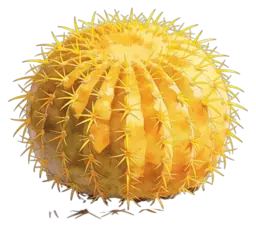
- #1 — vueltaalhuerto illustration
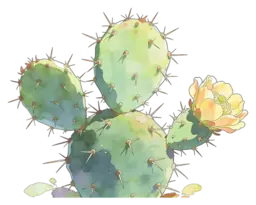
- #2 — vueltaalhuerto illustration
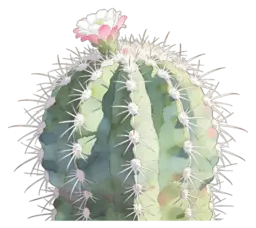
- #3 — vueltaalhuerto illustration
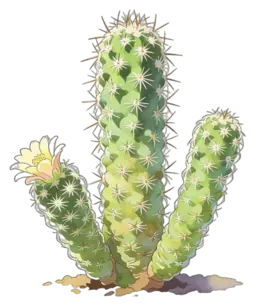
- #4 — vueltaalhuerto illustration
- #5 — vueltaalhuerto illustration
- #6 — vueltaalhuerto illustration
- #7 — vueltaalhuerto illustration
- #8 — vueltaalhuerto illustration
- #9 — vueltaalhuerto illustration
- #10 — vueltaalhuerto illustration
Monvillea crestata (crested cactus)
and 3 more names
moonlight cactus, crested Cereus, fan cactusMonvillea crestata (crested cactus) is sown in seed trays from March to April. Grow it in full sun, 30 cm apart, with little watering. Dates are for a mild temperate climate in the northern hemisphere; the calendar below adjusts them to your zone.
The crested (monstrose) form of Cereus spegazzinii is sold under the trade name "Monvillea crestata"; the species appears in older literature as Monvillea spegazzinii and is now accepted within the genus Cereus. In its normal form it is a columnar cactus with slender, ribbed, bluish-green stems with pale markings; in the crested form the growing point widens and the stem opens into a wavy fan, like coral or a brain, with a sculptural look, with areoles and short spines spread over the whole crest. It grows quickly for a cactus and large crests need a heavy pot. It is a plant for a very bright room, a terrace or a sheltered patio: the crest is a mutation that sometimes reverts and puts out normal columnar stems. Mind the spines when handling it.
Family and origin: Cactus family (Cactaceae) · native to Southern Bolivia, Paraguay, north-eastern Argentina and western Brazil · More plants from South America
01In your area
How will it do in your home?
Year calendar
| Task | J | F | M | A | M | J | J | A | S | O | N | D |
|---|---|---|---|---|---|---|---|---|---|---|---|---|
| Seed trayMar–Apr | no | no | yes | yes | no | no | no | no | no | no | no | no |
| CuttingsMay–Aug | no | no | no | no | yes | yes | yes | yes | no | no | no | no |
Its life cycle at a glance
Swipe and tap a stage to see its details.
02Planting
Planting and transplanting
- TipTurn the pot from time to time so that the crest grows evenly.
03Care
Care through the year
Sun and aspectFull sun · 8 h of sun · South or south-west, with nothing casting shade at midday
- Too little sun
- Ideal range
- Plenty of sun
South or south-west, with nothing casting shade at midday
Strong sun: Loves full midday sun and high temperatures.
Very bright light and several hours of direct sun; in summer it appreciates a little shade at midday, especially if you have just rooted a cutting or brought the plant out from indoors. After winter, expose it to the sun gradually.
WateringLet it dry out between waterings · summer: every 10 to 14 days
- Summerevery 10 to 14 days0.2 L per plant/week
- Spring / Autumnevery 10-14 days0.1 L per plant/week
- Winterhardly at all (once a month or less)0 L per plant/week
Let it dry out between waterings: A Mediterranean favourite: better thirsty than overwatered.
Water thoroughly only when the potting mix is completely dry and let it drain; in winter, minimal watering and under cover. A very free-draining mineral potting mix, with coarse sand, perlite or pumice. Too much water rots the base.
When to water? Push your finger 5 cm into the soil next to the base of the plant:
- Damp: soil sticks to your finger. Do not water yet. It has more than enough; wait for it to dry out more.
- Cool but clean, no mud. Wait another 1-2 days before watering.
- Dry and dusty. Water now, but moderately. Do not overdo it: it prefers thirst to excess.
- TipPut it in the sunniest window of the house or on a sheltered terrace and do not leave it below about 5 to 10 °C: in areas with frost it must be brought indoors in winter, and then it is best watered very little.
- TipWatch out for mealybugs and for collar rot from overwatering.
- TipThe watering and temperature figures are a rough guide and depend on the light and the pot; the sources consulted disagree about its cold hardiness, so it is best to be cautious.
- TipA dry winter rest: with hardly any water they flower better in spring.
- Common mistakeWatering in cold winter weather is the fast track to rot.
Potting mix and feedingpH 6–7 · Mineral mix with almost no organic matter
Mineral mix with almost no organic matter.
20 % multi-purpose compost · 40 % silica sand · 40 % pumice or lava rock.
Extreme.
This plant prefers a pH between 6.0 and 7.0 (slightly acidic to neutral).
- Rich, compact mix: certain rot within a few months.
- Watering in cold winter weather: the first step towards rot.
- TipPlenty of light and a free-draining mineral mix.
- Common mistakeA mix that holds water drowns the roots.
Common mistakes and tips
- TipIf a straight, normal stem appears at the base or on one side, cut it off so as not to lose the crest.
- TipThe large white flower, which opens at night, appears on the normal form and very rarely on the crest.
04Propagation
Make new plants
The crested form is propagated mainly from cuttings: cut a piece of stem with a clean knife, leave it to dry in the air in the shade for one to two weeks until the wound has callused over, and rest it on dry mineral potting mix, watering only once it has rooted. The crest is also grafted onto a healthy columnar rootstock, which is how it is often sold. Seed of the normal form germinates well with warmth, but seed-grown plants usually come out columnar and do not repeat the crest, so most growers prefer cuttings or grafting. Cuttings from a crest may revert to the normal form over time.
Seeds: how to germinate them~21 days
05Uses and health
What it is used for, and with what care
There are no solid toxicological data on this species, so it cannot be said to be harmless: do not eat it or leave it within reach of children and pets. The clearest risk is mechanical: the short spines and areoles prick you when handling the plant, and the pricks can become infected; use gloves or a folded strip of paper to move it. The sap of some cacti irritates the skin and eyes: wash your hands after working with cuttings.
- Properties
- An ornamental cactus with a sculptural shape, with no recognised medicinal or culinary uses.
For guidance only; this is not medical treatment and does not replace advice from a doctor or vet.
06Companions and related plants