Credits and licences
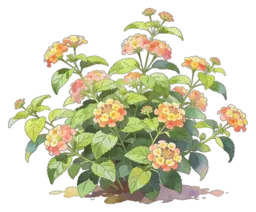
- #1 — vueltaalhuerto illustration
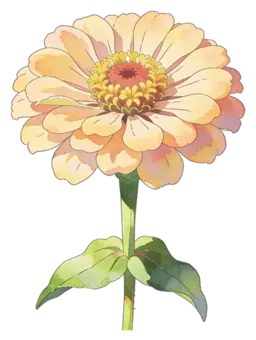
- #2 — vueltaalhuerto illustration
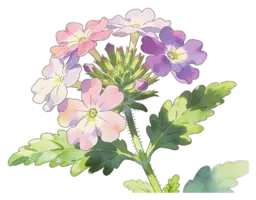
- #3 — vueltaalhuerto illustration
- #4 — vueltaalhuerto illustration
Milkweed (Asclepias)
and 3 more names
Asclepias curassavica, Gomphocarpus fruticosus, monarch host plantMilkweed (Asclepias) is sown in seed trays from February to March or directly outdoors from April to May, and planted out from April to May. It flowers from May to October. Grow it in full sun, 50 cm apart, with moderate watering. Dates are for a mild temperate climate in the northern hemisphere; the calendar below adjusts them to your zone.
What else to sow in February, March, April and May
A clump of upright stems and lance-shaped leaves, with clusters of red-orange and yellow flowers from spring to autumn. It is the plant the monarch caterpillars live on, eating it whole; in the Canary Islands and on the warmest southern coast of the peninsula the monarch is tied to this milkweed and to the Gomphocarpus kind, with its swollen, spiny fruits. It is also much visited by bees, bumblebees and other butterflies. The whole plant contains a toxic latex, and monarch caterpillars keep that toxin, which is why birds avoid them. In climates with frost it is grown as an annual. Note: in some parts of Spain milkweed (especially the Gomphocarpus kind) is watched as a species that escapes into the wild; check with your regional authority before planting it and do not let it become naturalised.
Family and origin: Dogbane family (Apocynaceae) · native to Tropical America; naturalised in warm regions worldwide · More plants from South America
01In your area
How will it do in your garden?
Year calendar
| Task | J | F | M | A | M | J | J | A | S | O | N | D |
|---|---|---|---|---|---|---|---|---|---|---|---|---|
| Seed trayFeb–Mar | no | yes | yes | no | no | no | no | no | no | no | no | no |
| Direct sowingApr–May | no | no | no | yes | yes | no | no | no | no | no | no | no |
| Plant / transplantApr–May | no | no | no | yes | yes | no | no | no | no | no | no | no |
| FloweringMay–Oct | no | no | no | no | yes | yes | yes | yes | yes | yes | no | no |
| PruningFeb–Mar | no | yes | yes | no | no | no | no | no | no | no | no | no |
Its life cycle at a glance
Swipe and tap a stage to see its details.
02Planting
Where and how to plant it
Sow the seed 5 mm deep; leave 50 cm between plants.
50 cm between plants
Seed at a depth of 5 mm; seedlings go in with the root ball level with the soil.
- Transplanting
- Apr–May
- Seed tray
- Feb–Mar
- Direct sowing
- Apr–May
- Germination
- ~14 days
- TipHandle the plant with gloves, because the white latex irritates skin and eyes, and wash your hands afterwards.
- TipIf there are monarchs in your area, let them eat the leaves: the plant grows back.
- TipIn warm climates without frost, cut the plant back to about 15 cm at the end of winter so it regrows with fresh leaves and parasites of the caterpillars do not build up.
- TipOutside warm areas, ask a local native-plant nursery about alternatives for butterflies.
- Common mistakeSowing out of season: many need warmth or a cold spell beforehand to sprout.
03Care
Care through the year
Sun and aspectFull sun · 8 h of sun · South, in full sun
- Too little sun
- Ideal range
- Plenty of sun
South, in full sun
Strong sun: Loves full midday sun and high temperatures.
Full sun, at least six hours. With less light it stretches and flowers little.
WateringMoist but never waterlogged · summer: every 3-4 days; in pots, every 2 days
- Summerevery 3-4 days; in pots, every 2 days1.2 L per plant/week
- Spring / Autumnevery 5-7 days0.6 L per plant/week
- Wintervery little, only so it does not dry out completely0.2 L per plant/week
Moist but never waterlogged: Water before the surface is completely dry. Never puddles. Mulch: straw or dry plant material cuts watering by 30-50 %.
Regular watering in summer without waterlogging. It tolerates a dry day or two, but flowers best with steady, moderate moisture.
When to water? Push your finger 3 cm into the soil next to the base of the plant:
- Damp: soil sticks to your finger. Do not water today. The moisture is fine.
- Cool but clean, no mud. Water early tomorrow if it stays like this, or this evening.
- Dry and dusty. Water now, and deeply. This is not where it likes to be.
Soil and feedingpH 6–7.5 · Loose soil with organic matter and good drainage
Loose soil with organic matter and good drainage.
50 % topsoil · 30 % well-rotted compost · 20 % sand or perlite.
Medium/high.
This plant prefers a pH between 6.0 and 7.5 (slightly acidic to slightly alkaline).
- Overfeeding gives lots of leaf and few flowers.
- Compacted, poorly drained soil rots the roots in winter.
- Common mistakeOverfeeding gives lush leaves but few flowers.
PruningWhen: Feb–Mar
Pruning time for this plant: Feb–Mar.
- TipRemove faded flowers to prolong flowering.
Common mistakes and tips
- TipNobody, pets included, should chew or taste it.
- TipDo not release or rear monarchs outside their range.
- TipTimings and temperatures are approximate.
04Propagation
Make new plants
It is propagated from seed, sown in a seed tray with warmth at about 20 to 25 °C from February, or sown directly once there is no longer a risk of frost. The seeds carry a silky tuft of hairs, which is removed before sowing. It can also be grown from 10 cm stem cuttings in spring, which root with warmth.
Seeds: how to germinate them~14 days
05Uses and health
What it is used for, and with what care
WARNING: the whole plant contains a latex with cardenolides, which are toxic to the heart, and it is toxic to people, dogs, cats and livestock. The latex irritates skin and eyes. Nobody should chew or taste it; use gloves and wash your hands after touching it; keep it out of reach of children and pets. If any is swallowed, call your poison information service or the emergency number, and a vet if it is a pet.
- Properties
- A very valuable plant for monarch butterflies, bees and bumblebees. No home uses.
- Uses
- Not edible in any part.
For guidance only; this is not medical treatment and does not replace advice from a doctor or vet.
06Companions and related plants