Credits and licences
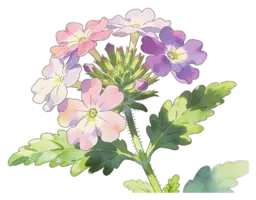
- #1 — vueltaalhuerto illustration
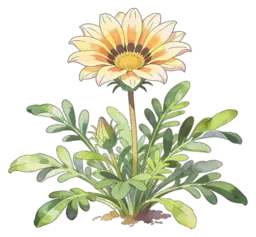
- #2 — vueltaalhuerto illustration
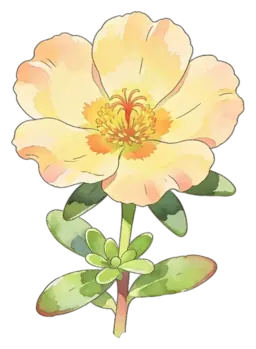
- #3 — vueltaalhuerto illustration
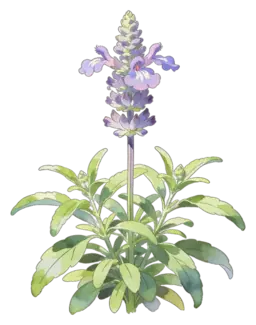
- #4 — vueltaalhuerto illustration
- #5 — vueltaalhuerto illustration
- #6 — vueltaalhuerto illustration
- #7 — Bageense · CC BY-SA 4.0 see on Wikimedia
- #8 — Franz Xaver · CC BY-SA 3.0 see on Wikimedia
- #9 — Kambai Akau · CC BY-SA 4.0 see on Wikimedia
- #10 — Tournasol7 · CC BY 4.0 see on Wikimedia
Lantana
and 1 more names
Lantana camaraLantana is sown in seed trays from January to February, and planted out from April to May. It flowers from May to October. Grow it in full sun, 80 cm apart, with little watering. Dates are for a mild temperate climate in the northern hemisphere; the calendar below adjusts them to your zone.
What else to sow in January and February
A shrub that flowers almost continuously, with clusters of flowers that change colour as they mature. Prune hard at the end of winter; in mild climates it can naturalise, so keep an eye on its spread.
Family and origin: Verbena family (Verbenaceae) · native to Central America · More plants from Mesoamerica
01In your area
How will it do in your garden?
Year calendar
| Task | J | F | M | A | M | J | J | A | S | O | N | D |
|---|---|---|---|---|---|---|---|---|---|---|---|---|
| Seed trayJan–Feb | yes | yes | no | no | no | no | no | no | no | no | no | no |
| Plant / transplantApr–May | no | no | no | yes | yes | no | no | no | no | no | no | no |
| FloweringMay–Oct | no | no | no | no | yes | yes | yes | yes | yes | yes | no | no |
Its life cycle at a glance
Swipe and tap a stage to see its details.
02Planting
Where and how to plant it
Sow the seed 3 mm deep; leave 80 cm between plants.
80 cm between plants
Seed at a depth of 3 mm; seedlings go in with the root ball level with the soil.
- Transplanting
- Apr–May
- Seed tray
- Jan–Feb
- Germination
- ~42 days
- Common mistakePlanting too deep smothers the crown of the plant.
03Care
Care through the year
Sun and aspectFull sun · 8 h of sun · South or south-west, with nothing casting shade at midday
- Too little sun
- Ideal range
- Plenty of sun
South or south-west, with nothing casting shade at midday
Strong sun: Loves full midday sun and high temperatures.
WateringLet it dry out between waterings · summer: every 5-7 days
- Summerevery 5-7 days3 L per plant/week
- Spring / Autumnevery 10-14 days1.2 L per plant/week
- Winteronly if extremely dry (once a month)0.5 L per plant/week
Let it dry out between waterings: A Mediterranean favourite: better thirsty than overwatered.
When to water? Push your finger 5 cm into the soil next to the base of the plant:
- Damp: soil sticks to your finger. Do not water yet. It has more than enough; wait for it to dry out more.
- Cool but clean, no mud. Wait another 1-2 days before watering.
- Dry and dusty. Water now, but moderately. Do not overdo it: it prefers thirst to excess.
- TipWater generously in the first year until it is established; after that it looks after itself.
Soil and feedingDeep soil with good drainage
Deep soil with good drainage.
Medium/high.
This plant prefers a pH between 6.0 and 7.5 (slightly acidic to slightly alkaline).
- Water generously in the first year until it is established.
- A thick mulch all year round, not touching the trunk.
Pruning
- TipPrune it hard at the end of winter, once the risk of frost has passed, because it flowers on new wood.
- TipBirds eat and spread its little berries, and on the Spanish Mediterranean coast it has already naturalised on waste ground and roadside verges: cut off the fruit clusters before they ripen and do not dump prunings in the countryside.
- TipFormative pruning after flowering keeps the shape compact.
- Common mistakePruning at the wrong time removes the year's flower buds.
Common mistakes and tips
- TipThe green berries are toxic, another reason to remove them if there are children or dogs around.
04Uses and health
What it is used for, and with what care
The green berries are especially toxic (triterpenes): vomiting, diarrhoea, weakness and, in quantity, liver damage in people and pets. If eaten, see a vet/doctor.
- Properties
- Continuous flowering that attracts butterflies; ornamental.
For guidance only; this is not medical treatment and does not replace advice from a doctor or vet.
05Companions and related plants