Credits and licences
- #1 — vueltaalhuerto illustration
- #2 — vueltaalhuerto illustration
- #3 — vueltaalhuerto illustration
- #4 — vueltaalhuerto illustration
- #5 — vueltaalhuerto illustration
- #6 — vueltaalhuerto illustration
- #7 — vueltaalhuerto illustration
- #8 — vueltaalhuerto illustration
- #9 — vueltaalhuerto illustration
Japanese spindle (evergreen euonymus)
and 3 more names
euonymus, Euonymus japonicus, Euonymus japonicus 'Aureomarginatus'Japanese spindle (evergreen euonymus) is planted from March to April and from September to October. Grow it in sun or partial shade, 80 cm apart, with moderate watering. Dates are for a mild temperate climate in the northern hemisphere; the calendar below adjusts them to your zone.
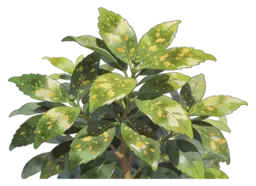
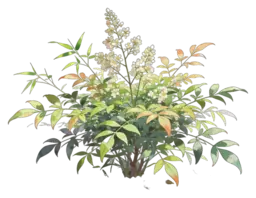
A dense, evergreen shrub of moderate growth that reaches 2 or 3 m tall in the garden, although it stays lower with pruning. The leaves are oval, leathery and glossy, with slightly serrated edges, dark green in the species, and yellow, white or gold-edged in cultivars such as ‘Aureomarginatus’, ‘Aurea’ or the variegated-leaved forms. In spring it bears small clusters of inconspicuous greenish-white flowers, followed by rounded pink capsules that split open to show orange seeds. It takes pruning, pollution, salt and heat well, adapts to almost any soil that drains, and is widely used for hedges, edging, pots and on the coast. Variegated cultivars colour best in full sun or morning sun. It is toxic if eaten, especially the fruits: do not eat it or use it in herbal teas, and do not confuse it with other euonymus species or with box, even though they look alike in a hedge. It is not regulated as invasive in Spain or the EU.
Family and origin: Spindle family (Celastraceae) · native to Japan, Korea and China · More plants from Far East
01In your area
How will it do in your garden?
Year calendar
| Task | J | F | M | A | M | J | J | A | S | O | N | D |
|---|---|---|---|---|---|---|---|---|---|---|---|---|
| Plant / transplantMar–Apr, Sep–Oct | no | no | yes | yes | no | no | no | no | yes | yes | no | no |
| PruningApr–May, Sep | no | no | no | yes | yes | no | no | no | yes | no | no | no |
| CuttingsJul–Sep | no | no | no | no | no | no | yes | yes | yes | no | no | no |
Its life cycle at a glance
Swipe and tap a stage to see its details.
02Planting
Where and how to plant it
Leave 80 cm between plants and 80 cm between rows.
80 cm between plants · 80 cm between rows
Seedlings are planted with the root ball level with the soil.
- Transplanting
- Mar–Apr, Sep–Oct
- Common mistakePlanting too deep smothers the crown of the plant.
03Care
Care through the year
Sun and aspectSun and shade · 6 h of sun · shade in summer
- Too little sun
- Ideal range
- Plenty of sun
East, or south with light shade during the middle of the day
Moderate sun: Copes with full sun, but give it some shade during heatwaves.
Sun or partial shade. Variegated cultivars colour best with morning sun and plenty of light; in poor light the yellow edge fades. In full summer sun in inland Spain it can scorch the most tender leaves.
WateringMoist but never waterlogged · summer: every 5 to 7 days in the first year; after that, every 10 to 15 days
- Summerevery 5 to 7 days in the first year; after that, every 10 to 15 days6 L per plant/week
- Spring / Autumnevery 4-5 days3 L per plant/week
- Winterevery 2-3 weeks0.9 L per plant/week
Moist but never waterlogged: Water before the surface is completely dry. Never puddles. Mulch: straw or dry plant material cuts watering by 30-50 %.
Water regularly in the first year so that it establishes; after that it copes well with moderate drought, although it looks better with some water in summer. In a pot, water when the top layer dries out. It does not tolerate waterlogging.
When to water? Push your finger 3 cm into the soil next to the base of the plant:
- Damp: soil sticks to your finger. Do not water today. The moisture is fine.
- Cool but clean, no mud. Water early tomorrow if it stays like this, or this evening.
- Dry and dusty. Water now, and deeply. This is not where it likes to be.
- TipWater generously in the first year until it is established; after that it looks after itself.
Soil and feedingpH 5.5–8 · Deep soil with good drainage
Deep soil with good drainage.
Medium/high.
This plant prefers a pH between 5.5 and 8.0 (slightly acidic to alkaline).
- Water generously in the first year until it is established.
- A thick mulch all year round, not touching the trunk.
- TipPlant it in any soil that drains, in sun or partial shade, with 80 cm between plants (40 to 50 cm if you want it as a dense hedge).
PruningWhen: Apr–May, Sep
Pruning time for this plant: Apr–May, Sep.
- TipPrune in mid to late spring, once there are no more frosts, and give a hedge a light trim in early autumn; it withstands hard cutting, even into old wood, and regrows.
- TipWear gloves when pruning it and wash your hands.
- TipFormative pruning after flowering keeps the shape compact.
- Common mistakePruning at the wrong time removes the year's flower buds.
Common mistakes and tips
- TipRemove any plain green shoots that appear on variegated cultivars: they are more vigorous and end up taking over.
- TipThe most common problem is powdery mildew, a white dust on the leaves encouraged by damp and poor air circulation, and euonymus scale, which forms white crusts and turns the leaves yellow.
- TipThe figures are a rough guide and depend on the climate.
04Propagation
Make new plants
Variegated cultivars are propagated by semi-ripe cuttings, which is what nurseries do: current-year shoots 10 to 12 cm long, taken in summer or early autumn, with the lower leaves removed and the top leaf trimmed if it is very large, planted in a moist, sandy potting mix. They root in four to eight weeks (a rough guide), better with humidity and gentle warmth. Layering also works. Seed is slow, and cultivars do not come true for variegation.
05Uses and health
What it is used for, and with what care
SAFETY WARNING: the fruits, seeds and, to a lesser extent, the leaves are toxic if eaten; the genus contains cardiac glycosides and other compounds that can cause vomiting, diarrhoea and heart rhythm disturbances, and it is listed as toxic to dogs, cats and horses. The pink fruits with orange seeds attract children’s attention, so do not plant it where they play unsupervised and remove the fruits if necessary. Do not eat it or use it in herbal teas. If there are symptoms after it has been eaten, in Spain call the Toxicology Information Service (91 562 04 20) or 112, and a vet if it is an animal. Wash your hands after pruning it. It is not regulated as invasive in Spain or the EU.
- Properties
- An ornamental shrub: it is not grown for consumption and has no proven health uses.
- Uses
- Not edible. Do not use the leaves, fruits or seeds in cooking or herbal teas; it is grown for hedges, edging and pots.
For guidance only; this is not medical treatment and does not replace advice from a doctor or vet.
06Companions and related plants