Credits and licences
- #1 — vueltaalhuerto illustration
- #2 — vueltaalhuerto illustration
- #3 — vueltaalhuerto illustration
- #4 — vueltaalhuerto illustration
- #5 — vueltaalhuerto illustration
- #6 — vueltaalhuerto illustration
- #7 — vueltaalhuerto illustration
- #8 — vueltaalhuerto illustration
- #9 — vueltaalhuerto illustration
- #10 — Dinesh Valke from Thane, India · CC BY-SA 2.0 see on Wikimedia
- #11 — Sun Jiao (Interaccoonale) · CC BY 4.0 see on Wikimedia
- #12 — Dinesh Valke from Thane, India · CC BY-SA 2.0 see on Wikimedia
- #13 — Forest and Kim Starr · CC BY 3.0 us see on Wikimedia
- #14 — Sun Jiao (Interaccoonale) · CC BY 4.0 see on Wikimedia
- #15 — Forest and Kim Starr · CC BY 3.0 us see on Wikimedia
- #16 — Sun Jiao (Interaccoonale) · CC BY 4.0 see on Wikimedia
- #17 — Ryan Hodnett · CC BY-SA 4.0 see on Wikimedia
Japanese honeysuckle
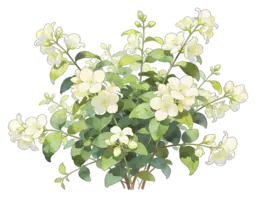
Japanese honeysuckle is planted from March to April and from October to November. It flowers from May to September. Grow it in sun or partial shade, 200 cm apart, with moderate watering. Dates are for a mild temperate climate in the northern hemisphere; the calendar below adjusts them to your zone.
A semi-evergreen climber of very vigorous growth, with white flowers that turn yellow over the days and are most fragrant in the evening. It grows in sun or partial shade and quickly covers fences and walls, but its stems root where they touch the ground and it can escape into nearby hedgerows and copses, so it is wise to keep it in check by pruning after flowering.
Family and origin: Honeysuckle family (Caprifoliaceae) · native to East Asia · More plants from Far East
01In your area
How will it do in your garden?
Year calendar
| Task | J | F | M | A | M | J | J | A | S | O | N | D |
|---|---|---|---|---|---|---|---|---|---|---|---|---|
| Plant / transplantMar–Apr, Oct–Nov | no | no | yes | yes | no | no | no | no | no | yes | yes | no |
| FloweringMay–Sep | no | no | no | no | yes | yes | yes | yes | yes | no | no | no |
Its life cycle at a glance
Swipe and tap a stage to see its details.
02Planting
Where and how to plant it
Leave 2 m between plants; give it a stake from the start.
2 m between plants
Seedlings are planted with the root ball level with the soil.
- Transplanting
- Mar–Apr, Oct–Nov
- Support
- Needs a stake
- Common mistakePlanting it hard up against a wall with no gap reduces air flow.
03Care
Care through the year
Sun and aspectSun and shade · 5 h of sun · shade in summer
- Too little sun
- Ideal range
- Plenty of sun
East, or south with light shade in the middle of the day
Moderate sun: Copes with full sun, but give it some shade during heatwaves.
WateringMoist but never waterlogged · summer: every 2-3 days
- Summerevery 2-3 days8 L per plant/week
- Spring / Autumnevery 4-5 days4 L per plant/week
- Winterevery 2-3 weeks1.2 L per plant/week
Moist but never waterlogged: Water before the surface is completely dry. Never puddles. Mulch: straw or dry plant material cuts watering by 30-50 %.
When to water? Push your finger 3 cm into the soil next to the base of the plant:
- Damp: soil sticks to your finger. Do not water today. The moisture is fine.
- Cool but clean, no mud. Water early tomorrow if it stays like this, or this evening.
- Dry and dusty. Water now, and deeply. This is not where it likes to be.
Soil and feedingDeep soil with good drainage
Deep soil with good drainage.
Medium/high.
This plant prefers a pH between 6.0 and 7.5 (slightly acidic to slightly alkaline).
- Guide the first stems onto the support; after that it climbs on its own.
- A mulch at the base keeps the roots moist.
- Planting it hard against a wall reduces air flow and encourages powdery mildew.
- Pruning at the wrong time removes its flower buds.
- TipIt prefers partial shade or morning sun and moist soil; in full sun, and in dry spots, it needs frequent watering in summer.
- TipOnce the main flowering is over, thin the centre, cut back stems that stray from their support and pull out shoots that root into the soil.
Pruning
- TipIt is one of the climbers that most readily naturalises, especially in mild, damp climates: do not plant it next to natural hedgerows or riverbanks, and do not dump the prunings in the countryside.
- TipPrune after flowering to keep its vigour in check.
Common mistakes and tips
- TipThe black berries are not edible.
- TipGuide the first stems onto the support; after that it climbs on its own.
- Common mistakeLeaving it untrained turns it into a tangle that is hard to manage.
04Uses and health
What it is used for, and with what care
The berries contain saponins: digestive upset if eaten. If swallowed, see the vet.
- Properties
- A climber with fragrant, nectar-rich flowers; ornamental.
For guidance only; this is not medical treatment and does not replace advice from a doctor or vet.
05Companions and related plants