
Credits and licences
- #1 — vueltaalhuerto illustration
- #2 — vueltaalhuerto illustration
- #3 — vueltaalhuerto illustration
- #4 — vueltaalhuerto illustration
- #5 — vueltaalhuerto illustration
- #6 — vueltaalhuerto illustration
- #7 — vueltaalhuerto illustration
- #8 — vueltaalhuerto illustration
- #9 — vueltaalhuerto illustration
Hoya crassipetiolata (wax plant)
and 1 more names
wax flowerHoya crassipetiolata (wax plant) is planted from April to June. Grow it in sun or partial shade, 40 cm apart, with little watering. Dates are for a mild temperate climate in the northern hemisphere; the calendar below adjusts them to your zone.
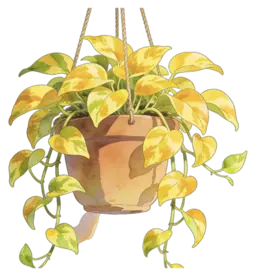
A climbing or trailing Hoya with long, flexible stems and elongated, slightly fleshy, glossy leaves, broad in the middle and narrow at the ends, pale green with a darker midrib. Many plants have silver splashes on the leaf blade, and in strong light the leaves turn purple or reddish. When mature, after a few years, it produces umbels of small, star-shaped, waxy-looking flowers, white or cream with a pink centre and a sweet scent. It is very well suited to a hanging pot or to training up a support. A note about the name: in the Spanish trade it is often spelt ‘cassipetiolata’; the correct botanical name is crassipetiolata. Like other hoyas, it releases a milky latex when the stems are cut, which can irritate the skin.
Family and origin: Dogbane family (Apocynaceae) · native to Vietnam, in tropical forests where it climbs over trees and rocks · More plants from Southeast Asia
01In your area
How will it do in your home?
Year calendar
| Task | J | F | M | A | M | J | J | A | S | O | N | D |
|---|---|---|---|---|---|---|---|---|---|---|---|---|
| Plant / transplantApr–Jun | no | no | no | yes | yes | yes | no | no | no | no | no | no |
| CuttingsApr–Aug | no | no | no | yes | yes | yes | yes | yes | no | no | no | no |
Its life cycle at a glance
Swipe and tap a stage to see its details.
02Planting
Planting and transplanting
- TipIt is happy in a slightly tight pot and should only be repotted when the roots start to come out, in spring.
- TipGive it a support or a hanging pot so the stems can develop well.
03Care
Care through the year
Sun and aspectSun and shade · 4 h of sun · shade in summer
- Too little sun
- Ideal range
- Plenty of sun
East-facing, or south-facing with light shade in the middle of the day
Gentle sun: Morning or afternoon sun. Midday summer sun stresses and scorches it.
Very bright light without strong direct sun: next to an east- or west-facing window, or set back a little from a south-facing one. With more light the leaves colour up more and it flowers better; in poor light the stems stretch and it does not flower. If you move a newly bought plant, accustom it to the sun gradually so that it does not scorch. It should not drop below about 10 °C.
- TipTurn the pot every week so it grows evenly towards the light.
WateringLet it dry out between waterings · summer: every 7 to 12 days
- Summerevery 7 to 12 days0.3 L per plant/week
- Spring / Autumnevery 10-14 days0.1 L per plant/week
- Winterevery 3 to 4 weeks0 L per plant/week
Let it dry out between waterings: A Mediterranean favourite: better thirsty than overwatered.
Water thoroughly and let the potting mix dry out almost completely before watering again; the slightly fleshy leaves store water and cope well with the odd lapse. Overwatering, with the roots constantly wet, is the most common reason it goes wrong: the leaves yellow and drop. In winter, water much less.
When to water? Push your finger 3 cm into the soil next to the base of the plant:
- Damp: soil sticks to your finger. Do not water yet. It has more than enough; wait for it to dry out more.
- Cool but clean, no mud. Wait another 1-2 days before watering.
- Dry and dusty. Water now, but moderately. Do not overdo it: it prefers thirst to excess.
- TipThe watering, temperatures and timings are only a guide.
- TipAdjust watering to the light and the season: in winter almost all of them need much less water.
- Common mistakeOverwatering is the number one killer: let it dry out as the species requires.
Potting mix and feedingpH 5.5–7 · Multi-purpose compost lightened with perlite
Multi-purpose compost lightened with perlite.
70 % multi-purpose compost · 20 % perlite · 10 % coir.
High: always a pot with a drainage hole and a shallow saucer.
This plant prefers a pH between 5.5 and 7.0 (slightly acidic to neutral).
- Repot every 2-3 years into a pot a finger's width wider, not much more.
- A handful of worm castings a year keeps the potting mix alive.
- Reusing old potting mix without refreshing it compacts and rots the roots.
- No drainage in the pot = waterlogged roots = dead plant.
- TipPlant it in a pot with drainage holes and a very airy potting mix: for example, half houseplant potting mix and half pine bark and perlite.
- TipFeed once a month, from spring to summer, with a diluted fertiliser for flowering plants.
- Common mistakePots without drainage waterlog the roots and rot the plant.
Common mistakes and tips
- TipKeep an eye out for mealybugs, which hide in the leaf axils.
04Propagation
Make new plants
It is propagated from stem cuttings. Cut a section with two or three nodes and a couple of leaves, just below a node, and root it in water or in moist perlite or coir, in spring or summer, at 22 to 26 °C and in plenty of light without direct sun. It takes three to six weeks to root. Do not cut off the flower spurs when they dry, because the plant flowers again from the same points.
05Uses and health
What it is used for, and with what care
Hoyas are considered of low toxicity to dogs and cats, and we have no specific data for this species: to be on the safe side, do not let pets chew it, because they may have mild digestive upset. Like other members of the dogbane family (Apocynaceae), it releases a milky latex when the stems are cut, which can irritate the skin and eyes: wash your hands after taking cuttings. It must not be eaten. It is not regulated as an invasive species in Spain or in the EU.
- Properties
- A low-maintenance ornamental houseplant. It has no home medicinal uses.
- Uses
- It is not edible. It has no culinary uses and is not used for infusions.
For guidance only; this is not medical treatment and does not replace advice from a doctor or vet.
06Companions and related plants
What to plant it with
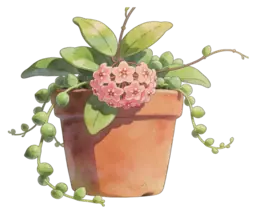
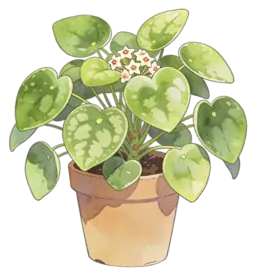
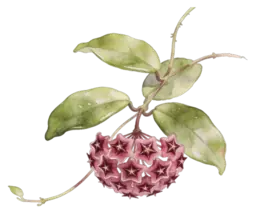
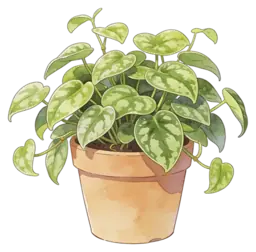
Compare with similar varieties
| Variety | Sowing | Harvest | Days | Spacing | Difficulty |
|---|---|---|---|---|---|
| Hoya carnosa (wax plant) | — | — | — | 60 cm | Easy |
| Hoya crassipetiolata (wax plant) | Apr–Jun | — | — | 40 cm | Easy |
| Hoya kerrii (sweetheart plant) | — | — | — | 25 cm | Easy |
| Hoya pubicalyx | — | — | — | 50 cm | Easy |
| Hoya villosa (velvet wax plant) | Apr–Jun | — | — | 40 cm | Moderate |