
Credits and licences
- #1 — vueltaalhuerto illustration
- #2 — vueltaalhuerto illustration
- #3 — vueltaalhuerto illustration
- #4 — vueltaalhuerto illustration
- #5 — vueltaalhuerto illustration
- #6 — vueltaalhuerto illustration
- #7 — vueltaalhuerto illustration
- #8 — vueltaalhuerto illustration
- #9 — vueltaalhuerto illustration
Ficus maclellandii (ficus 'Alii', ficus 'Amstel King')
and 4 more names
banana-leaf fig, long-leaf fig, sabre fig, ficusFicus maclellandii (ficus 'Alii', ficus 'Amstel King') is planted from March to June. Grow it in sun or partial shade, 80 cm apart, with moderate watering. Dates are for a mild temperate climate in the northern hemisphere; the calendar below adjusts them to your zone.
A slender indoor tree with a thin, smooth, greyish-brown trunk and slim branches bearing long, narrow, lance-shaped leaves that are glossy and dark green with a pale midrib. The cultivar ‘Alii’ has the narrowest leaves, 15 to 30 cm long, which hang elegantly; ‘Amstel King’ has broader leaves and its new shoots emerge with coppery or pinkish tones. Indoors it grows to 1.5 to 3 m and grows quickly in good conditions. It is more tolerant than the fiddle-leaf fig: it copes with medium light and being moved with less leaf drop. It is often sold as Ficus binnendijkii; in practice nurseries mix up the two names, and the botanical identification of these cultivars has been confused. Indoors it almost never produces figs. It is not edible. LEGAL AND SAFETY WARNING: like all ficus, it releases a white latex when its leaves are cut or broken, which can irritate the skin and mouth, and it is considered toxic or irritant to dogs, cats and children if they chew it (we have not found a specific data for this species, so we apply the caution that goes for the genus). What to do: wear gloves when pruning it or taking cuttings, wash off any splashes with soap and water, keep it out of reach of children and pets and, if any part is swallowed, consult a doctor or a vet.
Family and origin: Mulberry family (Moraceae) · native to Tropical South and South-East Asia, in humid forests · More plants from Southeast Asia
01In your area
How will it do in your home?
Year calendar
| Task | J | F | M | A | M | J | J | A | S | O | N | D |
|---|---|---|---|---|---|---|---|---|---|---|---|---|
| Plant / transplantMar–Jun | no | no | yes | yes | yes | yes | no | no | no | no | no | no |
| PruningMar–May | no | no | yes | yes | yes | no | no | no | no | no | no | no |
| CuttingsApr–Jul | no | no | no | yes | yes | yes | yes | no | no | no | no | no |
Its life cycle at a glance
Swipe and tap a stage to see its details.
02Planting
Planting and transplanting
- TipWipe the dust off the leaves with a damp cloth and turn the pot now and then.
03Care
Care through the year
Sun and aspectSun and shade · 4 h of sun · shade in summer
- Too little sun
- Ideal range
- Plenty of sun
East, or south with light shade during the middle of the day
Gentle sun: Morning or afternoon sun. Midday summer sun stresses and scorches it.
Bright light without strong direct sun; it copes with medium light, although it grows less. A couple of hours of gentle morning sun suit it well. It does not withstand temperatures below about 10 to 15 °C, or cold draughts.
- TipTurn the pot every week so it grows evenly towards the light.
WateringMoist but never waterlogged · summer: every 7 to 10 days
- Summerevery 7 to 10 days0.6 L per plant/week
- Spring / Autumnevery 4-5 days0.3 L per plant/week
- Winterevery 12 to 15 days0.1 L per plant/week
Moist but never waterlogged: Water before the surface is completely dry. Never puddles.
Water thoroughly when the mix is dry to a depth of about 3 cm and always empty the saucer. With very irregular watering it drops leaves. In winter water less.
When to water? Push your finger 3 cm into the soil next to the base of the plant:
- Damp: soil sticks to your finger. Do not water today. The moisture is fine.
- Cool but clean, no mud. Water early tomorrow if it stays like this, or this evening.
- Dry and dusty. Water now, and deeply. This is not where it likes to be.
- TipYellow leaves that drop usually point to overwatering or a sudden change of position.
- TipWatering, temperatures and timings are a rough guide.
- TipAdjust watering to the light and the season: in winter almost all of them need much less water.
- Common mistakeOverwatering is the number one killer: let it dry out as the species requires.
Potting mix and feedingpH 6–7.5 · Multi-purpose compost lightened with perlite
Multi-purpose compost lightened with perlite.
70 % multi-purpose compost · 20 % perlite · 10 % coir.
High: always a pot with a drainage hole and a shallow saucer.
This plant prefers a pH between 6.0 and 7.5 (slightly acidic to slightly alkaline).
- Repot every 2-3 years into a pot a finger's width wider, not much more.
- A handful of worm castings a year keeps the potting mix alive.
- Reusing old potting mix without refreshing it compacts and rots the roots.
- No drainage in the pot = waterlogged roots = dead plant.
- TipPlant it in a pot with drainage holes and multipurpose potting mix with perlite or bark.
- TipFeed every month from spring to summer with a foliage-plant fertiliser at half strength.
- Common mistakePots without drainage waterlog the roots and rot the plant.
PruningWhen: Mar–May
Pruning time for this plant: Mar–May.
- TipPinch out the tips in spring so that it branches and fills out.
Common mistakes and tips
- TipRepot every two or three years, in spring.
04Propagation
Make new plants
It is propagated from semi-ripe stem cuttings, about 10 to 15 cm long with two or three leaves, taken in spring or summer; latex flows from the cut, so wipe it off or let it dry before planting. They root in water or in moist mix with warmth. The varieties ‘Alii’ and ‘Amstel King’ are clones and only stay true when grown from cuttings.
Seeds: how to germinate them~30 days
05Uses and health
What it is used for, and with what care
WARNING: like other ficus, it releases a white latex that can irritate the skin and mouth, and it is considered toxic or irritant to dogs, cats and children if they chew it; we have not found a specific data for this species and apply the caution that goes for the genus. Wear gloves when pruning it, wash off any splashes with soap and water, keep it out of reach of children and pets, and consult a doctor or a vet if any part is swallowed.
- Properties
- An elegant ornamental houseplant. It has no home medicinal uses.
- Uses
- It is not edible. It has no culinary uses and is not used in infusions.
For guidance only; this is not medical treatment and does not replace advice from a doctor or vet.
06Companions and related plants
What to plant it with
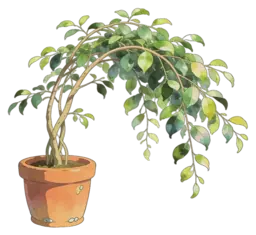
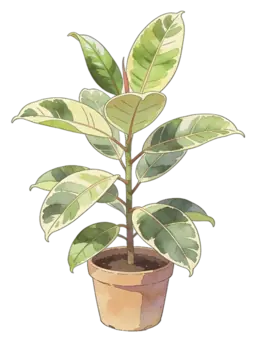
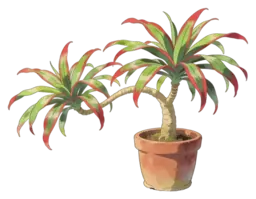
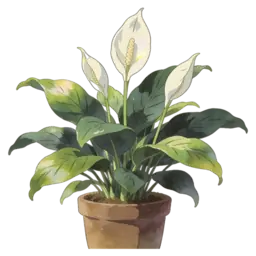
Compare with similar varieties
| Variety | Sowing | Harvest | Days | Spacing | Difficulty |
|---|---|---|---|---|---|
| Ficus benghalensis 'Audrey' (ficus Audrey, banyan) | Mar–Jun | — | — | 100 cm | Moderate |
| Weeping fig (Ficus benjamina) | — | — | — | 100 cm | Moderate |
| Rubber plant (Ficus elastica) | — | — | — | 80 cm | Easy |
| Ficus ginseng | — | — | — | 30 cm | Easy |
| Fiddle-leaf fig (Ficus lyrata) | — | — | — | 100 cm | Moderate |
| Ficus maclellandii (ficus 'Alii', ficus 'Amstel King') | Mar–Jun | — | — | 80 cm | Easy |
| Creeping fig (Ficus pumila) | — | — | — | 30 cm | Easy |