Credits and licences
- #1 — vueltaalhuerto illustration
- #2 — vueltaalhuerto illustration
- #3 — vueltaalhuerto illustration
- #4 — vueltaalhuerto illustration
- #5 — vueltaalhuerto illustration
Pellaea rotundifolia (button fern)
and 1 more names
pellaeaPellaea rotundifolia (button fern) is planted from March to June. Grow it in sun or partial shade, 30 cm apart, with moderate watering. Dates are for a mild temperate climate in the northern hemisphere; the calendar below adjusts them to your zone.
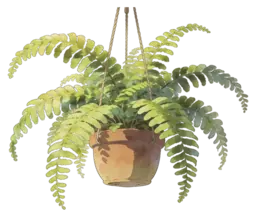
A small, elegant fern with arching fronds 20 to 40 cm long that hang over the rim of the pot, made up of a thin, dark midrib bearing, on both sides, rounded, leathery, glossy dark green leaflets 1 to 2 cm across, like little buttons. On the underside, beneath the edge of the leaflets, it carries the sori containing the spores, in a brown line. It is more tolerant of dryness than other ferns, although it appreciates fairly humid air. It is grown in pots, hanging baskets and open terrariums. Outdoors it only survives very light frosts. It is not edible.
Family and origin: Brake fern family (Pteridaceae) · native to New Zealand, where it grows in the forest understorey and on rocky slopes · More plants from Oceania
01In your area
How will it do in your home?
Year calendar
| Task | J | F | M | A | M | J | J | A | S | O | N | D |
|---|---|---|---|---|---|---|---|---|---|---|---|---|
| Plant / transplantMar–Jun | no | no | yes | yes | yes | yes | no | no | no | no | no | no |
| PruningMar–Apr | no | no | yes | yes | no | no | no | no | no | no | no | no |
| Divide the clumpMar–May | no | no | yes | yes | yes | no | no | no | no | no | no | no |
Its life cycle at a glance
Swipe and tap a stage to see its details.
02Planting
Planting and transplanting
- TipThere is no reliable data on its toxicity: it is not eaten, and it is best kept away from pets that chew plants.
03Care
Care through the year
Sun and aspectSun and shade · 5 h of sun · shade in summer
- Too little sun
- Ideal range
- Plenty of sun
East, or south with light shade during the middle of the day
Gentle sun: Morning or afternoon sun. Midday summer sun stresses and scorches it.
Bright, filtered light, without direct sun in the hottest hours, which dries out the leaflets. It tolerates some winter sun. In low light it grows slowly and becomes sparse; it appreciates temperatures of 15 to 25 °C and should not drop below about 3 °C.
- TipIf the leaflets dry out and curl, it is usually because of very dry air or direct sun.
- TipHumidity and shade: ideal indoors in bright spots without direct sun.
- Common mistakeDry air and direct sun scorch the fronds.
WateringMoist but never waterlogged · summer: every 2-3 days
- Summerevery 2-3 days1.2 L per plant/week
- Spring / Autumnevery 4-5 days0.6 L per plant/week
- Winterevery 2-3 weeks0.2 L per plant/week
Moist but never waterlogged: Water before the surface is completely dry. Never puddles. Mulch: straw or dry plant material cuts watering by 30-50 %.
Keep the potting mix slightly moist, without waterlogging, and let the top layer dry a little between waterings, because the roots rot with too much water. Use an airy, free-draining mix with fern or multipurpose compost, fine bark and perlite. It copes with dry air better than other ferns, but when the heating is on it is a good idea to group it with other plants or stand it on a tray of damp pebbles.
When to water? Push your finger 2 cm into the soil next to the base of the plant:
- Damp: soil sticks to your finger. Do not water today. The moisture is fine.
- Cool but clean, no mud. Water early tomorrow if it stays like this, or this evening.
- Dry and dusty. Water now, and deeply. This is not where it likes to be.
Potting mix and feedingpH 5.5–7 · Acidic, spongy, moist mix
Acidic, spongy, moist mix.
50 % multi-purpose compost · 30 % coir · 20 % perlite.
Medium: constantly moist but airy.
This plant prefers a pH between 5.5 and 7.0 (slightly acidic to neutral).
- Mist the foliage several times a week in dry climates.
- A little worm castings every spring is enough.
- TipPut the fern in a pot with good drainage and do not leave it in a saucer of water.
- TipFeed sparingly, with liquid fertiliser diluted to half strength once a month in the growing season, and cut old or dry fronds off at the base at the end of winter so that it regrows vigorously.
- TipKeep the potting mix always moist, never waterlogged.
PruningWhen: Mar–Apr
Pruning time for this plant: Mar–Apr.
Common mistakes and tips
- TipWatch out for scale insects and fungus gnats.
- TipTemperatures, timings and dates are only a guide.
- Common mistakeLetting the root ball dry out completely is usually fatal.
04Propagation
Make new plants
It is propagated mainly by dividing the clump in spring: take the plant out of its pot, separate the rhizome into two or three pieces with roots and fronds, and plant each one in a pot with an airy potting mix. It can also be propagated by spores, collected from the sori on the underside of mature fronds and sown on the surface of a fine, moist, sterilised mix at about 13 to 18 °C, with diffused light and a clear lid; it is a slow process taking months, and the spores take weeks to germinate.
Seeds: how to germinate them~30 days
05Uses and health
What it is used for, and with what care
There is no reliable data on its toxicity, so it should not be eaten. Although it is often sold as a pet-safe fern, there is no reliable source confirming this for this species: if a dog or cat bites the leaves, take them away and consult the vet if vomiting or lethargy appear.
- Properties
- It is an ornamental houseplant with a fine, trailing habit, and no medicinal properties are attributed to it.
- Uses
- It is not edible and is not used in cooking.
For guidance only; this is not medical treatment and does not replace advice from a doctor or vet.
06Companions and related plants