
Credits and licences
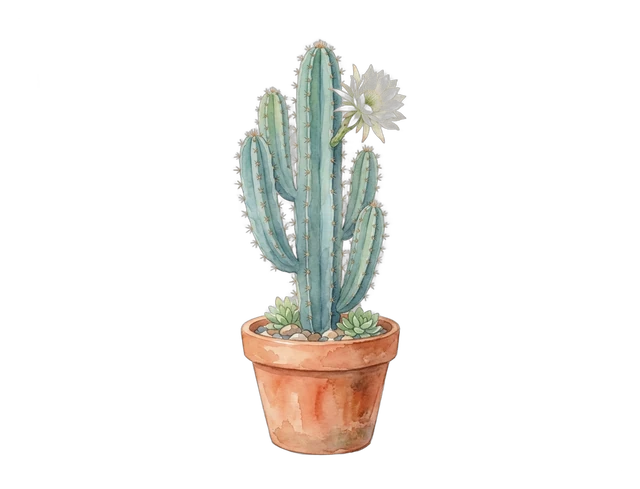
- #1 — vueltaalhuerto illustration
- #2 — vueltaalhuerto illustration
- #3 — vueltaalhuerto illustration
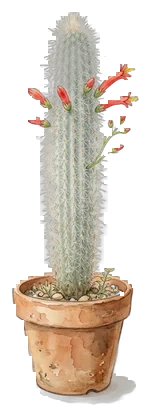
- #4 — vueltaalhuerto illustration
- #5 — vueltaalhuerto illustration
- #6 — vueltaalhuerto illustration
- #7 — vueltaalhuerto illustration
- #8 — vueltaalhuerto illustration
- #9 — vueltaalhuerto illustration
- #10 — vueltaalhuerto illustration
Argentine saguaro (Echinopsis terscheckii, Trichocereus terscheckii)
and 4 more names
Echinopsis terscheckii, Leucostele terscheckii, Trichocereus werdermannianus, trichocereusArgentine saguaro (Echinopsis terscheckii, Trichocereus terscheckii) is sown in seed trays from March to May, and planted out from April to June. Grow it in full sun, 150 cm apart, with little watering. Dates are for a mild temperate climate in the northern hemisphere; the calendar below adjusts them to your zone.
What else to sow in March, April and May
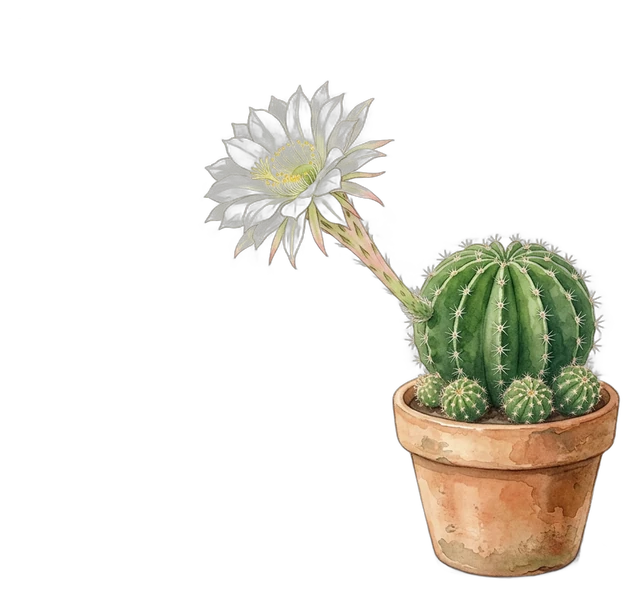
A giant columnar cactus that, over the years, branches from a certain height like a candelabra. In its homeland it reaches 10 metres or more; in cultivation it is very slow, and in Mediterranean gardens it takes decades to exceed 3 to 5 metres. It has thick stems, 15 to 30 cm across, with 8 to 14 ribs and areoles bearing strong yellowish or brown spines that can exceed 10 cm. In spring and summer it produces very large white flowers, up to 20 cm, which open at night and last one day, followed by round, greenish fruits about 4 cm across, with white flesh and black seeds. It wants full sun, heat, very free-draining soil and almost no water in winter. It is a plant for a large garden or a sunny patio, and when young it can be grown in a pot. Kew (POWO) now accepts it as Leucostele terscheckii, although it is sold as Trichocereus or Echinopsis. LEGAL AND SAFETY NOTICE: it belongs to the Trichocereus/Echinopsis group, which includes species containing mescaline; the literature describes alkaloids, including mescaline, in this species too. This profile is ornamental only: do not eat it or make infusions or extracts from it. Mescaline is a controlled substance, and extracting or preparing it for consumption is illegal and dangerous. Like all cacti, it is listed in CITES Appendix II: always buy nursery-grown plants with an invoice and do not collect specimens from the wild. It does not appear in the Spanish Catalogue of Invasive Alien Species or on the EU list.
Family and origin: Cactus family (Cactaceae) · native to Northern Argentina and southern Bolivia, in dry scrub and on mountain slopes (the 'cardón' of those regions) · More plants from South America
01In your area
How will it do in your garden?
Year calendar
| Task | J | F | M | A | M | J | J | A | S | O | N | D |
|---|---|---|---|---|---|---|---|---|---|---|---|---|
| Seed trayMar–May | no | no | yes | yes | yes | no | no | no | no | no | no | no |
| Plant / transplantApr–Jun | no | no | no | yes | yes | yes | no | no | no | no | no | no |
| CuttingsMay–Jul | no | no | no | no | yes | yes | yes | no | no | no | no | no |
Its life cycle at a glance
Swipe and tap a stage to see its details.
02Planting
Planting and transplanting
- TipChoose its permanent position from the start: it is a very large, slow-growing plant and does not take well to being moved.
03Care
Care through the year
Sun and aspectFull sun · 8 h of sun · South or south-west, with nothing casting shade at midday
- Too little sun
- Ideal range
- Plenty of sun
South or south-west, with nothing casting shade at midday
Strong sun: Loves full midday sun and high temperatures.
Full sun all year round, and heat. It withstands light, dry frosts, down to about -5 °C in mature specimens and somewhat lower according to some sources, but young plants and frosts combined with damp damage it: protect it with a wrap or horticultural fleece if the temperature drops below -3 °C. In high summer, a young specimen just moved into the sun can scorch, so acclimatise it gradually.
WateringLet it dry out between waterings · summer: every 5-7 days
- Summerevery 5-7 days0.2 L per plant/week
- Spring / Autumnevery 10-14 days0.1 L per plant/week
- Winteronly in extreme drought (once a month)0 L per plant/week
Let it dry out between waterings: A Mediterranean favourite: better thirsty than overwatered.
Water moderately from spring to autumn and let the potting mix dry out completely between waterings; in winter, none at all. It is very prone to rotting with too much water, especially in the cold, so plant it in very free-draining soil, on a mound or in a deep pot with drainage holes.
When to water? Push your finger 5 cm into the soil next to the base of the plant:
- Damp: soil sticks to your finger. Do not water yet. It has more than enough; wait for it to dry out more.
- Cool but clean, no mud. Wait another 1-2 days before watering.
- Dry and dusty. Water now, but moderately. Do not overdo it: it prefers thirst to excess.
- TipA dry winter rest: with hardly any water they flower better in spring.
- Common mistakeWatering in cold winter weather is the fast track to rot.
Soil and feedingpH 6–7.5 · Mineral mix with almost no organic matter
Mineral mix with almost no organic matter.
20 % multi-purpose compost · 40 % silica sand · 40 % pumice or lava rock.
Extreme.
This plant prefers a pH between 6.0 and 7.5 (slightly acidic to slightly alkaline).
- Rich, compact mix: certain rot within a few months.
- Watering in cold winter weather: the first step towards rot.
- TipPlant it in very free-draining sandy or stony soil, away from paths, because the spines are long and strong, and leave plenty of space around it.
- TipWhen young, grow it in a deep pot with a very mineral potting mix.
- TipPlenty of light and a free-draining mineral mix.
- Common mistakeA mix that holds water drowns the roots.
Pruning
- TipTo prune or move a specimen, wear thick gloves and goggles.
Common mistakes and tips
- TipWatch out for mealybug and rot at the base.
- TipThe heights, timings and temperatures are only a guide.
04Propagation
Make new plants
It is propagated by seed and by stem cuttings. For a cutting, wearing thick gloves and using a clean knife, cut a piece 20 to 30 cm long in spring or summer, leave it to dry somewhere dry and shaded for two to four weeks until the wound has callused, and plant it in a mineral potting mix, without watering until you see new growth. By seed: the seeds are tiny and black, found in the white flesh of the fruit, and are sown on the surface of a fine, moist mineral mix, in the light and at 20 to 28 °C; they germinate in a few weeks and grow very slowly.
Seeds: how to germinate them~21 days
05Uses and health
What it is used for, and with what care
LEGAL AND SAFETY NOTICE: the literature describes alkaloids, including mescaline, in this species of the Trichocereus/Echinopsis group, although there are no reliable data on the amounts or on its toxicity to people and pets. As a precaution, do not eat it or make it into an infusion or any preparation, and do not use it to obtain substances: mescaline is a controlled substance, and extracting or preparing it for consumption is illegal and dangerous. If someone has swallowed part of the plant, in Spain call the Toxicology Information Service (91 562 04 20) or 112. The clearest risk is the long, strong spines and the fine bristles on the areoles, which lodge in the skin and in the mouths of pets and children: keep it out of their reach and handle it with thick gloves. Like all cacti, it is listed in CITES Appendix II: always buy nursery-grown specimens.
- Properties
- An imposing ornamental cactus with white night-blooming flowers visited by nocturnal pollinators. It has no home medicinal uses.
- Uses
- It is not grown for eating or for any preparation. Do not use any part of the plant in cooking, infusions or remedies.
For guidance only; this is not medical treatment and does not replace advice from a doctor or vet.
06Companions and related plants
What to plant it with
Compare with similar varieties
| Variety | Sowing | Harvest | Days | Spacing | Difficulty |
|---|---|---|---|---|---|
| Red torch cactus (Echinopsis huascha, Trichocereus huascha) | Mar–May | — | — | 30 cm | Easy |
| Argentine saguaro (Echinopsis terscheckii, Trichocereus terscheckii) | Mar–May | — | — | 150 cm | Easy |