
Sclerotinia (white mould)
Also known as: sclerotinia, white mould, white mold, Sclerotinia sclerotiorum, sclerotinia rot, cottony rot
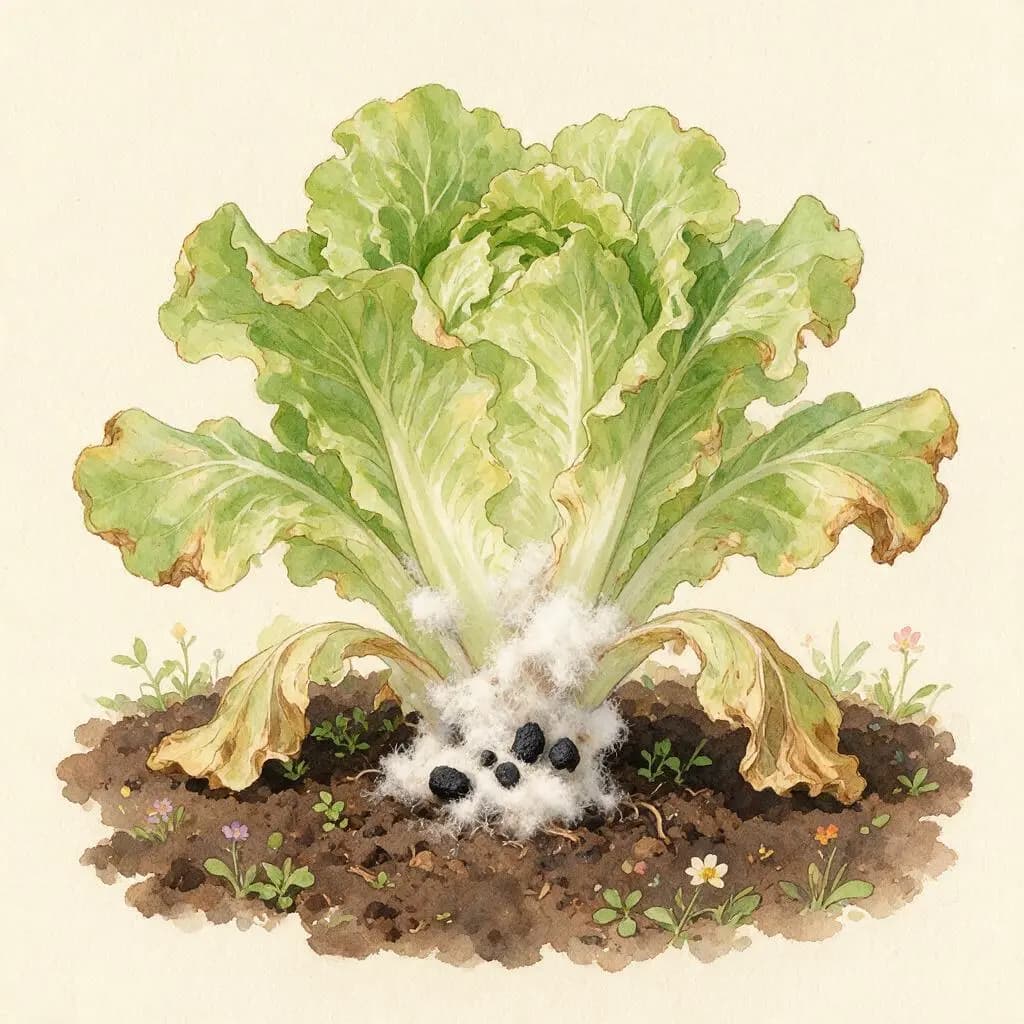
A fungus that produces a very dense, cottony white mould with black ‘marbles’ (sclerotia) inside it. It rots the collar and the stems. The first step is to remove affected plants whole, without disturbing the soil.

How to recognise it (symptoms)
- Cottony white mould at the base of the stem, near the soil
- Black ‘marbles’, the size of a pea or smaller, inside the mould
- A plant that collapses onto the bed as if scorched
- Fruit that drops off soft, covered in the same mould
Crops affected
 LettuceCos lettuce, with a long, crisp heart.
 BeansA dwarf green bean that does not need a support and is easy to grow in a bed.
 CauliflowerA classic cauliflower with a compact white curd.
 CarrotThe Nantes carrot, cylindrical and sweet.
 AubergineAn aubergine with glossy black fruit, for warm climates.
 SunflowerA fast-growing annual with enormous flowers that turn to follow the sun in their early stages.
 TomatoMarmande tomato, flattened and ribbed, a good size for salads.
What favours it
- Mild temperatures (15-22 °C) and high humidity, with the leaves wet for long periods
- Very dense planting, which reduces ventilation
- Plant debris left lying, where the fungus overwinters
- Short rotations, which do not let the fungus run out of hosts
Prevention
- A 4-5 year rotation without susceptible crops
- Wide spacing so that the leaves dry sooner
- Drip irrigation, not sprinklers
- Remove affected plants without turning the soil: if you dig it over, you bury sclerotia that reappear the following year
Organic treatment
Always start here: these remedies are kind to the garden, the soil and pollinators.
- First: remove affected plants whole, taking care not to spread the mould, and put them in the rubbish bin (not on the compost heap)
- Trichoderma harzianum at transplanting and in the irrigation water
- Coniothyrium minitans, a specific antagonistic fungus, applied to the soil (a registered product)
- Summer solarisation in warm areas
Don't confuse it with…
With botrytis, which forms a greyish mould rather than a dense white one, and does not produce black sclerotia.
In-depth guide — sclerotinia (white mould)
It causes a soft rot and black sclerotia (like coffee beans) on stems and leaves. It is not botrytis.
Telling it apart from botrytis
Botrytis forms a grey felt. Sclerotinia forms a cottony white mould with hard black sclerotia.
- Check the collars of the plants and the debris on the soil after leafy crops or beans.
- Cool, damp conditions favour an attack.
Management
Reduce the humidity and the sclerotia left in the soil.
- Remove diseased plants whole, not just the odd leaf, so that you also take away the fungus in the collar and roots.
- Avoid high planting densities and keep the paths airy.
- Solarise the bed in summer if the problem keeps coming back.
Use plant protection products responsibly, even organic ones. Always read and follow the label, the doses and the harvest interval, and never treat plants in flower or while bees are flying, in order to protect pollinators. If in doubt, put prevention and organic methods first.

In the plant catalogue you'll see what to plant, how and when: a well-tended plant resists pests much better.