
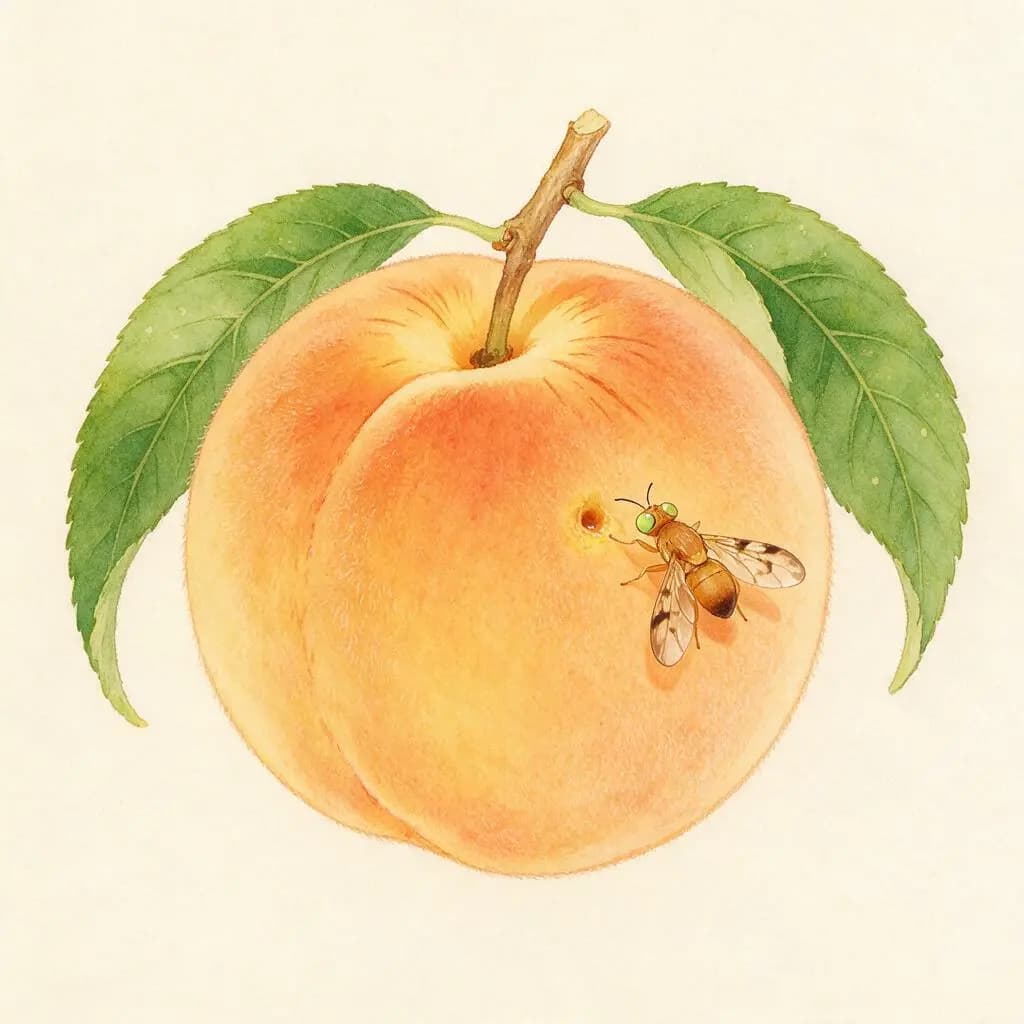
Mediterranean fruit fly
Also known as: Mediterranean fruit fly, medfly, fruit fly, Ceratitis capitata
A yellowish fly with mottled wings that stings ripe fruit to lay its eggs. Its white larvae rot the fruit from the inside. It attacks almost any sweet fruit. The first step is to gather up fallen fruit and hang fly traps.
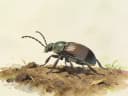
Its best ally
Ground beetle
A natural predator that helps to keep this pest under control. Tap to see how to attract it.

How to recognise it at every stage
Shares your gardenIt likes your ripe fruit: peaches, figs, citrus and persimmons.
Life cycle: Complete metamorphosis: egg under the fruit skin (2-4 days), larva inside the fruit (1-2 weeks), pupa in the soil (1-2 weeks) and adult. In hot weather, 3-4 weeks per generation: six to eight generations a year in warm areas.
Tap a stage to see it full size. The photos are AI reference images checked against real photographs; stages without a reliable photo are shown as text only.
Life-stage calendar
| Jan | Feb | Mar | Apr | May | Jun | Jul | Aug | Sep | Oct | Nov | Dec | |
|---|---|---|---|---|---|---|---|---|---|---|---|---|
| Eggs (sting) | ||||||||||||
| Larva | ||||||||||||
| Pupa | ||||||||||||
| Adult |
Approximate months for mainland Spain; in cold areas they start later and in warm areas they last longer. Garden creatures this month
No reliable photo yet
1Keep an eye on itEggs (sting)
· 1 mmNot visible: just a tiny dot on the fruit skin, sometimes with a spot or halo around it.
- Where to find it
- Under the skin of fruit that is starting to ripen.
- When: Jun–Nov
- What to do
- Check the fruit when it changes colour; separate stung fruits early.
- 2Protect your plants
Larva
· 6-8 mmA creamy-white maggot, legless, pointed at the front; when it leaves the fruit, it flips itself into the air.
- Where to find it
- Inside the fruit, which softens and rots from within.
- When: Jun–Nov
- What to do
- Collect stung and fallen fruit and leave it for several days in a closed bag in the sun before composting it.
- 3Keep an eye on it
Pupa
· 4-5 mmA small smooth reddish-brown barrel.
- Where to find it
- In the top centimetres of soil under the tree.
- When: Jun–Dec
- What to do
- Hens scratching under the fruit trees find many of them.
- 4Protect your plants
Adult
· 4-5 mmA small fly with a shiny black thorax with silver markings, wings with yellow-brown bands and iridescent green eyes.
- Where to find it
- On ripening fruit and leaves of sunny fruit trees.
- When: May–Nov
- What to do
- Fly traps with bait once the fruit starts to ripen, nets over small trees and harvesting without delay.
- Often confused with
- Vinegar fly (Drosophila). Smaller, brown, red-eyed and without wing bands; it goes for fruit that is already rotten or split, not sound fruit.
- Olive or cherry fruit fly. Similar but specialised: only on olives or cherries. See profile
Often confused with
- Vinegar fly (Drosophila). Smaller, brown, red-eyed and without wing bands; it goes for fruit that is already rotten or split, not sound fruit.
- Olive or cherry fruit fly. Similar but specialised: only on olives or cherries. See profile
How to recognise it (symptoms)
- Sting marks with a dark halo on the skin of the fruit
- Fruit that softens and rots from the inside before it is fully ripe
- White larvae that jump when you open the fruit
- Fallen fruit on the ground with small tunnels
Crops affected
 FigA fig with green-skinned fruit and very honeyed red flesh, excellent for drying.
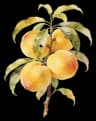 PeachA large, late yellow peach, very sweet and firm, which ripens in a protective bag on the tree.
 PlumA large, yellow, very juicy and early Japanese plum with a thin skin.
 PearThe 'Ercolini' pear is early, small and very aromatic, ideal for a Mediterranean climate.
 OrangeAn early, seedless, very sweet navel orange, picked from November to January; it is one of the most widely…
 PersimmonThe star Valencian cultivar (protected designation of origin D.O.
What favours it
- Long, hot summers and early autumns, which allow more generations
- Fallen fruit left lying, which harbours larvae and adults
- Fruit varieties that ripen in succession, giving it food for months
Prevention
- Gather fallen fruit every day and do not leave it or simply bury it: this breaks the cycle of the larvae that pupate in the soil
- Bag delicate fruit (figs, peaches) in breathable bags
- Put up mass-trapping fly traps before the fruit starts to colour, at the density recommended by the manufacturer
Organic treatment
Always start here: these remedies are kind to the garden, the soil and pollinators.
- First: gather fallen fruit every day and hang fly traps before the fruit ripens, to catch the adults
- Home-made fly traps with diammonium phosphate (a protein-type attractant) in a bottle with holes; renew the liquid every 1-2 weeks
- Commercial traps with attractant, some with insecticide (spinosad): use only registered products and follow the label
- In Spain, check with your autonomous community's plant health service whether sterile insect releases or control programmes are running in your area
Don't confuse it with…
The olive fruit fly (Bactrocera oleae) is similar, but it only attacks olives.
In-depth guide — Mediterranean fruit fly
Ceratitis capitata attacks stone fruit and citrus in Mediterranean climates. The key is to trap the adults before the fruit ripens and not to leave fallen fruit lying around.
Confirming and monitoring
You will see stings on the fruit (sunken dots) and white larvae inside. In summer the life cycle speeds up.
- Put up McPhail-type fly traps or pheromone traps from spring.
- Check fruit that is soft or oozing juice.
- Note down the first catches so you can anticipate the peak.
Practical management
Combine traps, hygiene and timely harvesting. Broad-spectrum insecticides are rarely the first option in a home garden.
- Gather fallen fruit every day and do not put it on a cold compost heap, because the larvae complete their cycle there: seal it in a bag, leave it in the sun for a few days and put it in the rubbish bin.
- Harvest fruit when it is just ripe; do not leave overripe fruit on the tree.
- On citrus and stone fruit trees, check the traps every week in July and August.
Use plant protection products responsibly, even organic ones. Always read and follow the label, the doses and the harvest interval, and never treat plants in flower or while bees are flying, in order to protect pollinators. If in doubt, put prevention and organic methods first.

In the plant catalogue you'll see what to plant, how and when: a well-tended plant resists pests much better.