
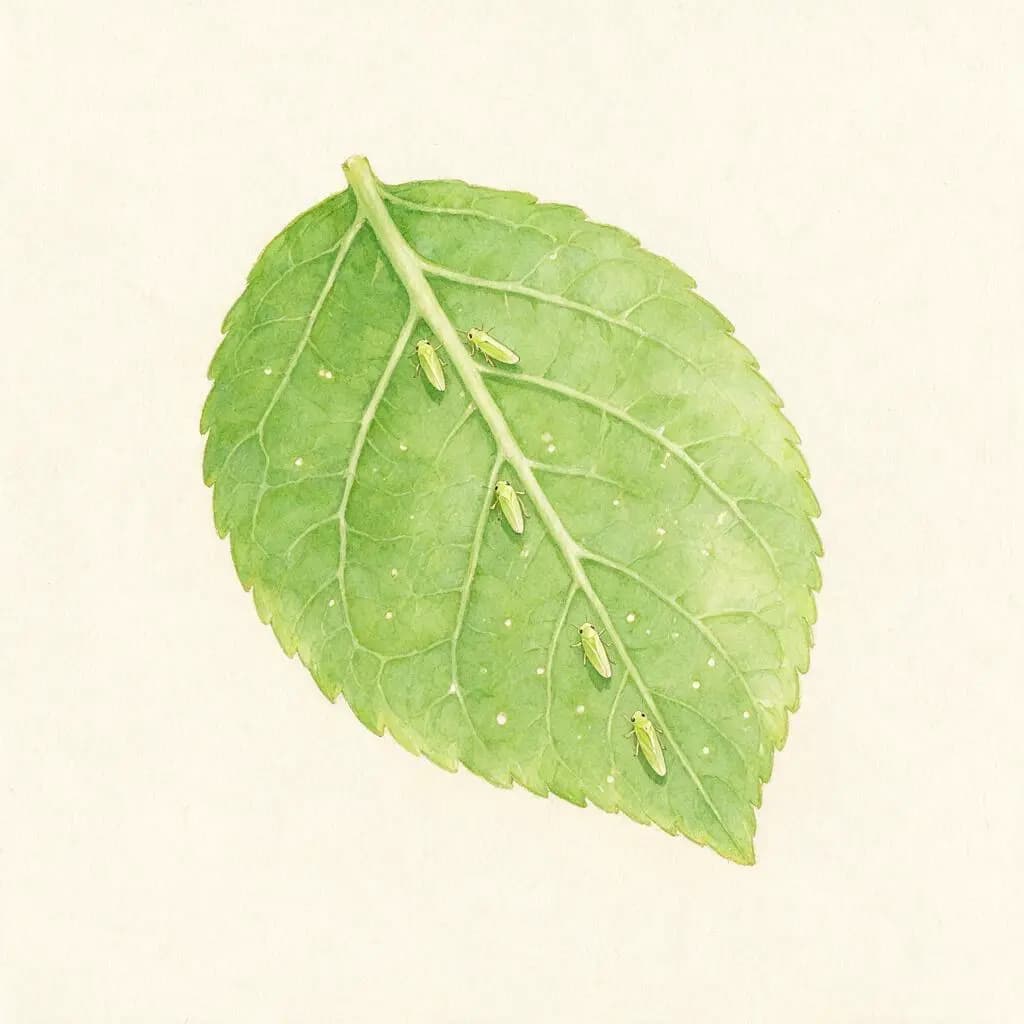
Leafhoppers
Also known as: leafhoppers, leafhopper, green leafhopper, potato leafhopper, Empoasca
Small, elongated insects (3 to 5 mm), green or cream, that hop sideways. They suck sap from the undersides of the leaves and leave white speckling; some can transmit viruses and phytoplasmas. The first step is to hang yellow traps and spray potassium soap on the undersides of the leaves.
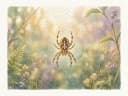
Its best ally
Orb-weaver spider
A natural predator that helps to keep this pest under control. Tap to see how to attract it.

How to recognise it at every stage
Shares your gardenIt likes your potatoes, beans, aubergines and vines.
Life cycle: Incomplete metamorphosis: egg inside the leaf veins (1-2 weeks), five nymphal stages (2-3 weeks) and a jumping adult. Several generations a year; adults overwinter on perennial plants.
Tap a stage to see it full size. The photos are AI reference images checked against real photographs; stages without a reliable photo are shown as text only.
Life-stage calendar
| Jan | Feb | Mar | Apr | May | Jun | Jul | Aug | Sep | Oct | Nov | Dec | |
|---|---|---|---|---|---|---|---|---|---|---|---|---|
| Eggs | ||||||||||||
| Nymph | ||||||||||||
| Adult | ||||||||||||
| Foam on stems (cuckoo spit) |
Approximate months for mainland Spain; in cold areas they start later and in warm areas they last longer. Garden creatures this month
No reliable photo yet
1Keep an eye on itEggs
· 0.8 mmNot visible: the female inserts them into the veins and leaf stalks.
- Where to find it
- Inside the leaf.
- When: Apr–Sep
- What to do
- Nothing to do at this stage.
- 2Keep an eye on it
Nymph
· 1-3 mmPale green, wingless, scuttling sideways like a crab when disturbed.
- Where to find it
- On leaf undersides.
- When: May–Sep
- What to do
- If there are many, potassium soap on the undersides at dusk.
- 3Protect your plants
Adult
· 3-4 mmLight green, long and wedge-shaped, with roof-like wings. It jumps and flies as soon as you move the plant.
- Where to find it
- On the leaf underside; leaves end up with white stippling and yellow or scorched edges.
- When: Apr–Oct
- What to do
- Yellow traps, mixed hedges near the garden and no insecticides that kill its predators (spiders, lacewings).
- Often confused with
- Whitefly. White, with flat floury wings; the leafhopper is green, long and jumps. See profile
Nests, egg clutches and shelters
- Keep an eye on it
Foam on stems (cuckoo spit)
Little blobs of white foam like spit on stems; inside there is a green nymph. It belongs to the spittlebug, a relative of leafhoppers.
- Where to find it
- On grass stems, lavender, rosemary and olive trees, in spring.
- When: Mar–Jun
- What to do
- It does not harm plants. Near olives, almonds or vines, tell your local agricultural office if you see a lot: it can spread Xylella.
Often confused with
- Whitefly. White, with flat floury wings; the leafhopper is green, long and jumps. See profile
How to recognise it (symptoms)
- Fine, pale speckling on the leaves, especially on the underside
- Yellowish leaves with dry, sometimes curled edges
- Small insects that hop sideways when you move the plant
- Transmission of viruses and phytoplasmas in tomatoes and grapevines
Crops affected
 GrapevineA white grape with large, oval berries and a mild muscat flavour.
 PotatoThe 'Kennebec' potato is versatile in the kitchen, with pale skin.
 TomatoMarmande tomato, flattened and ribbed, a good size for salads.
 AubergineAn aubergine with glossy black fruit, for warm climates.
 BeansA dwarf green bean that does not need a support and is easy to grow in a bed.
 RoseA very hardy rose with distinctive wrinkled leaves, extraordinarily resistant to cold, salt and disease.
What favours it
- Heat and drought, which weaken the crop
- Nearby wild vegetation, where they shelter and from where they move into the garden
- Irregular watering, which stresses the plant
Prevention
- Insect-proof mesh on seed trays and at transplanting, to stop adults laying eggs on tender seedlings
- Regular watering and mulch to avoid stress
- A variety of flowers and ground cover to provide nectar and shelter for parasitoids
Organic treatment
Always start here: these remedies are kind to the garden, the soil and pollinators.
- First: hang yellow sticky traps to see how many there are, and spray potassium soap (10-20 g per litre) on the undersides of the leaves at dusk, repeating every 5-7 days
- A registered neem product (at the rate on its label) on the undersides of the leaves, at dusk
- Encourage spiders, earwigs and lacewings, which reduce the pest without you having to spray
Don't confuse it with…
With thrips (slimmer, and they do not hop sideways) and with aphids (slower, and living in colonies).
In-depth guide — leafhoppers (Cicadellidae)
These are small insects that hop sideways and suck sap from the undersides of the leaves. On grapevines and tomatoes they can transmit phytoplasmas and viruses in areas with heavy pest pressure.
Symptoms
- Pale speckling on the leaf, sometimes with dry edges.
- Sideways hops when you move the plant.
- General weakness in drought and heat.
Reducing stress
Water regularly and mulch in summer. A vigorous plant copes well with a moderate population.
Yellow traps
Monitor their numbers with sticky traps at leaf height. A sudden rise means it is time to treat the undersides of the leaves with potassium soap.
Beneficial wildlife
- Spiders, lacewings and wasps in flowering edges.
- Avoid indiscriminate spraying during flowering.
- Mesh over the seed tray for virus-sensitive crops.
Use plant protection products responsibly, even organic ones. Always read and follow the label, the doses and the harvest interval, and never treat plants in flower or while bees are flying, in order to protect pollinators. If in doubt, put prevention and organic methods first.

In the plant catalogue you'll see what to plant, how and when: a well-tended plant resists pests much better.