
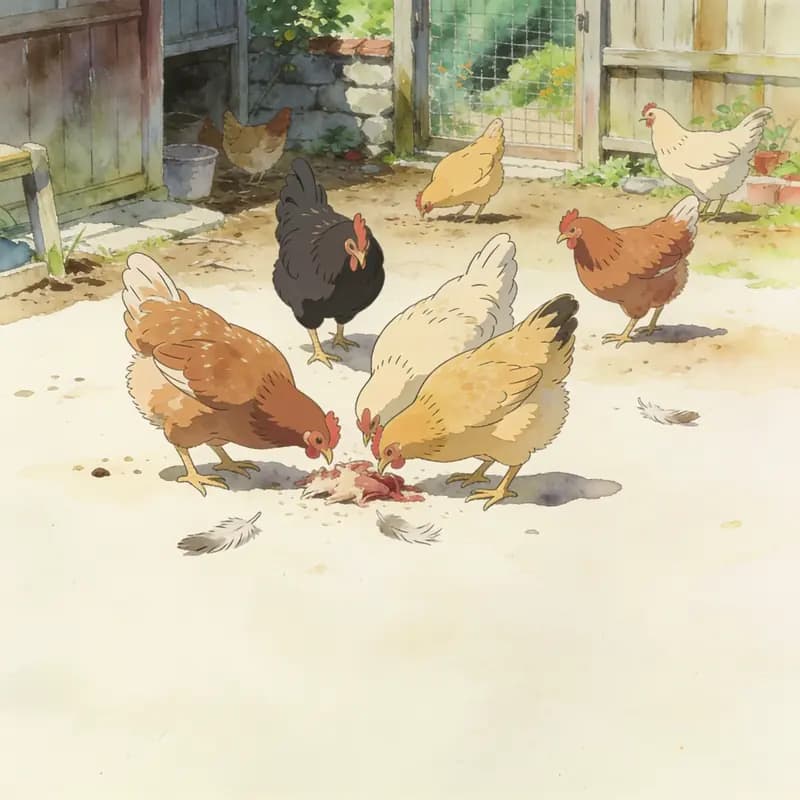
What to look for
- Bald or bleeding areas on the back, neck or tail
- Blood on feathers: if others see blood, they keep pecking
- A bird that chases others and attacks them
- A drop in laying and general stress
Possible causes
- Too many birds triggers pecking: do not keep more than 3-4 hens per square metre in the closed coop and, if possible, offer between 4 and 10 m² (108 sq ft) of yard per bird.
- Boredom from lack of stimulation: without scratching, perches or a dust bath, pecking appears easily
- A lack of protein or salt in the diet: birds try to make up for it by pecking feathers (rich in keratin)
- Lighting that is too bright or continuous: it increases nervousness and pecking
- Sudden introduction of new birds: the fight over the pecking order ends in pecking and wounds
What to do now
- Isolate the injured bird and also the aggressor: if you remove only the victim, another takes over the role of pecking
- Cover the wound with a dark-coloured healing spray of veterinary use, so it does not draw the attention of the rest
- Increase enrichment: hanging vegetables, a dust-bath area, new perches
- Check the diet: in lay it needs 16-18 % protein; below that, feather pecking increases
Prevention
- Respect a suitable density: do not keep more than 3-4 hens per square metre in the closed coop, because overcrowding triggers pecking and disease.
- Offer varied enrichment with perches at different heights, hiding places and a dust bath of soil or ash so they scratch, keep busy and do not get bored.
- Introduce new birds with a mesh divider for 1-2 weeks: they get used to each other without being able to injure one another
- Use dim light, with no strong bulbs in the coop: bright light increases nervousness and pecking
When to call the vet
If there are large or infected wounds, or if the problem comes back despite correcting density and diet.
This guide is for guidance only. If you have any reasonable doubt, it is always better to ask. Note down the symptoms, how they progress and the times, to help the professional.