
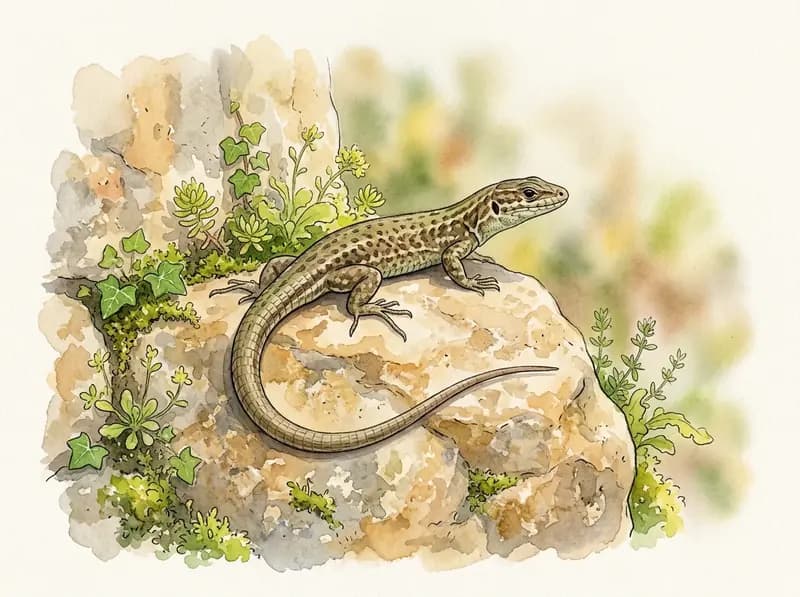
Wall lizard
Podarcis muralis, Podarcis hispanicus
Also called: small lizard, lizard, Podarcis, common wall lizard
Daytime hunters of mosquitoes, flies, ants and crickets. They also eat small caterpillars and spiders. If you have an old stone wall full of lizards basking in the sun, your garden will thank you.

How to recognise it at every stage
Garden allyGarden ally: it hunts grasshoppers, flies, spiders and insects in the sun.
Life cycle: No metamorphosis: the female buries a few soft-shelled eggs in spring or summer, and after 6-10 weeks young hatch that are already miniature lizards. They spend the winter dormant in crevices.
Tap a stage to see it full size. The photos are AI reference images checked against real photographs; stages without a reliable photo are shown as text only.
Life-stage calendar
| Jan | Feb | Mar | Apr | May | Jun | Jul | Aug | Sep | Oct | Nov | Dec | |
|---|---|---|---|---|---|---|---|---|---|---|---|---|
| Eggs | ||||||||||||
| Young | ||||||||||||
| Adult |
Approximate months for mainland Spain; in cold areas they start later and in warm areas they last longer. Garden creatures this month
- 1Protect it
Eggs
· 1-1.5 cmTwo to eight white, oval, soft-shelled eggs, like parchment.
- Where to find it
- Under stones, in loose soil, in wall crevices and sometimes in the compost.
- When: May–Aug
- What to do
- If you find them while digging, bury them again just as they were (without turning them).
- Often confused with
- Snake eggs. Snake eggs are bigger and more elongated, in larger groups, often in the compost. See profile
- 2Protect it
Young
· 3-5 cmTiny lizards; in the long-tailed lizard the young have a reddish or orange tail.
- Where to find it
- In the sun on walls, stones and bed edges.
- When: Jul–Oct
- What to do
- Beware of cats: they are their greatest danger.
- 3Protect it
Adult
· 12-25 cm with the tailBrown or greyish with stripes or spots, very fast; it can drop its tail if caught.
- Where to find it
- Basking on stone walls, rocks and log piles.
- When: Feb–Nov
- What to do
- Protect it (protected species): a dry-stone wall or a pile of stones in the sun is its home.
Often confused with
- Snake eggs. Snake eggs are bigger and more elongated, in larger groups, often in the compost. See profile
What it eats
- Mosquitoes and flies
- Ants
- Small caterpillars and spiders
- Crickets and grasshoppers
How it helps in the garden
How to attract this ally to your garden
- Dry-stone walls or stone piles with cracks: lizards warm up in the sun on the stone and hide in the cracks as soon as they sense danger.
- Leave warm, south-facing areas: reptiles and many useful insects need sun to be active.
- Do not chase them or pick them up by the tail: it breaks off, although it grows back.
What to avoid so you do not harm it by accident
- Free-roaming domestic cats: they hunt lizards, bats and insect-eating birds even when they are not hungry.
- Insecticides: their toxins pass to the lizard when it eats the insects.
How to recognise it
10-20 cm including the tail, greyish-brown with patterns. Very quick in the sun. The tail can drop off by itself and grows back smaller.
Risk to people: None. If you pick them up they may give a harmless nip.
Many allies are protected by Spanish law: do not capture or keep in captivity toads, hedgehogs, bats or native reptiles. Attract them, watch them and thank them from a distance. Rules in other countries differ: check your local regulations.

Allies do better if the garden is varied. Learn to identify each visitor and to prevent problems with good habits.