In this article (13 sections)
- 1. Side-shooting (removing suckers)
- 2. Topping (pruning the tip)
- 3. Pruning lower leaves (lower defoliation)
- One, two or no stems
- Tools
- What not to touch
- Common mistakes
- Side-shooting too late
- Pruning in high humidity or in rain
- Topping too early
- Not tying to the stake
- When not to prune
- What to expect from pruning
Pruning tomatoes concentrates the plant's energy on the fruit, improves ventilation and makes harvesting easier. These are the three basic techniques, from the most usual to the least urgent.
1. Side-shooting (removing suckers)
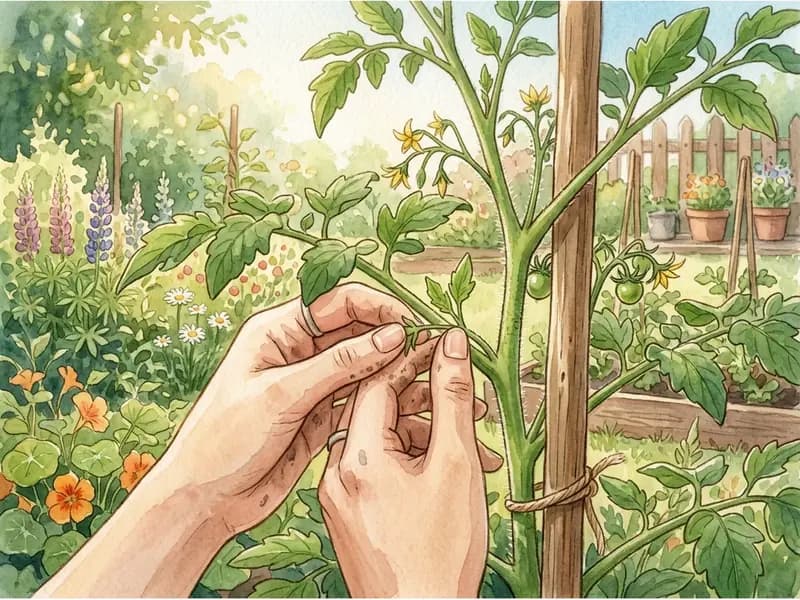
What it is: removing the side shoots that grow at the junction between the main stem and a leaf. They are called suckers because they compete with the fruit for sap.
When: only on indeterminate varieties, which grow without limit (most cherries, Beefsteak, Rosa de Barbastro). It is not done on determinate ones, which stop growing by themselves (Roma, Río Grande). If the label or the packet does not say “determinate”, it is almost certainly indeterminate. Semi-determinate varieties, such as Marmande, put up with light pruning: remove only the suckers at the base.
How to do it:
- Check the plant once a week, from when it is 30-40 cm (11.8–15.7 in).
- With your fingers: pinch off the small suckers (less than 5 cm, 2 in).
- With scissors: if they already have a thick stem, make a clean cut next to the main stem.
- Do it on sunny, dry days: wounds heal better.
If a sucker already carries a flower, you can leave it and train the plant to two stems (see below). If you do not want two stems, remove it anyway.
2. Topping (pruning the tip)
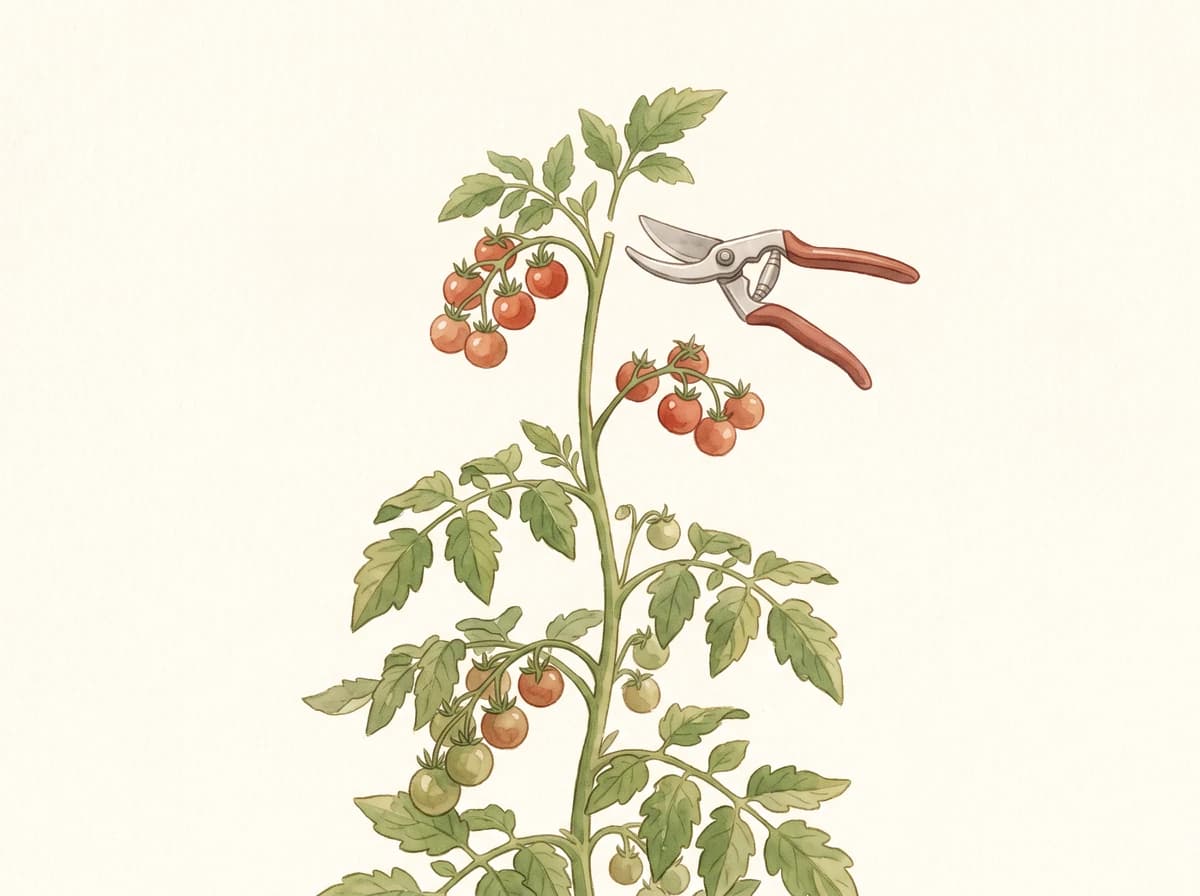
What it is: cutting the tip of the main stem when it already has the trusses the plant can ripen.
When:
- Outdoors: at the end of August or in September, between four and eight weeks before the first frosts. The plant no longer has time to ripen new flowers, so it is better for it to put its strength into the fruit it has.
- In a greenhouse: when the stem reaches the roof, at about 2-2.5 m (6.6–8.2 ft).
How: cut the stem leaving two or three leaves above the last truss. Those leaves keep feeding the tomatoes above.
Effect: the fruit that has already set ripens sooner.
3. Pruning lower leaves (lower defoliation)
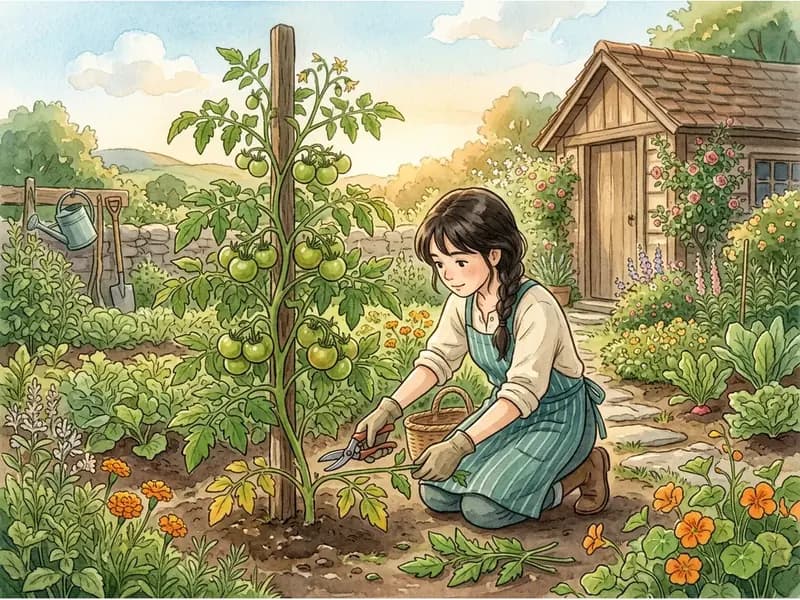
What it is: removing the old leaves from the lower part of the plant.
When: when they are yellow, or when the first trusses are almost ripe.
Effect:
- It improves ventilation and reduces fungi.
- It stops rain or watering from splashing soil onto the leaves, which is how fungi such as alternaria or septoria get in.
- It helps the plant share its energy better towards the fruit.
How: remove the leaves below the first truss when that truss is ripe, and work upwards little by little. Never leave the plant with fewer than 10-15 healthy leaves.
Avoid:
- Removing more than 30 % of the leaves at once.
- Pruning in the middle hours of the day.
- Leaving the stem completely bare at the bottom: the plant needs leaf to feed itself.
One, two or no stems
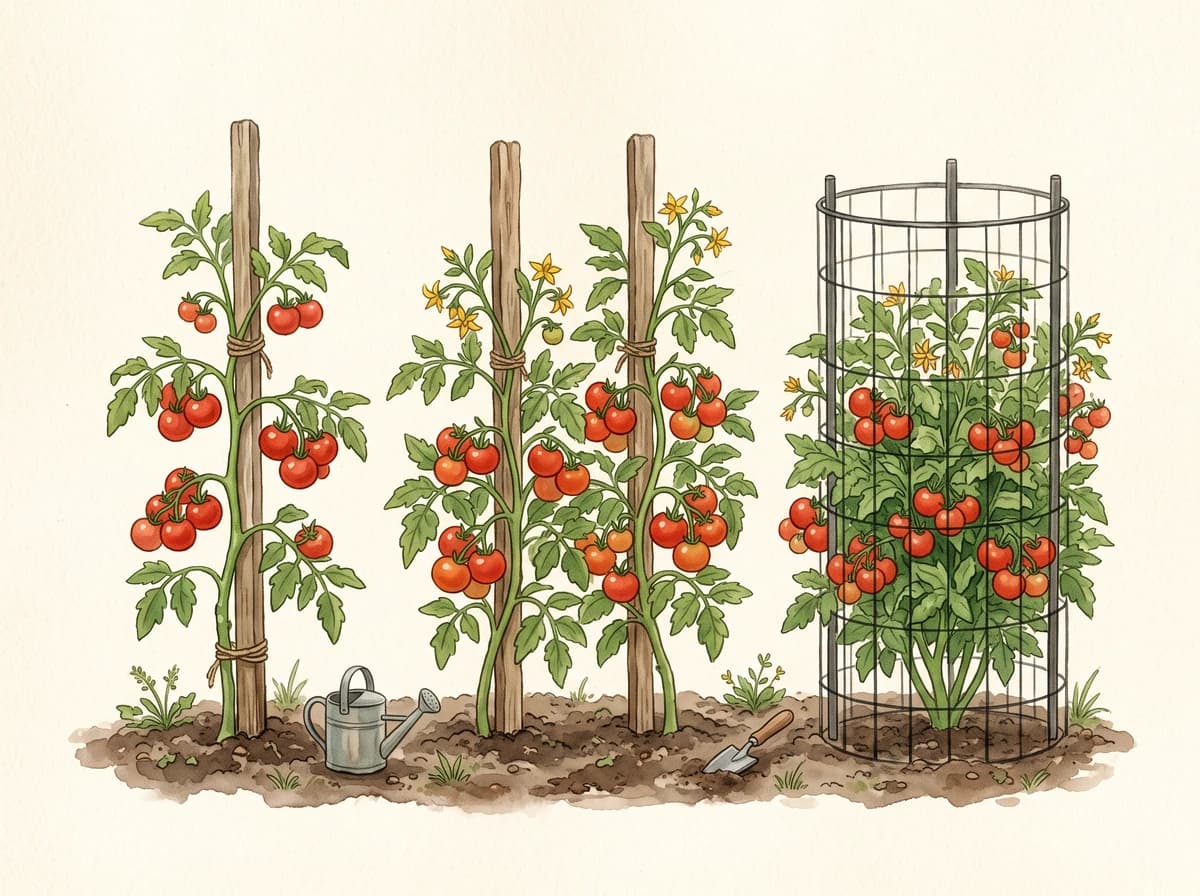
- One stem (the classic): you remove all the suckers and tie the plant to the stake. It is the most convenient and what works best in little space.
- Two stems: you leave the sucker that grows just below the first truss. Each stem gives less fruit, but the total per plant is usually similar or somewhat larger. It needs more space and two stakes.
- No pruning, free-growing: you let the whole plant grow, normally in a tall cage. Less large fruit is harvested, but it is hardier and needs less work.
Tools
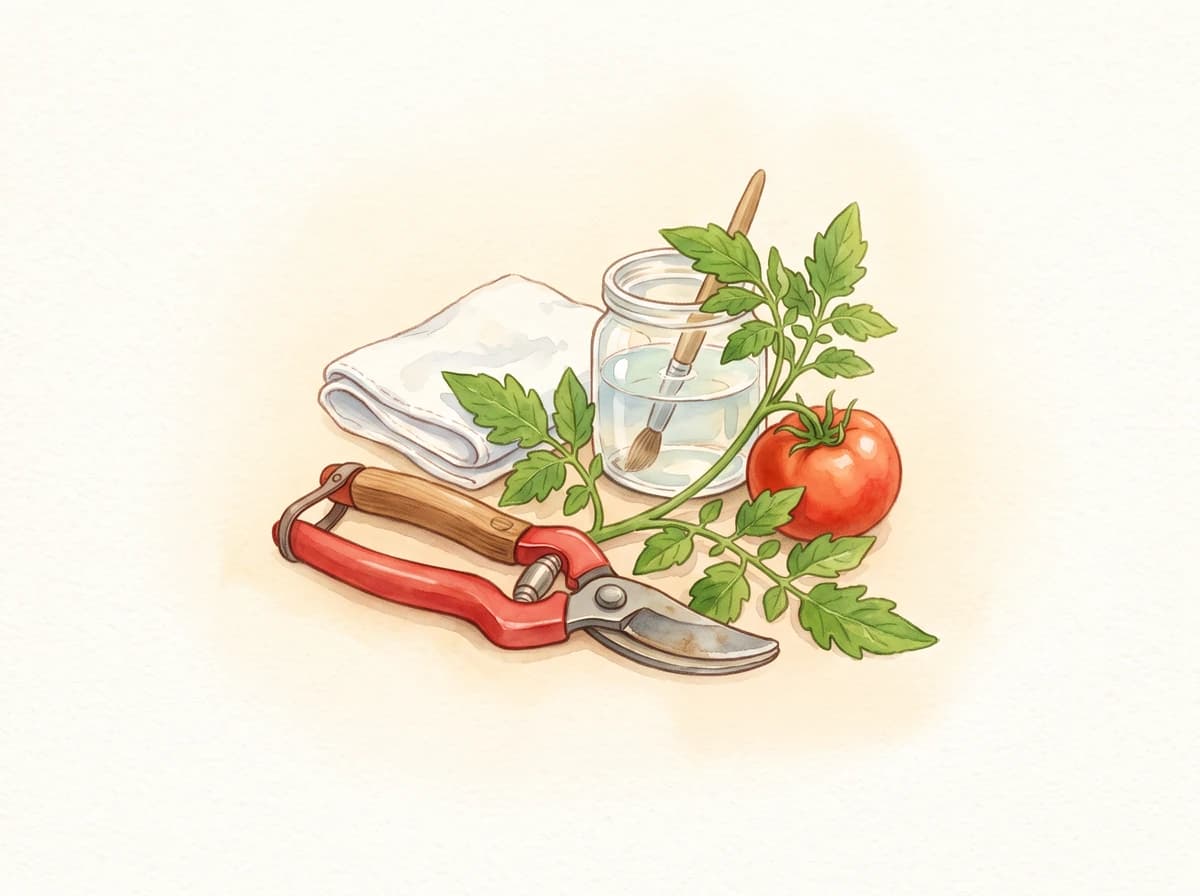
- Well-sharpened bypass secateurs.
- Disinfect with alcohol or diluted bleach between one plant and the next if you suspect viruses or diseases.
What not to touch
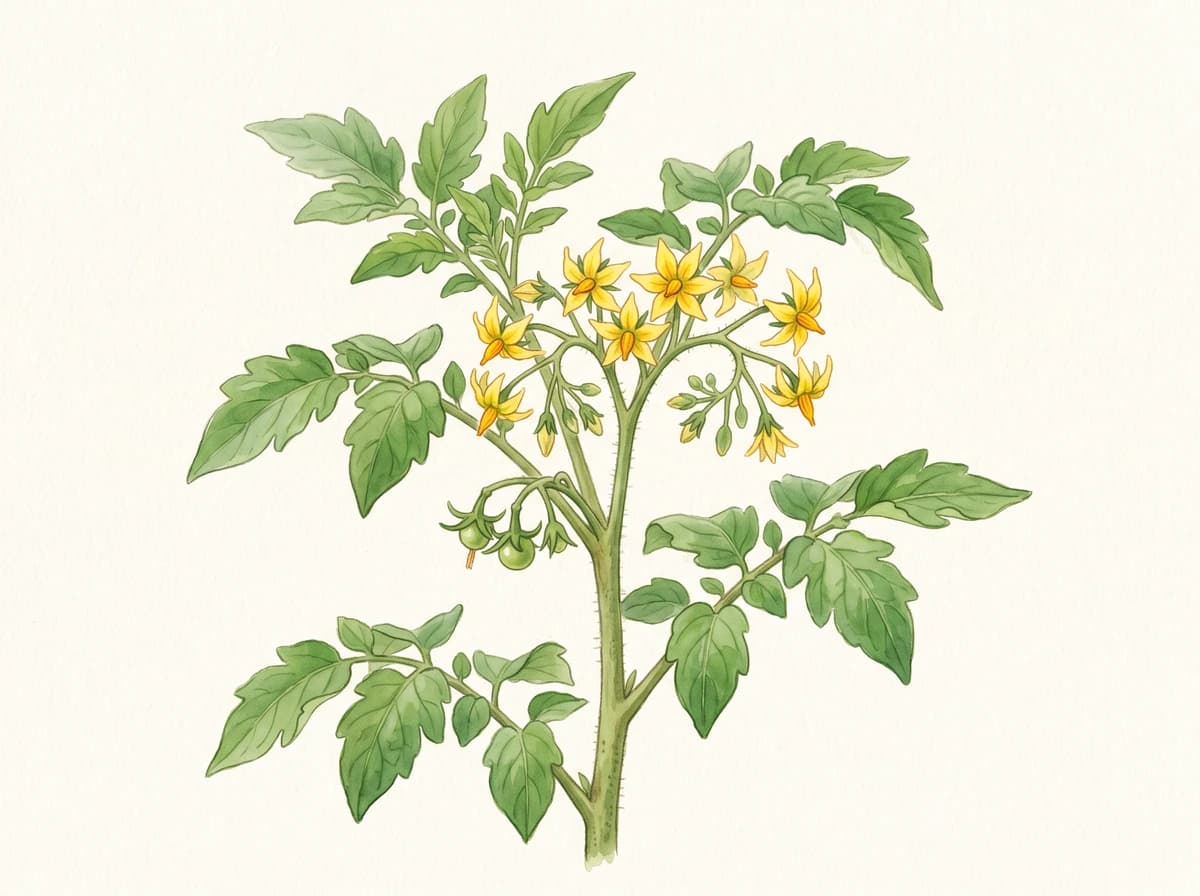
- Green, healthy leaves above the last truss.
- Flowers and trusses: do not remove them by accident when pinching out suckers.
- The graft on grafted tomatoes: do not bury it when planting.
Common mistakes
Side-shooting too late
A sucker of 20 cm (7.9 in) is already practically another stem and removing it leaves a big wound. Check the plant every week from when they start to appear.
Pruning in high humidity or in rain
Open cuts are an entry point for fungi. Choose dry days and use clean scissors.
Topping too early
If you cut the tip in high summer, the plant could still have given you more trusses. Wait until the end of August or September.
Not tying to the stake
With pruning, the plant loses branches that supported it. Tie the stem every 20-30 cm (7.9–11.8 in) of height.
When not to prune
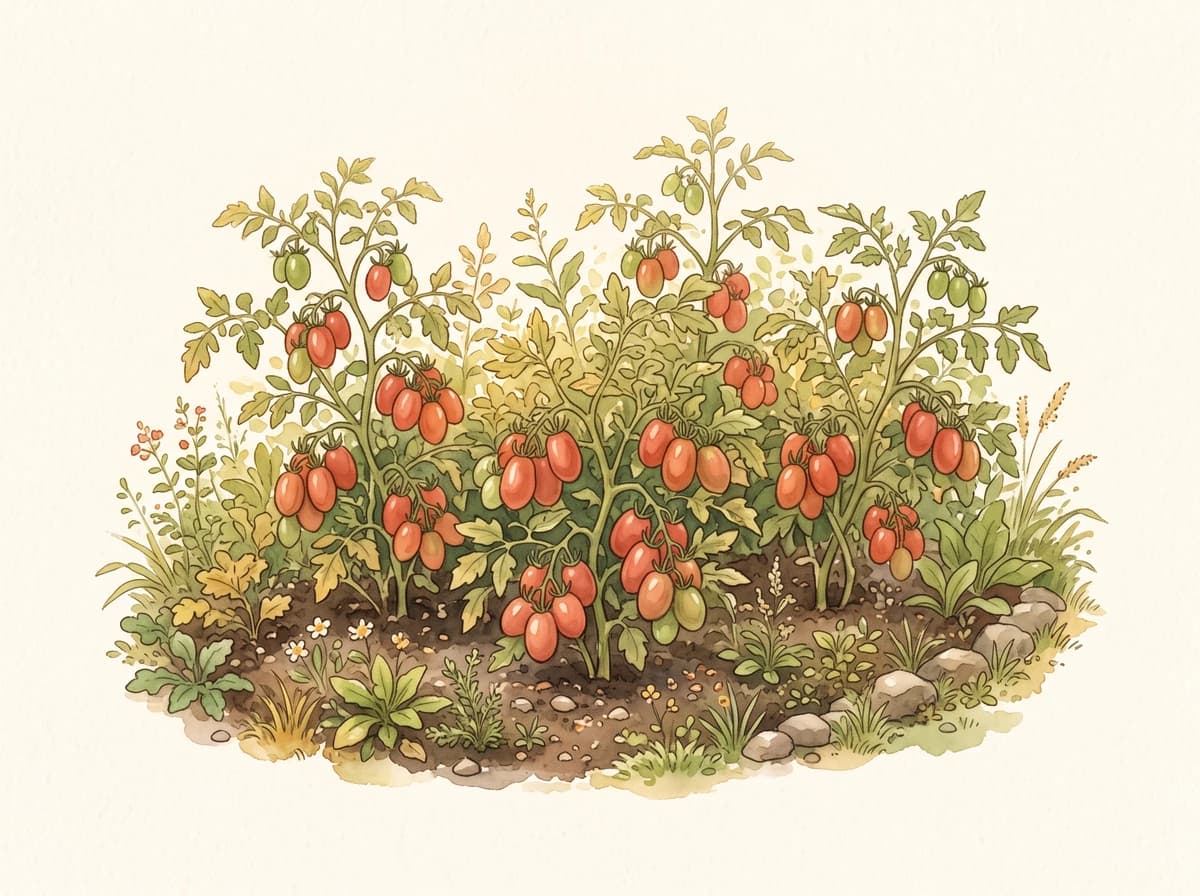
- Determinate tomatoes (Roma, Río Grande): they need no pruning.
- Tomato in a large cage: you can let it grow free.
- Very vigorous cherry tomatoes: they grow very strongly and it is usual to train them to two or three stems or to prune them little, because they give lots of small fruit.
What to expect from pruning
A well-pruned, staked and ventilated indeterminate plant has fewer fungal problems, produces somewhat larger fruit and is easier to harvest. Do not expect to harvest more total kilos per plant: pruning above all organises production and improves its quality.