In this article (21 sections)
- The 4 universal rules
- 1. When to prune
- 2. Sharp, clean tools
- 3. Clean cuts, over a bud or an outward branch
- 4. Remove first the diseased, the crossed and the badly oriented
- By species
- Apple and pear
- Peach and apricot
- Plum
- Fig
- Citrus (lemon, orange)
- Vine
- Rejuvenation pruning
- Big wounds
- Common mistakes
- Pruning a lot at once
- Pruning at any time
- Blunt or dirty tools
- Neglecting the shaping of the young tree
- Frequency by age
- Before cutting
Pruning fruit trees is simpler than it seems. With four basic rules and a little practice, your trees will give fruit for decades. After the general rules you will see what changes in each species.
The 4 universal rules
1. When to prune
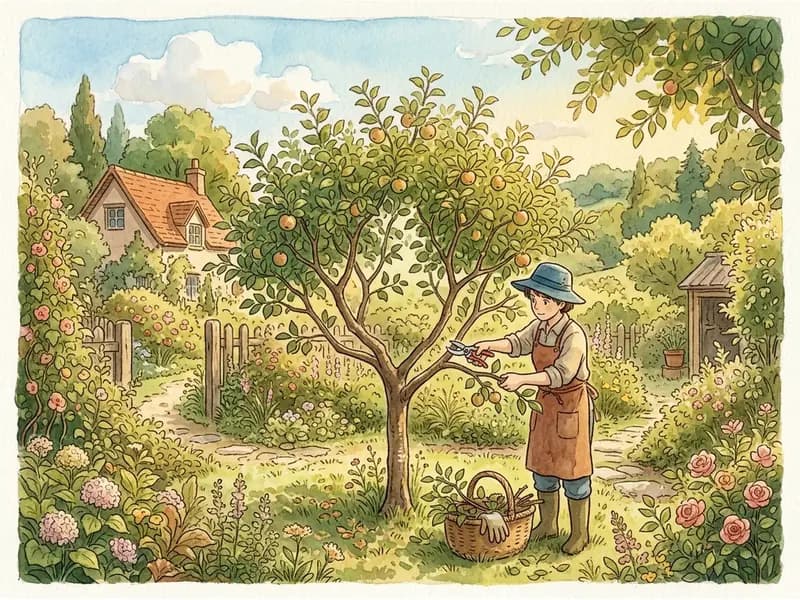
- Formative and winter pruning: between January and March, with the tree leafless and dormant. Avoid frosty days and do not wait for the buds to start swelling.
- Summer pruning: between June and August, light, to remove suckers and thin the crown.
- Avoid autumn: wounds take a long time to close and fungi get in.
- Avoid full flowering.
The exceptions are under each species below.
2. Sharp, clean tools
- Bypass secateurs for branches of less than 2 cm (0.8 in).
- Bow saw or handsaw for branches of more than 2 cm (0.8 in).
- Disinfect with alcohol between one tree and the next if there is disease.
3. Clean cuts, over a bud or an outward branch
- Thin branches: cut about 5 mm (0.2 in) above a bud that faces outwards, with the cut sloping away from the bud.
- Thick branches: do it in three cuts. First a cut underneath, about 30 cm (11.8 in) from the trunk, so that the branch does not tear. Then another on top, a little further out, which brings it down. And lastly the final cut, clean, just outside the swelling (collar) where the branch comes out of the trunk.
4. Remove first the diseased, the crossed and the badly oriented
In this order of priority:
- Dead or diseased branches.
- Crossed branches or those that rub.
- Vertical suckers that come from the base or the trunk, which give no fruit.
- Branches that grow inwards, because they block light and air.
- Double branches that compete: leave a single main one.
By species
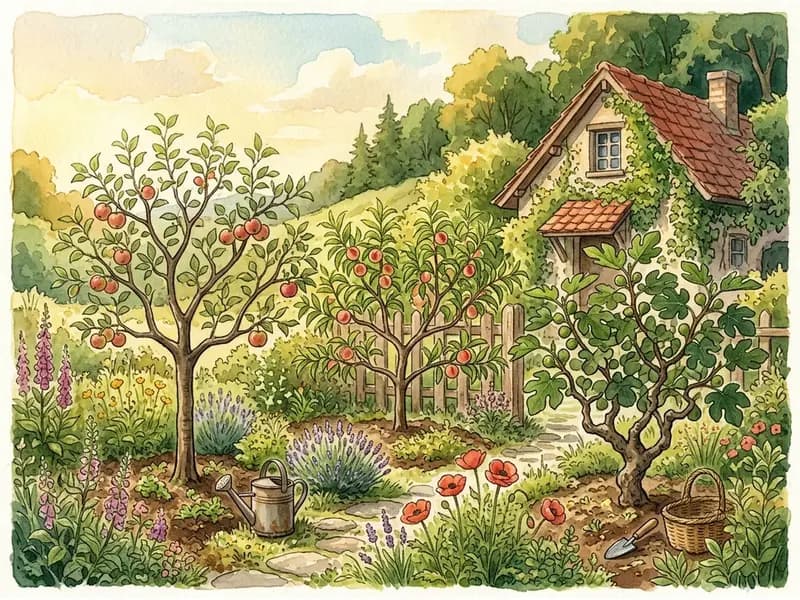
Apple and pear
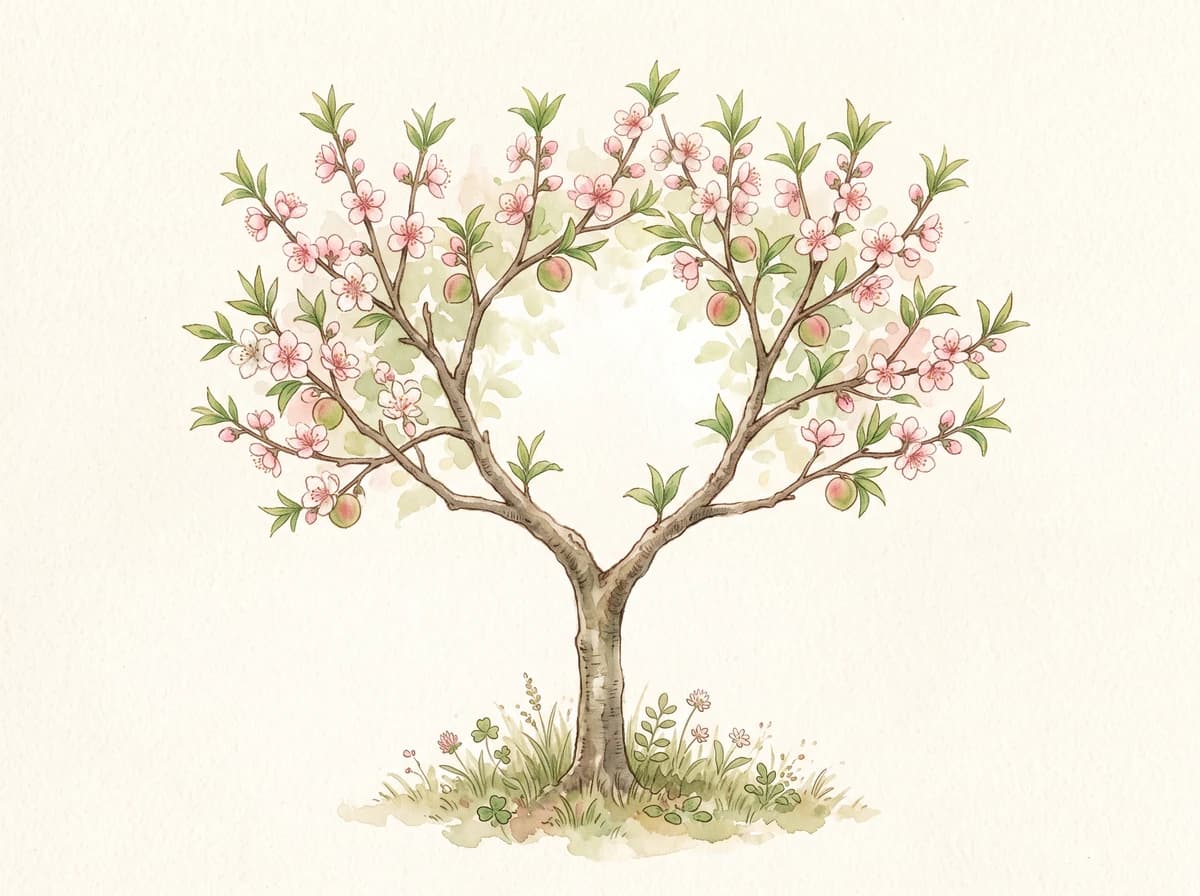
- Structure: open vase (three or four main branches in the shape of a cup) or central leader.
- Winter pruning: remove the vertical branches and keep the horizontal or sloping ones, which fruit best.
- Fruit thinning: after the natural June drop, leave one or two fruit per cluster. There will be fewer, but bigger.
- Summer pruning: in mid-June, remove the vertical suckers.
Peach and apricot
- Peach: it fruits on the shoots of the previous year, so it needs pruning every year to renew them. Remove the branches that have already fruited, leave well-spaced young shoots and trim the crown. It is a heavier pruning than that of the apple, but without going as far as felling the tree. It is done at the end of winter, before the buds open, or in summer just after the harvest.
- Apricot: lighter pruning. Thin the crown, remove the dead and shorten long branches, without big cuts.
Plum
- Minimal pruning. Big cuts can cause gummosis (a sticky exudate), so limit yourself to removing the diseased and the crossed. In damp climates it is best to prune in summer, after the harvest, rather than in winter.
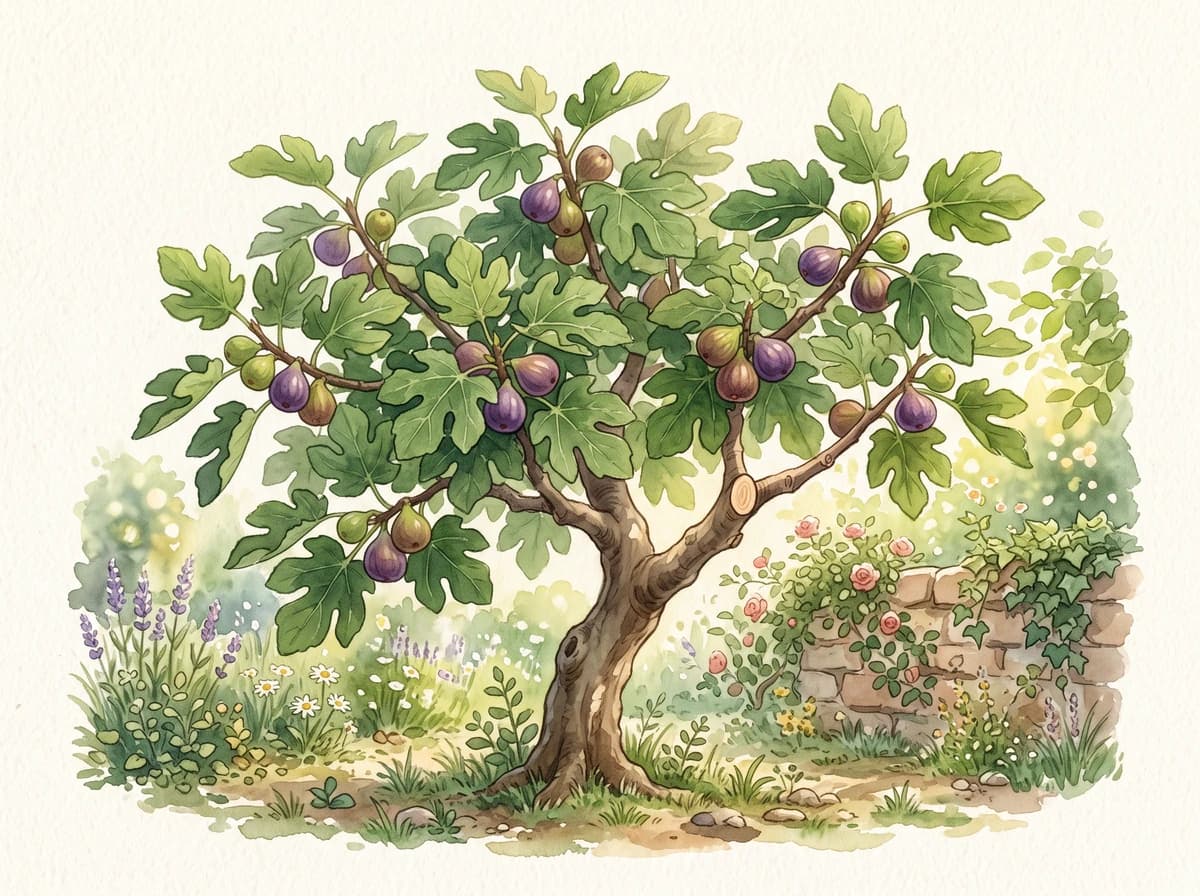
Fig
- It is very hardy and tolerates heavy pruning.
- Prune it at the end of winter (February-March), when the risk of hard frosts has passed.
- Cut the old wood that no longer produces and keep the young shoots.
- The fig can give two crops: breba figs (June, on the shoots of the previous year) and figs (August-September, on the shoots of the year). If you prune very hard, you will lose that year's brebas.
Citrus (lemon, orange)
- Gentle pruning, almost only to tidy up.
- Do it after the winter harvest, when there is no longer a risk of frost.
- Remove suckers, crossed branches and the diseased.
- Citrus gives fruit over the whole crown: do not force geometric shapes.
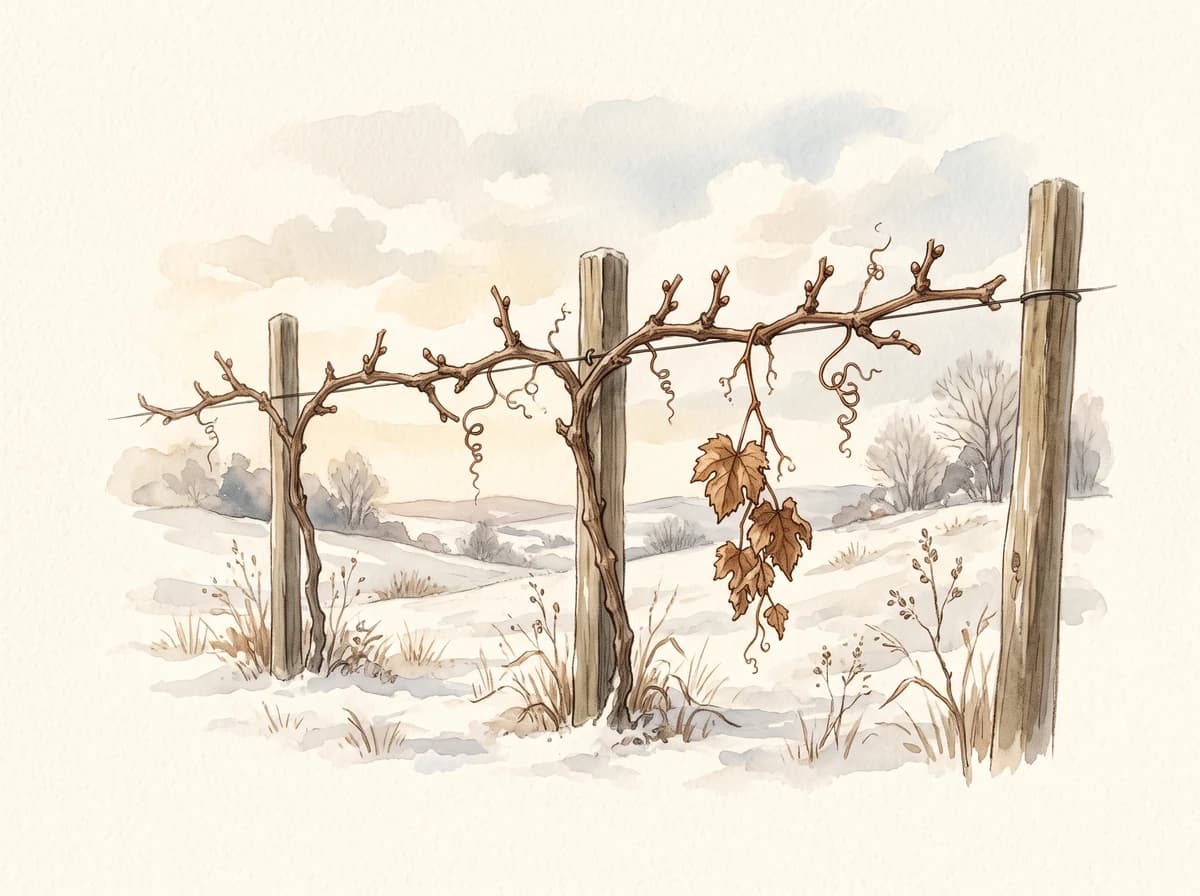
Vine
- It is pruned every year in winter, fairly severely.
- It can be trained as a goblet (a low stock with short arms) or as a horizontal cordon on a wire.
- Leave the canes of the previous year cut to two or three buds: from those buds will come the shoots that give fruit that year.
Rejuvenation pruning
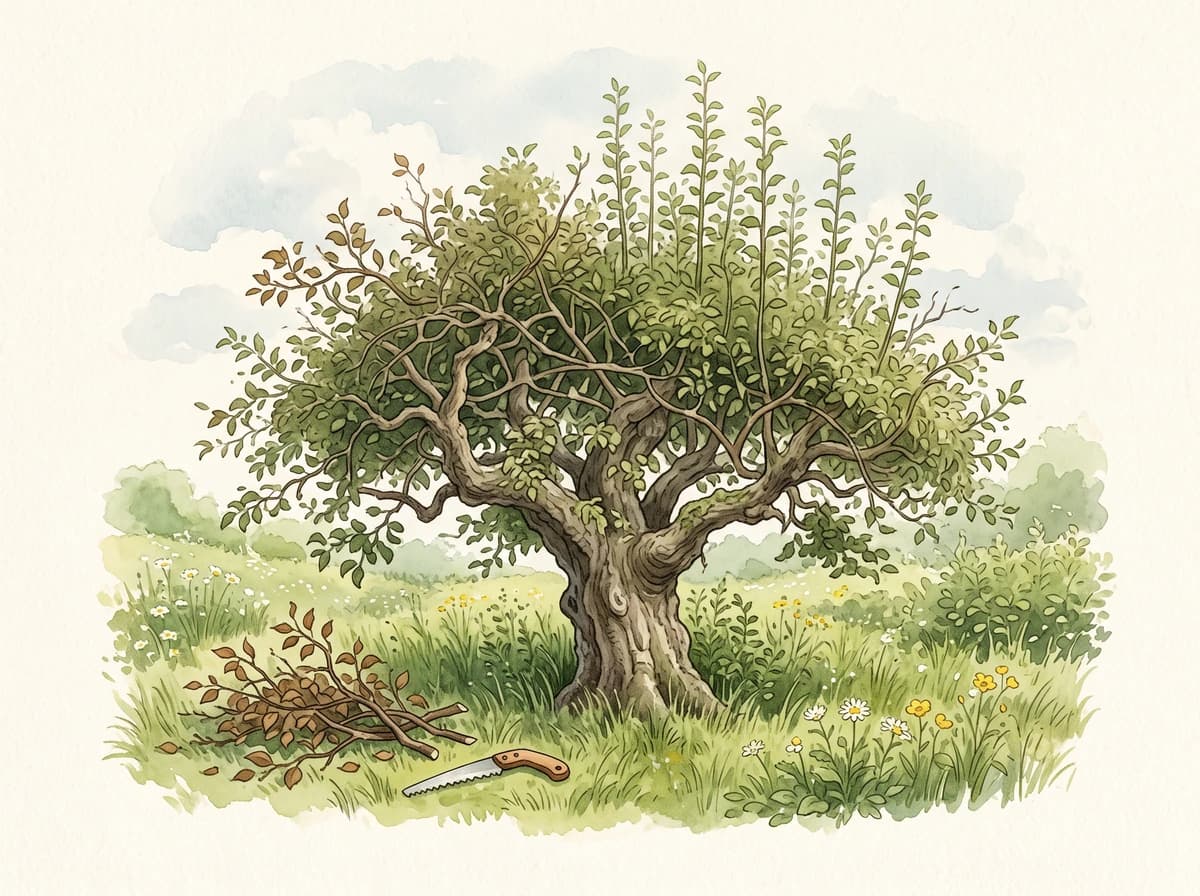
For trees neglected for years:
- Do not cut everything at once: you would weaken it a lot and it would regrow with suckers. Spread the pruning over three years.
- First year: remove only the dead and the crossed.
- Second year: lower the height and thin the centre.
- Third year: define the final structure.
Big wounds
Agricultural extension universities recommend not covering big cuts with sealant or paints: they do not prevent rot and can hold moisture. What heals best is a clean cut, made at the right time and leaving no stubs. In species prone to gummosis or cankers, such as plum or apricot, it is another reason to prune little and in dry weather.
Common mistakes
Pruning a lot at once
The tree responds with very vigorous suckers the following year and gives less fruit.
Pruning at any time
Each species has its moment (see the sections above). If in doubt, the end of winter is the best general option.
Blunt or dirty tools
Torn cuts make it easy for fungi and bacteria to get in. Sharpen and disinfect.
Neglecting the shaping of the young tree
The first 3-5 years decide the structure of the tree, so that is when pruning well matters most.
Frequency by age
- Young (0-5 years): annual formative pruning, with the structural decisions.
- Adult (5-20 years): light annual pruning to maintain production.
- Old (more than 20 years): minimal pruning, and rejuvenation only when it shows decline.
Before cutting
Before pruning, look at the tree for about fifteen minutes. Notice where it gives fruit, how it grows and which areas need more light. Often half the work consists of not cutting where it is not due.