
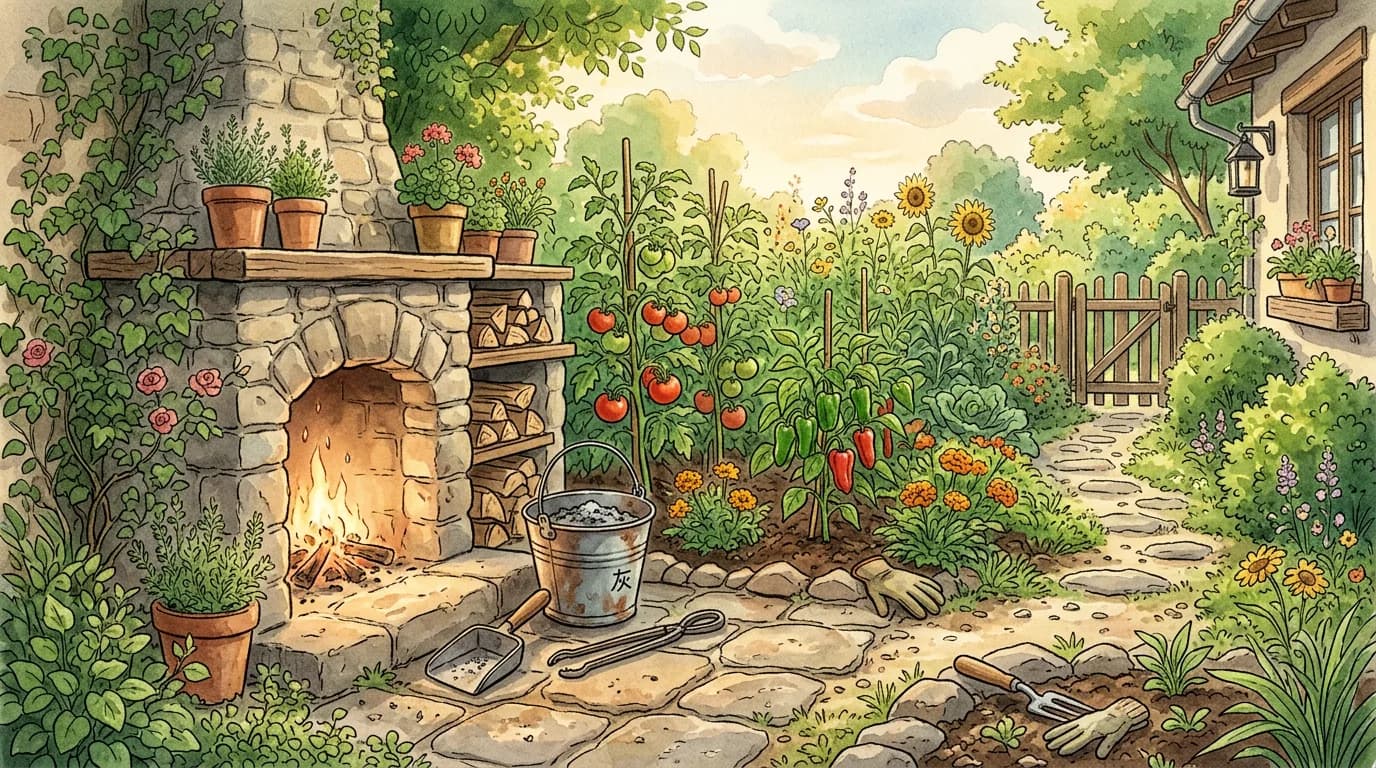
Wood ash
A supply of potassium and calcium, and a way to raise the pH in acid soils. Use it in moderation.
Use with care. It supplies some potassium (around 3 %) and calcium, and acts as a liming material of very variable strength (from 10 to 90 % of fine lime). Useful in acid soils; in neutral or chalky soils (common in Spain) it should not be used. See also “Bone ash” and “Agricultural lime or dolomite for acid soils”.
Before you start, read the precautions
You will need
- clean (untreated) wood ash
- sieve
When to use it
In acid soils or those lacking potassium, before planting or as an occasional top dressing. Best after measuring the pH.
Step by step
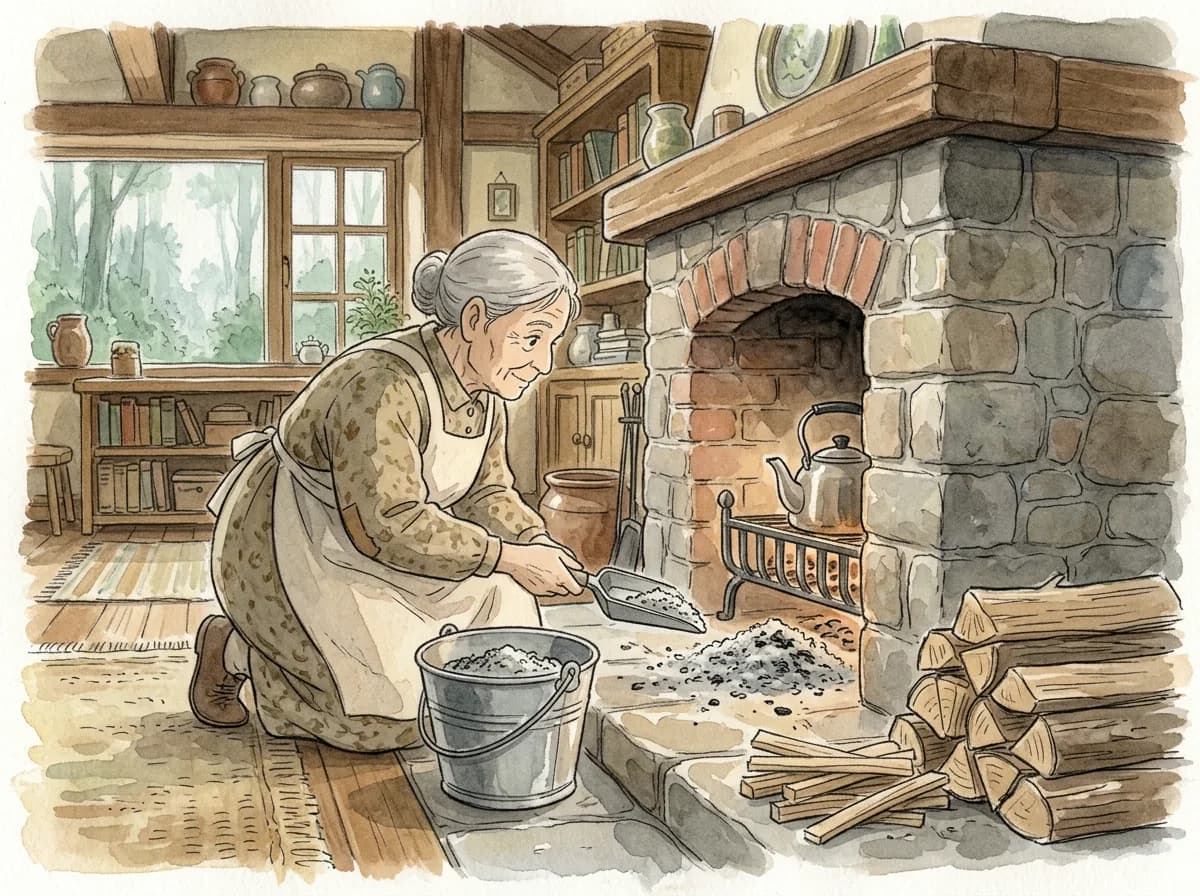
1Use only natural wood ash, with no paint, varnish or chipboard. Let it cool completely.
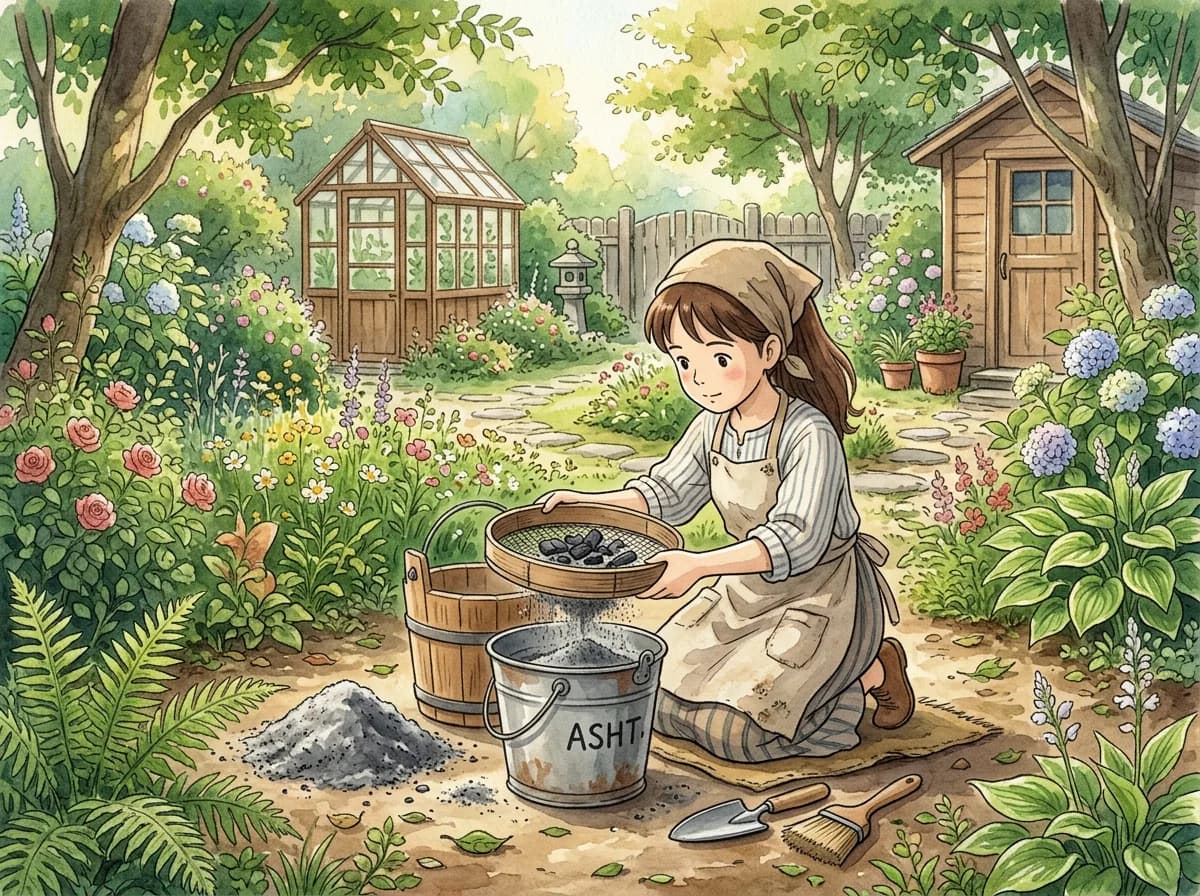
2Sieve it to remove charcoal and large pieces.
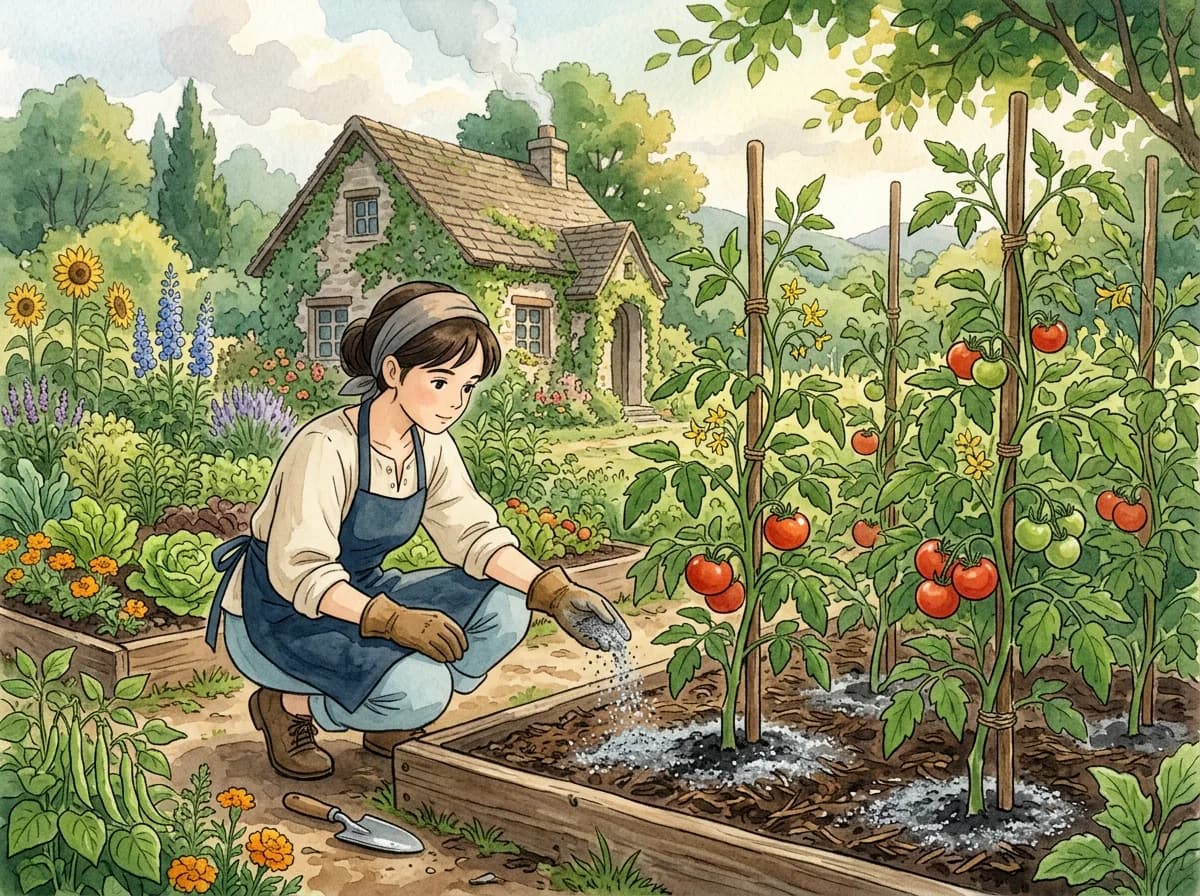
3Sprinkle a thin layer around the plants or mix it into the compost, and water.
Dose
A usual maximum is 15–20 pounds per 1000 square feet a year, that is, about 70–100 g (2.5–3.5 oz) per m² (somewhat less than a generous handful per m²), and only according to a soil test. With those doses, do not repeat for 10 years. Better less than more.
Which plants
Good for tomato, pepper, courgette, fruit trees in acid soils. No blueberries, azaleas or potatoes.
Plants mentioned in this remedy
 Tomato 'Marmande'Marmande tomato, flattened and ribbed, a good size for salads.
 Sweet pepper 'California Wonder'California Wonder pepper, a blocky bell type with thick flesh, for stuffing or eating fresh.
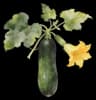 Courgette 'Nero di Milano'A cylindrical, very dark green courgette, productive and early, the classic bush type for continuous picking.
 Japanese azaleaA compact shrub that is completely covered in flowers in spring, in shades ranging from white to magenta.
 Potato 'Kennebec'The 'Kennebec' potato is versatile in the kitchen, with pale skin.
Precautions
- If your soil is already chalky or has a pH ≥ 7, do not use it: you would raise it further and lock up iron and other micronutrients.
- Do not use coal ash, coloured paper, treated wood or barbecue ash with additives.
- Do not mix it with nitrogen fertilisers or fresh manure: you lose nitrogen.
- Avoid it on potatoes (at high pH scab increases) and on plants that love acid soil (blueberries, azaleas, rhododendrons, blue hydrangeas).
- Do not leave it in contact with seeds or seedlings.
Why it works
Ash contains carbonates and oxides of calcium and potassium that neutralise acidity and supply potassium. Its composition varies with the wood (that of young branches is richer in potassium) and it loses strength in the rain. That is why it is a useful corrective only when the soil needs it.
Sources
- University of Wisconsin Extension: Using wood ash in the home garden (maximum 15–20 lb per 1000 ft², according to a test)
- University of Vermont Extension: Wood ashes in the home garden (15–20 lb per 1000 ft²; only untreated wood)
- Oklahoma State Extension: Fireplace ashes for lawn and garden use