
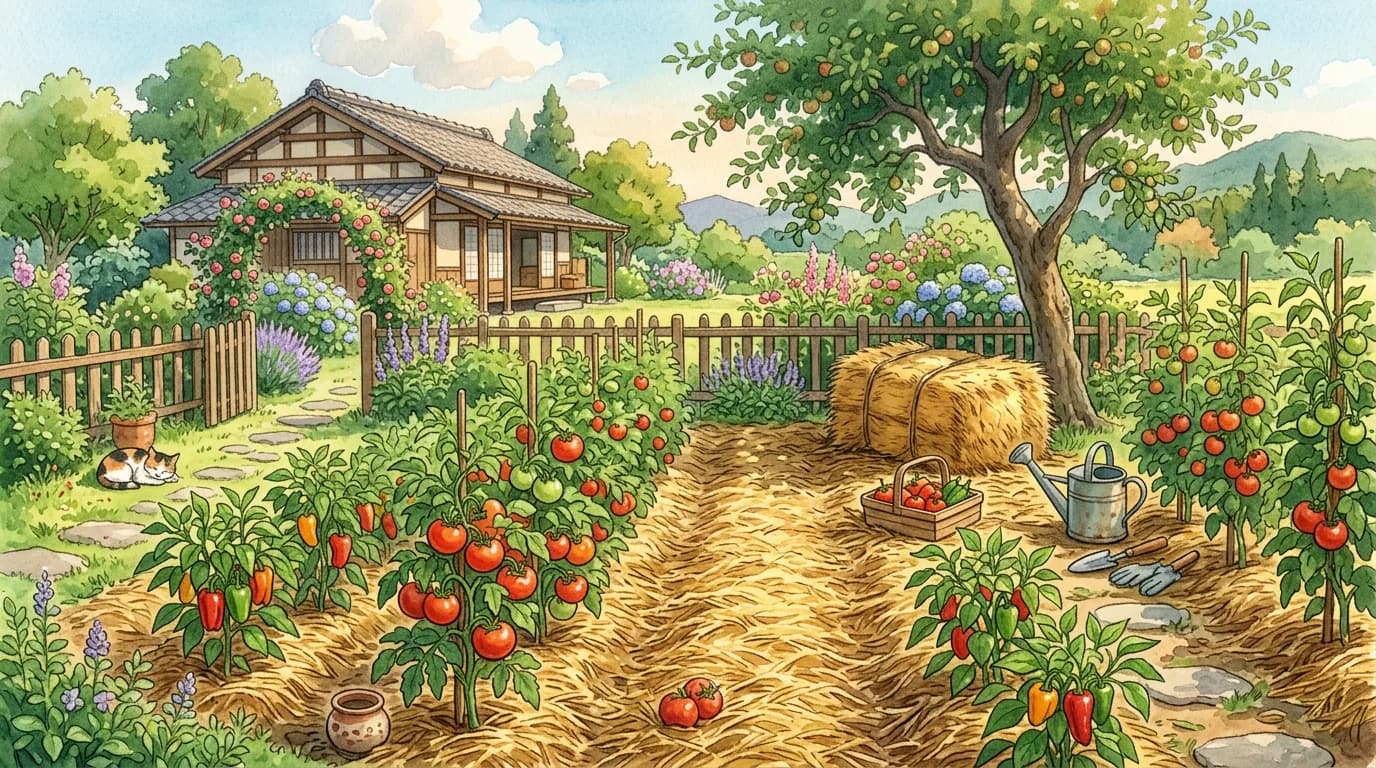
Straw mulch in the vegetable garden
A thick layer of straw keeps moisture in, holds back weeds and steadies watering, which is key in a Mediterranean summer.
Well established. Organic mulching is a standard practice: it reduces evaporation, moderates soil temperature and limits weeds. What is documented is the risk of straw or hay with persistent herbicides. See also “Cardboard and straw mulch against weeds”.
Before you start, read the precautions
You will need
- straw
- spade or rake
When to use it
With the soil already warm and moist, after watering, in spring after planting; also in summer to hold off drought.
Step by step
1Choose clean cereal straw, free of weed seeds and from a known source (no persistent herbicides).
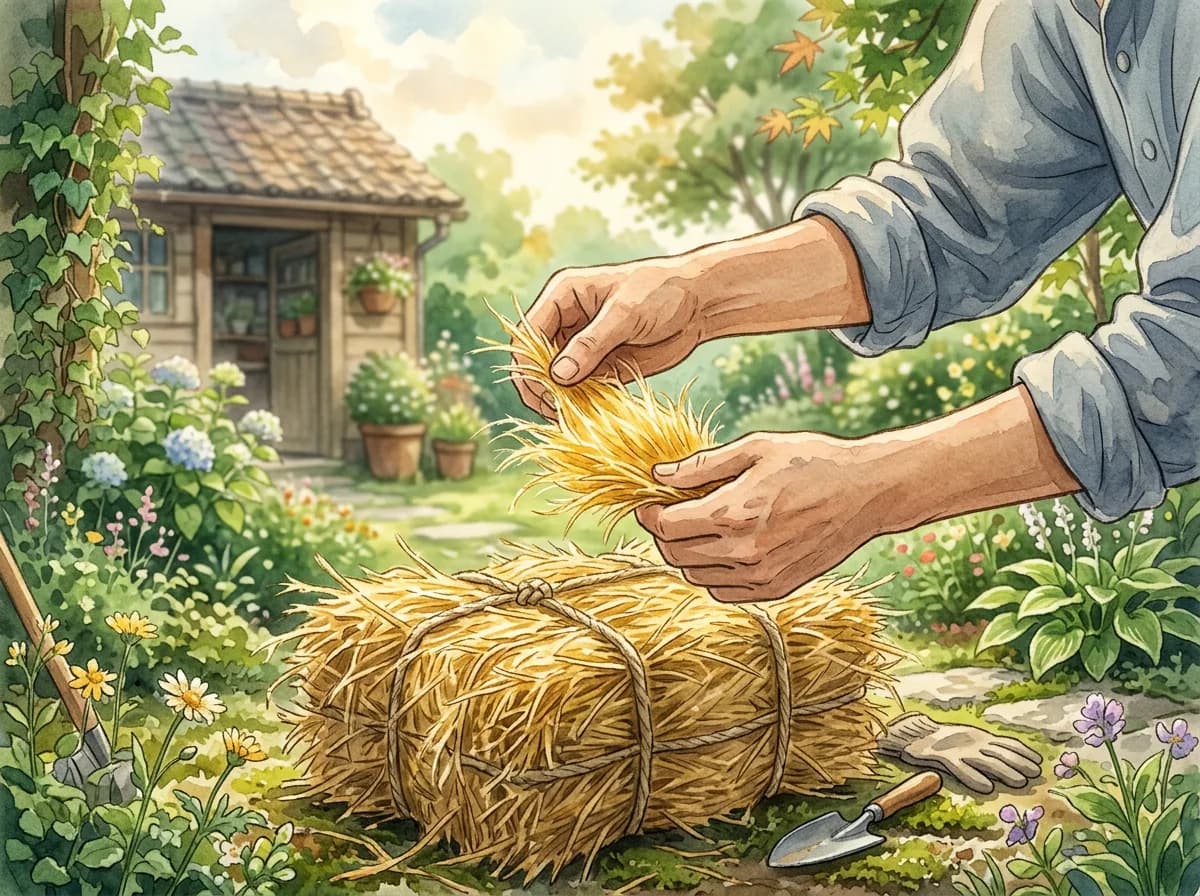
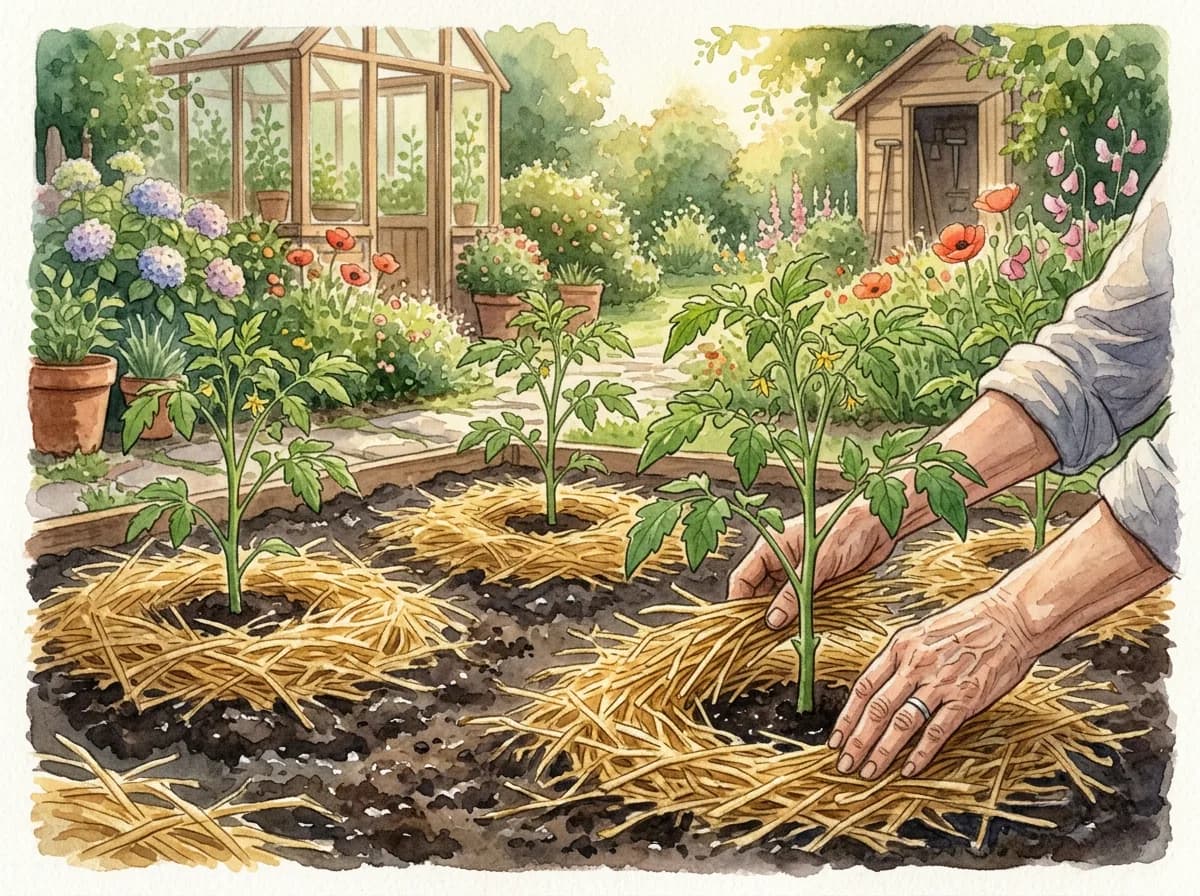
2Water the bed well and spread a layer of 5–8 cm (2–3.1 in) around the plants, leaving 3–5 cm (1.2–2 in) free next to each stem.
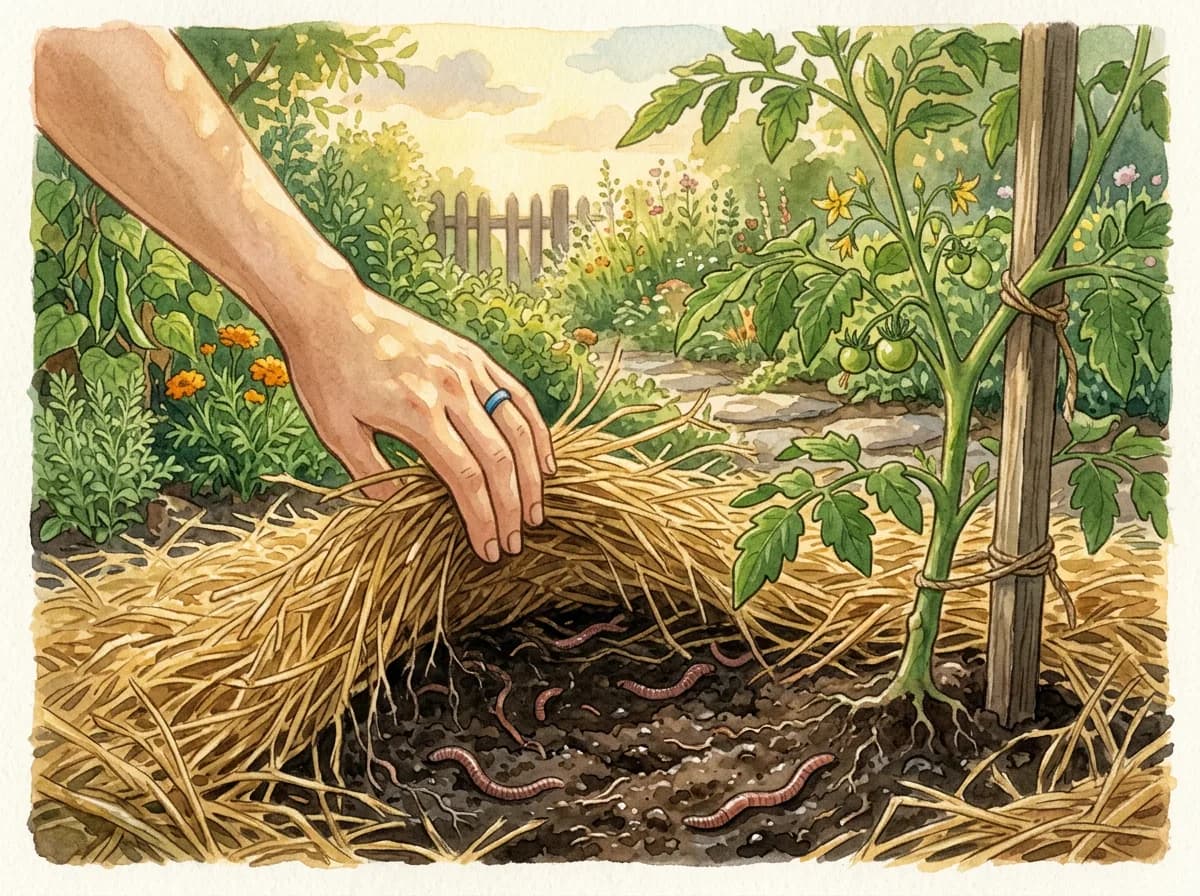
3Check from time to time: move the straw aside and make sure the soil underneath is cool. Top up when it packs down.
Dose
As a guide (usual practice): layer of 5–8 cm (2–3.1 in); top up 1–2 times per season. Over cardboard, 10–15 cm (3.9–5.9 in) of mulch is a common recommendation.
Which plants
Tomato, pepper, courgette, aubergine, strawberries, potato and almost all summer vegetables.
Plants mentioned in this remedy
 Tomato 'Marmande'Marmande tomato, flattened and ribbed, a good size for salads.
 Sweet pepper 'California Wonder'California Wonder pepper, a blocky bell type with thick flesh, for stuffing or eating fresh.
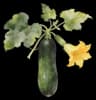 Courgette 'Nero di Milano'A cylindrical, very dark green courgette, productive and early, the classic bush type for continuous picking.
 Long black aubergineAn aubergine with glossy black fruit, for warm climates.
 Camarosa strawberryA strawberry with large, firm, deep red fruit, very productive and early.
 Potato 'Kennebec'The 'Kennebec' potato is versatile in the kitchen, with pale skin.
Precautions
- Beware of straw or hay from pastures treated with persistent herbicides (aminopyralid, clopyralid, picloram): Active residues are documented for up to three years in stored hay, with damage to tomato, bean, potato and many others. Run a pot bioassay with beans or peas before using a new batch.
- Avoid hay: it carries grass seeds that germinate.
- It can shelter slugs and rodents; in damp areas, do not overdo it or pack the straw against the stem.
- In a dry summer it is flammable: do not leave it near sources of ignition.
Why it works
The layer shields the soil from sun and wind, reduces evaporation, keeps moisture steadier (which helps against tomato blossom end rot) and blocks light to weed seeds. As it breaks down it supplies organic matter.
Sources
- North Carolina State University Extension: persistent herbicides in hay, manure, compost and clippings; bioassay with beans
- University of Florida IFAS Extension (Institute of Food and Agricultural Sciences): Beware of residual herbicides in hay and straw for mulching