
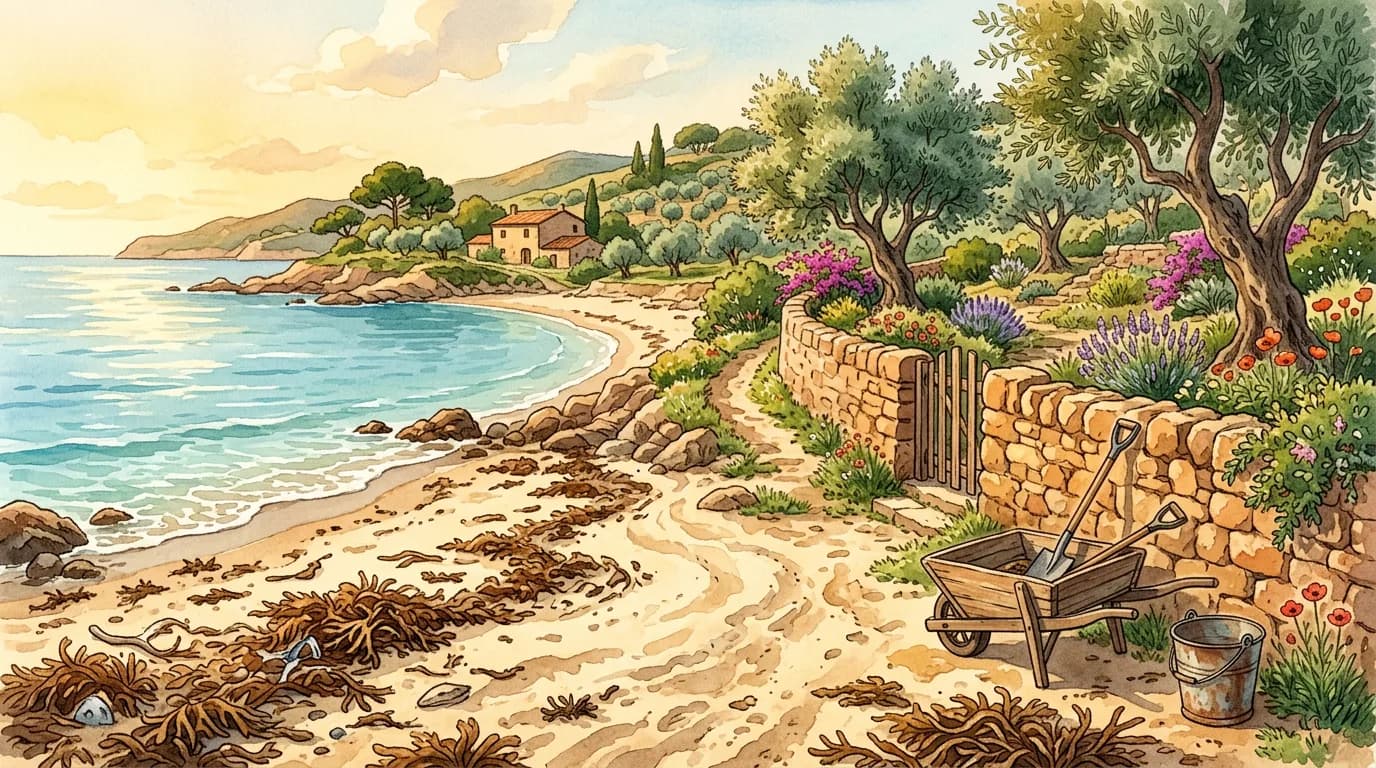
Seaweed as fertiliser and mulch
Seaweed washed up by the sea supplies potassium, magnesium and trace elements, washed and in a thin layer.
Works in practice. Seaweed contains nitrogen, potassium, phosphate and magnesium and trace elements, but it is not a guaranteed fertiliser because its content varies; traditional use in coastal areas is documented. Salt normally does no harm and rain washes it away. Mind the collection regulations, especially with posidonia. For commercial products see “Seaweed extract (kelp) as a biostimulant”.
Before you start, read the precautions
You will need
- seaweed collected from the beach
- fresh water
- tub or bucket
- fork
When to use it
After storms, when the sea leaves seaweed on the shore, in autumn or spring, to mulch or compost.
Step by step
1Check that collection is allowed in your area and take only fresh seaweed, without plastics or traces of pollution.
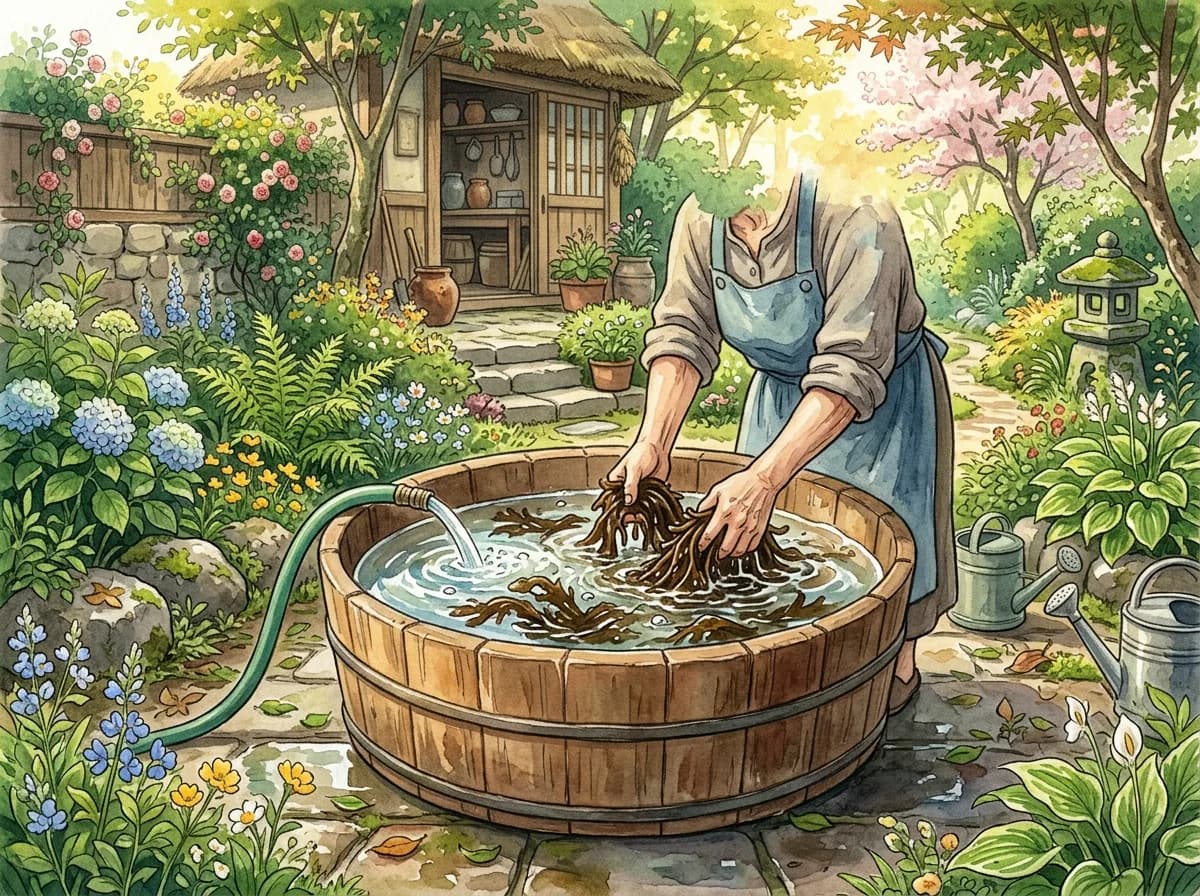
2Wash it in a tub of fresh water and drain it.
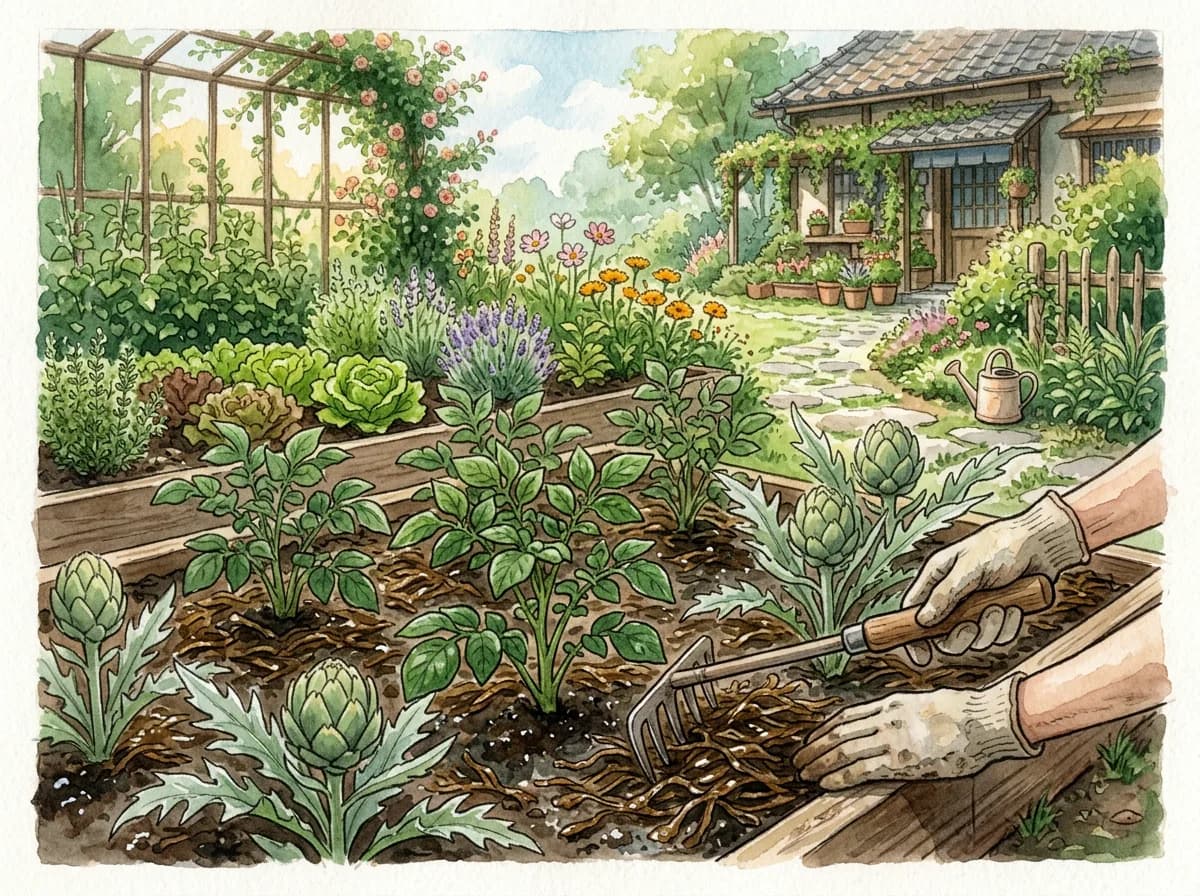
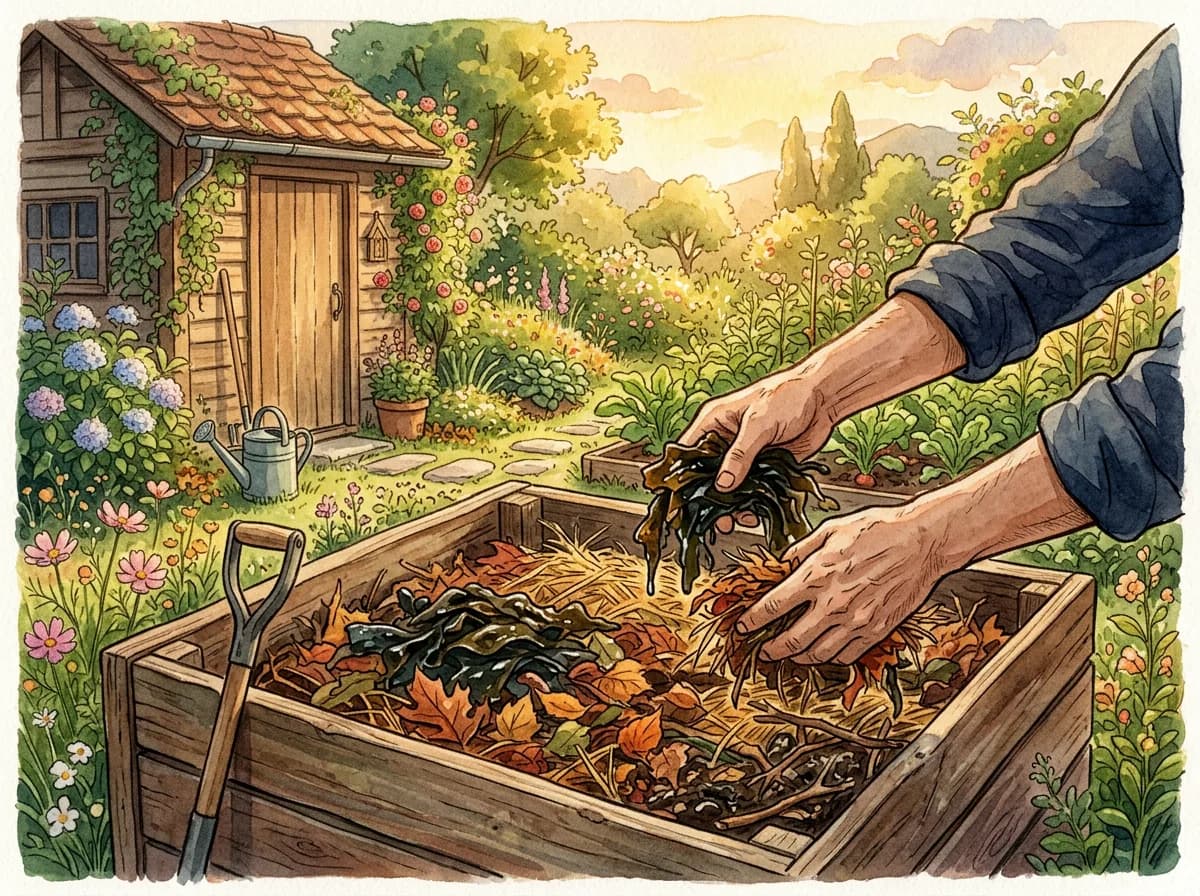
3Spread a layer of 3–5 cm (1.2–2 in) as mulch around the plants, or mix it in thin layers into the compost.
Dose
Fresh seaweed can be worked into the soil, up to a barrowload per m² (if you have that much). As a cautious guide: a 3–5 cm (1.2–2 in) layer as mulch, once a year at most; in compost, mixed with dry material, no more than 10–20 % of the volume.
Which plants
Potatoes, artichokes, asparagus, fruit trees and gardens in coastal areas. Avoid in pots and in soils with salinity.
Plants mentioned in this remedy
 Potato 'Kennebec'The 'Kennebec' potato is versatile in the kitchen, with pale skin.
 Artichoke 'Blanca de Tudela'An artichoke with a green head and a cleft at the top, tender and with no choke, good for eating almost raw.
 AsparagusA perennial vegetable grown for its tender shoots, or spears, which rise each spring from an underground…
Precautions
- In the Mediterranean, do not remove posidonia (Posidonia oceanica): it is a protected marine plant, and the remains left on the beach protect the coast.
- In many places in Spain collecting beach-cast seaweed is regulated or requires a permit: ask the town council or the coastal authority (Costas).
- Do not take seaweed from harbours or polluted areas.
- Rinse well to reduce the salt; in salty soils or with brackish irrigation water, do not use it.
Why it works
Seaweed contains nitrogen, potassium, phosphate, magnesium and trace elements and breaks down fast; the salt is soluble and rain washes it away.
Sources
- Royal Horticultural Society: seaweed products (nutrients, salt and collection with the owner's permission)
- MITECO: management of beach-cast seaweed (posidonia on natural beaches is generally not removed)