
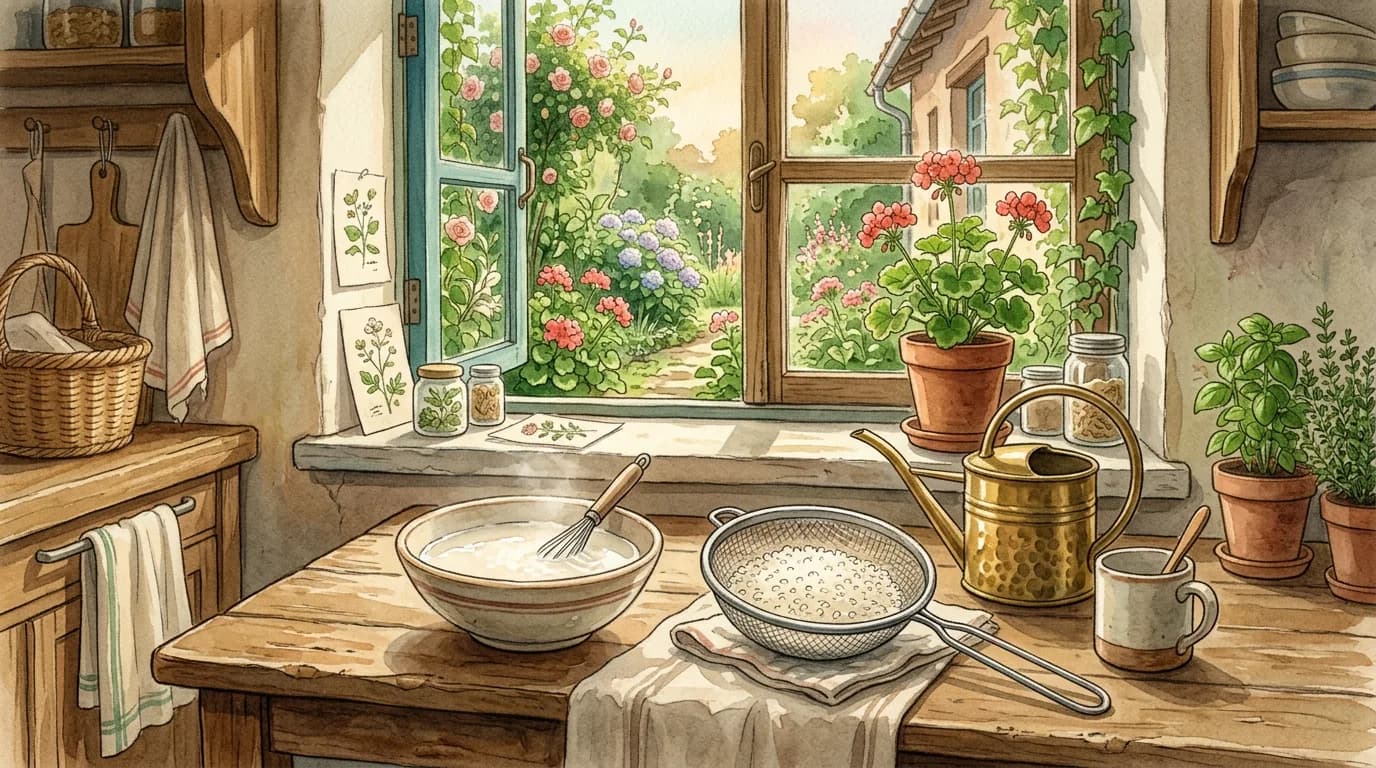
Rice rinsing water
The cloudy water from the first rinse of rice supplies starch and traces of nutrients; it is a gentle watering and reuses water.
Works in practice. There is very little research on rice water: the few trials that circulate use fermented rice water, not the water from the first rinse, and they have not been verified. Starch does not supply nitrogen, and the real nutritional contribution of rinsing water is small. It is a harmless watering if used fresh.
Before you start, read the precautions
You will need
- unsalted rice
- water
- strainer
- jug
- watering can
When to use it
At any time, for potted plants, herbs and light vegetables, making use of the water from rinsing rice.
Step by step
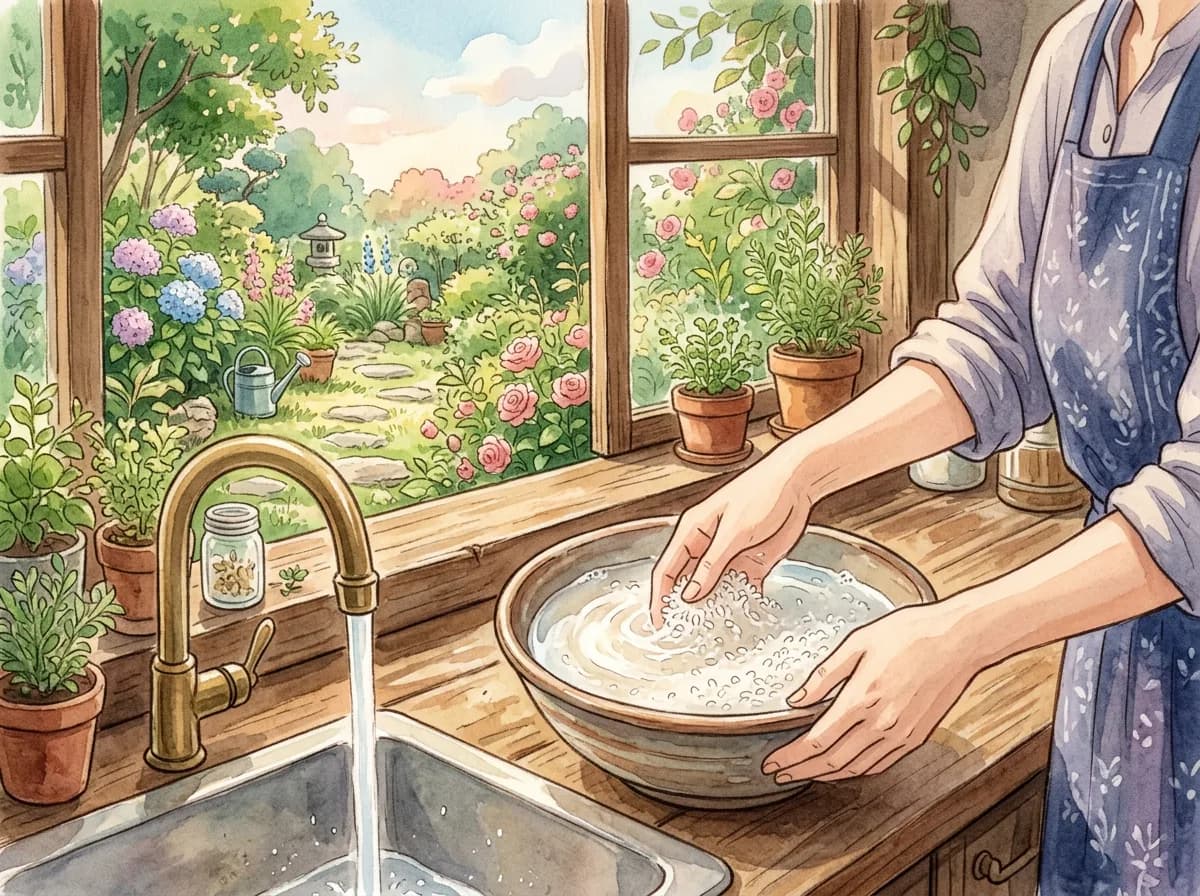
1Rinse the raw rice (without salt or seasonings) in a bowl of water. The first rinse is cloudy and whitish.
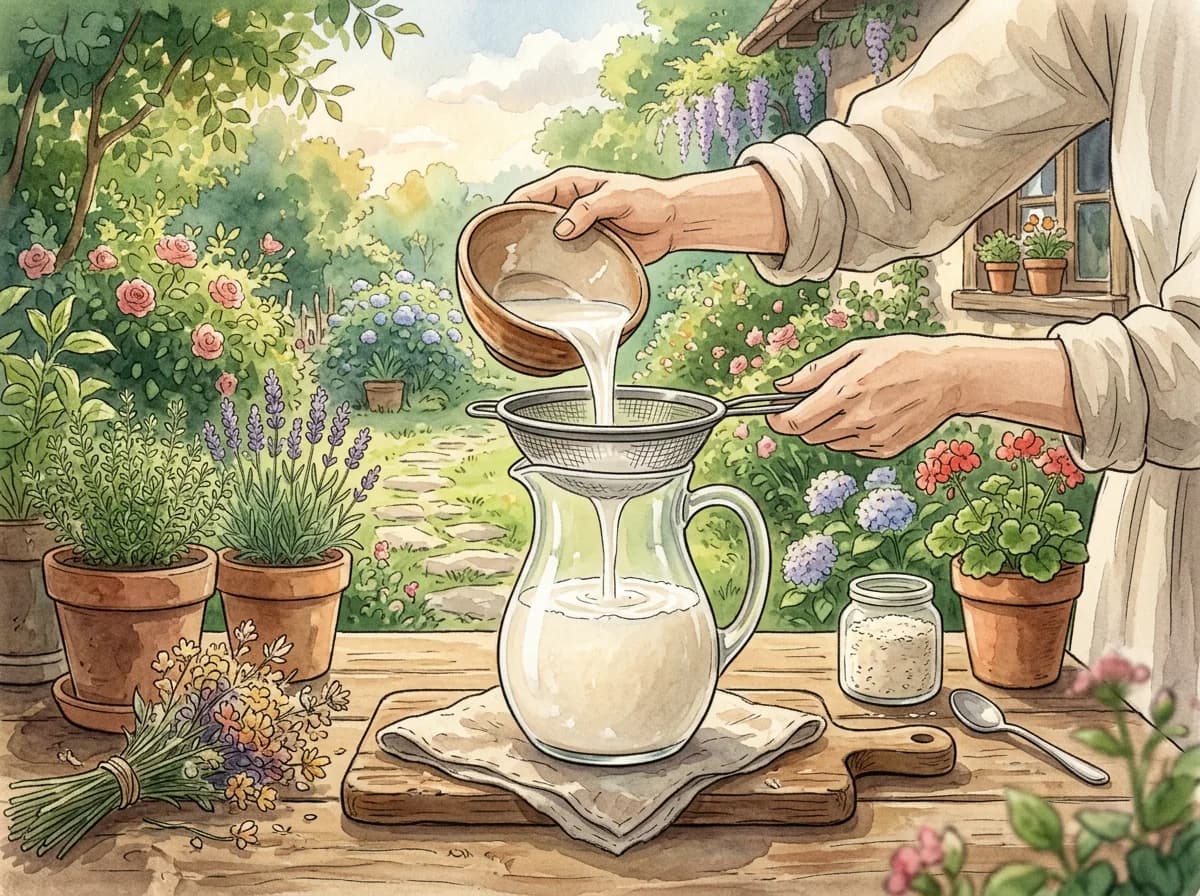
2Strain the water and collect it in a clean jug.
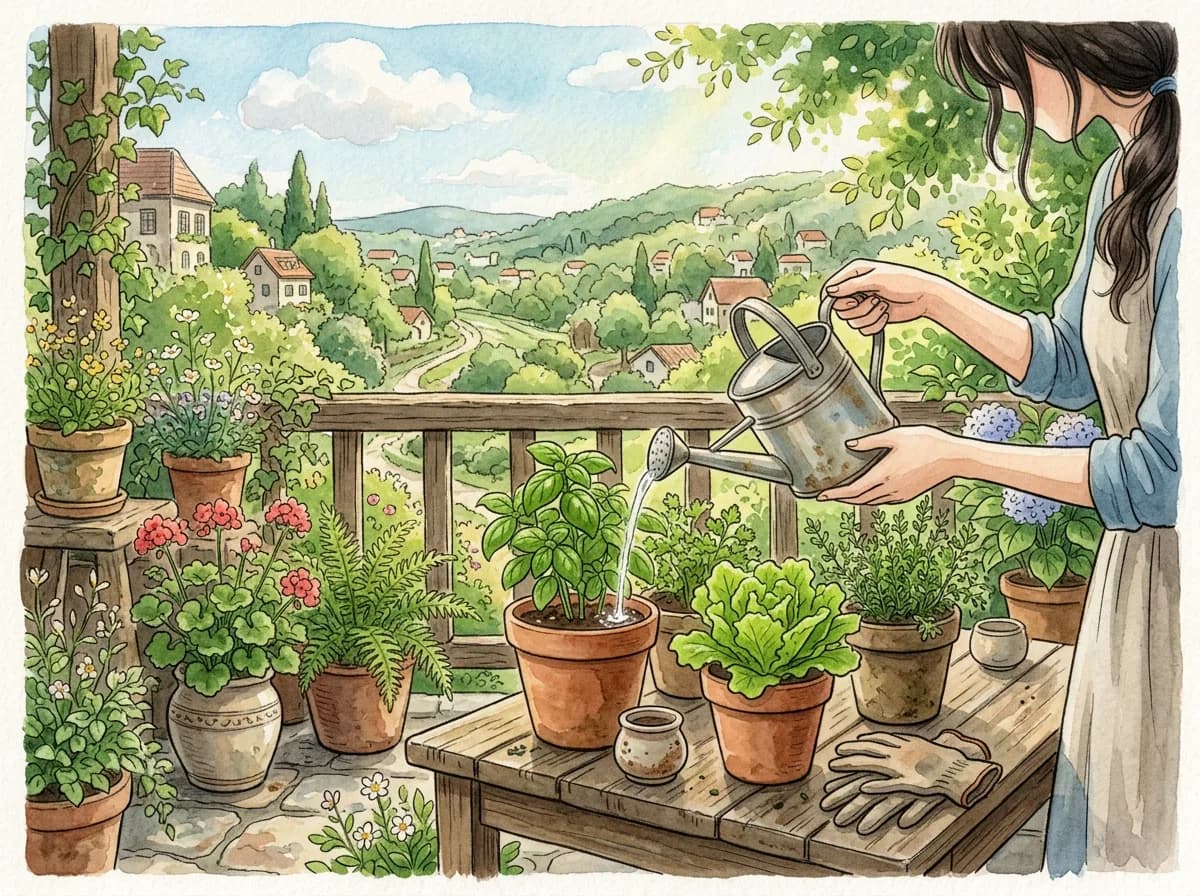
3Water the growing medium with the water the same day; do not keep it.
Dose
Indicative dose (no trials): undiluted on potted plants; 1:1 on seedlings. Once a week at most.
Which plants
Basil, parsley, lettuce and houseplants. Avoid on succulents and plants that dislike humidity.
Plants mentioned in this remedy
 Genovese basilGenovese basil, with broad leaves and a sweet scent, the basis of pesto.
 ParsleyLeaf parsley, a biennial that is slow to germinate.
 Cos lettuce (romaine)Cos lettuce, with a long, crisp heart.
Precautions
- Use it the same day: it ferments within hours, smells and attracts fungus gnats.
- Only water from raw rice without salt or oil. Do not use it from cooked rice.
- In excess, starch can cake and favour fungi in small pots.
- It is not a complete fertiliser.
Why it works
The water carries starch and traces of minerals from the grain. Starch is not absorbed by roots and, at most, feeds soil micro-organisms; the effect is more about reusing water than about feeding.
Sources
- Traditional household practice; the few studies that circulate (fermented rice) we have not been able to verify