
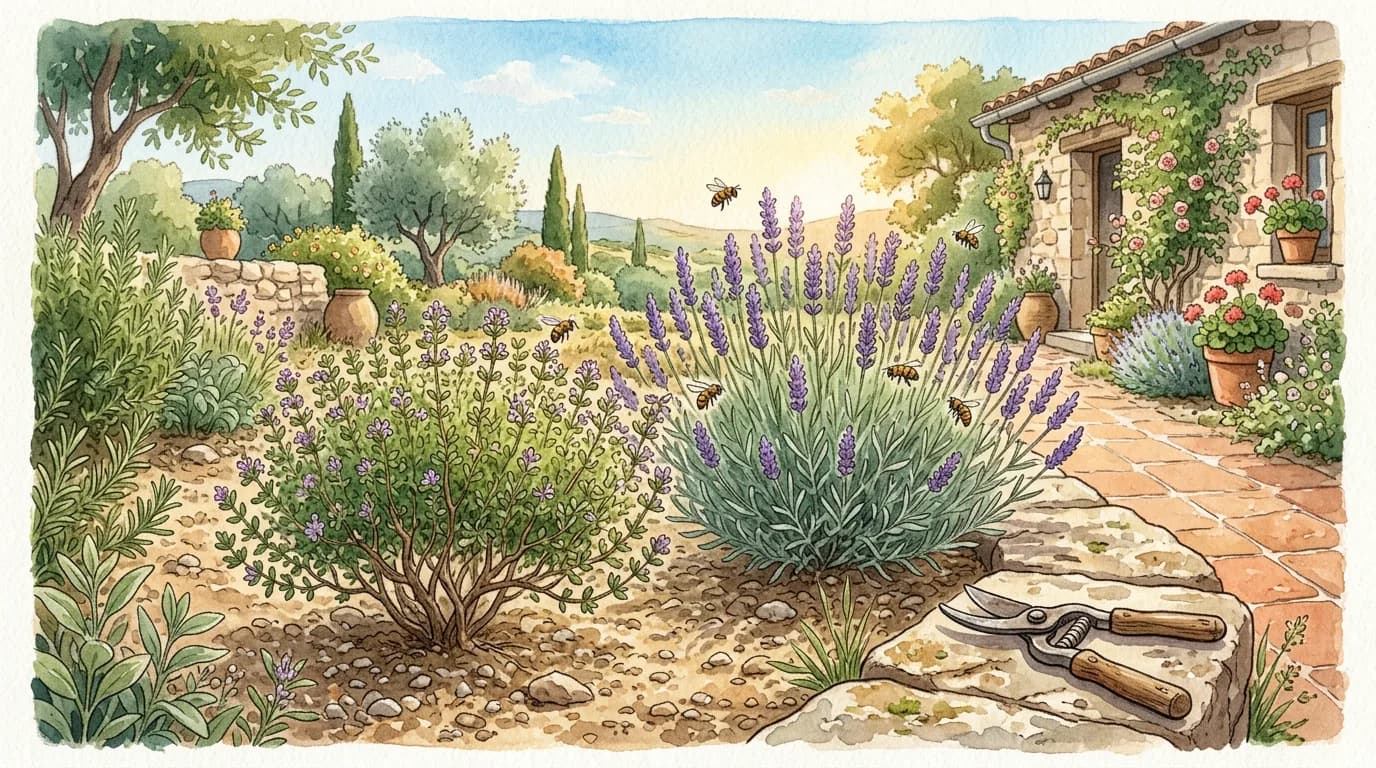
Rejuvenating thyme and lavender by pruning
A well-timed prune keeps lavender and thyme clumps compact and flowery, otherwise they turn woody and open up.
Well established. It is the standard pruning of Mediterranean herbs described in gardening guides: prune after flowering and do not cut into old wood with no leaves.
Before you start, read the precautions
You will need
- secateurs
- gloves
- alcohol to disinfect
When to use it
Lavender: after flowering (end of summer) and a light prune in spring. Thyme: at the end of flowering or in early spring.
Step by step
1With clean scissors, trim lavender about 2–3 cm (0.8–1.2 in) below the faded flowers, always leaving stems with green leaves and shaping a rounded dome.
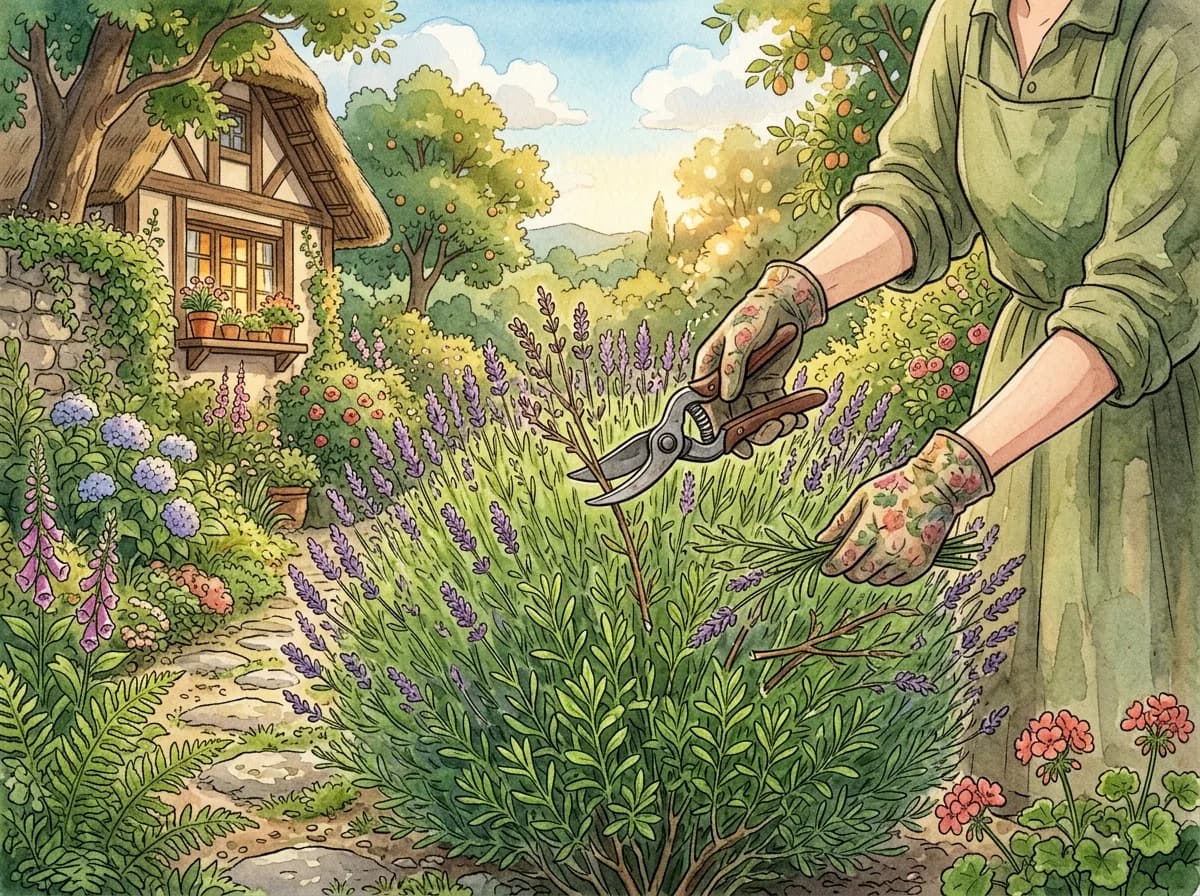
2On thyme, cut a third of the clump, above the points where leaves remain.
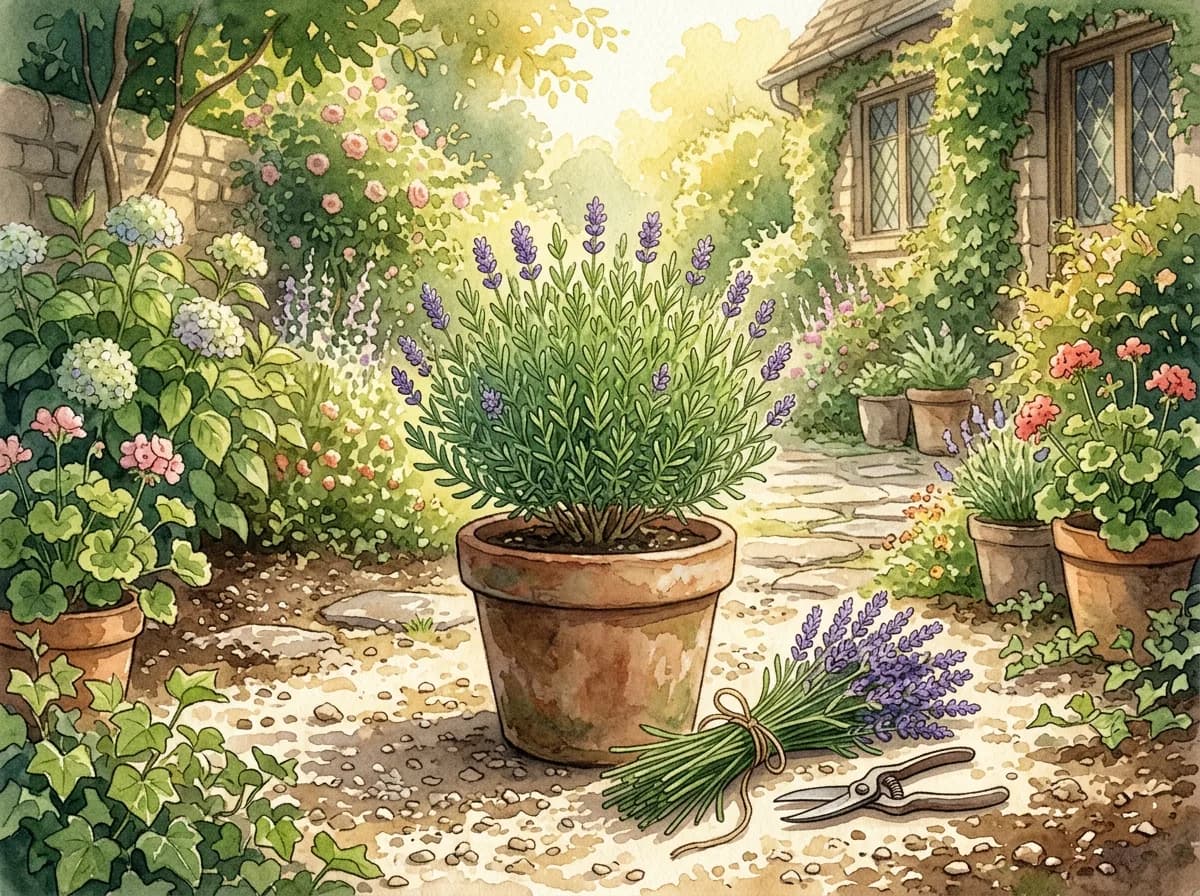
3Remove dry stems and crossing branches from the inside to let air through.
4Water only in long dry spells and do not feed: excess nitrogen softens the plant and makes it woodier.
Dose
Remove at most a third of the plant each time; no more than half of the green.
Which plants
Lavender, thyme, rosemary, sage, santolina. Not applicable to deciduous plants.
Plants mentioned in this remedy
 English lavenderA Mediterranean aromatic shrub with blue-violet spikes much loved by bees, indispensable in dry gardens and…
 ThymePerennial thyme for poor, dry soil, ideal for sunny borders.
 RosemaryA Mediterranean shrub that is very tough once established.
 Pineapple sageA perennial Salvia whose leaves have a fruity pineapple scent.
 Cotton lavender (Santolina)An aromatic subshrub with very fine silvery foliage that forms compact cushions, topped by yellow button…
Precautions
- Do not cut back to old, bare wood: lavender does not regrow well from there.
- Do not prune in mid-winter frost or in the summer heatwave: it stresses the plant.
- Disinfect scissors between plants so as not to pass on diseases.
- A very old clump (more than 6–8 years) is better replaced with new cuttings.
Why it works
These shrubs only regrow from stems with leaves. Pruning at the right time stimulates new shoots on the green part and stops branches from lengthening and going bare.
Sources
- Gardenia.net: pruning lavender; after flowering, remove about a third, without cutting into the woody base (search summary)
- Thyme: gardening guides agree on pruning gently in spring or after flowering without cutting into old wood; no verified institutional source