
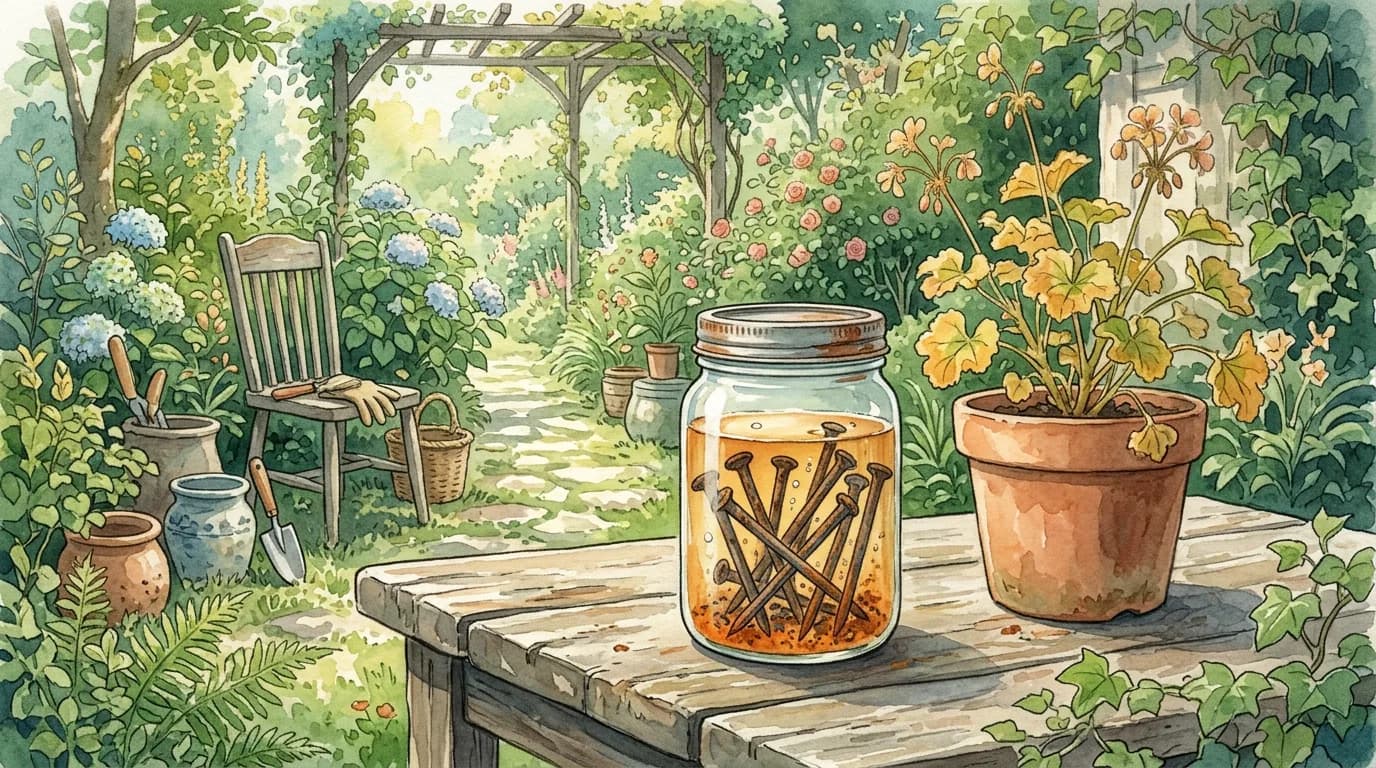
Myth: rusty nails in vinegar do not cure chlorosis
The rust on nails barely dissolves and is not in a form the plant can use; a chelate is better.
Myth. Iron oxide is very poorly soluble, and iron chlorosis in alkaline soils is not due to a lack of iron, but to high pH locking it up. We have not found trials with rusty nails.
Before you start, read the precautions
You will need
- rusty nails
- white vinegar
When to use it
Do not use it as a remedy. If you have chlorosis on young leaves, look at the iron chelates remedy or the iron sulphate one.
Which plants
None: it does not work. For citrus, hydrangeas and fruit trees with chlorosis, use EDDHA (iron chelate).
Plants mentioned in this remedy

Precautions
- Loose nails in the garden can cause wounds, with a risk of tetanus if your vaccination is not up to date.
- A vinegar steeping with nails supplies uncertain amounts of iron and can acidify or damage roots.
- In the chalky soils of Spain, chlorosis is usually due to iron being locked up by the pH, not to there being no iron.
- It delays the real treatment while the plant gets worse.
Why it works
The iron in rust is in the form of poorly soluble crystals, and there is no evidence that diluted vinegar releases useful amounts. With the high pH of a chalky soil, dissolved iron also tends to precipitate and the root cannot use it.
Sources
- North Dakota State University Extension: Iron chlorosis in trees