
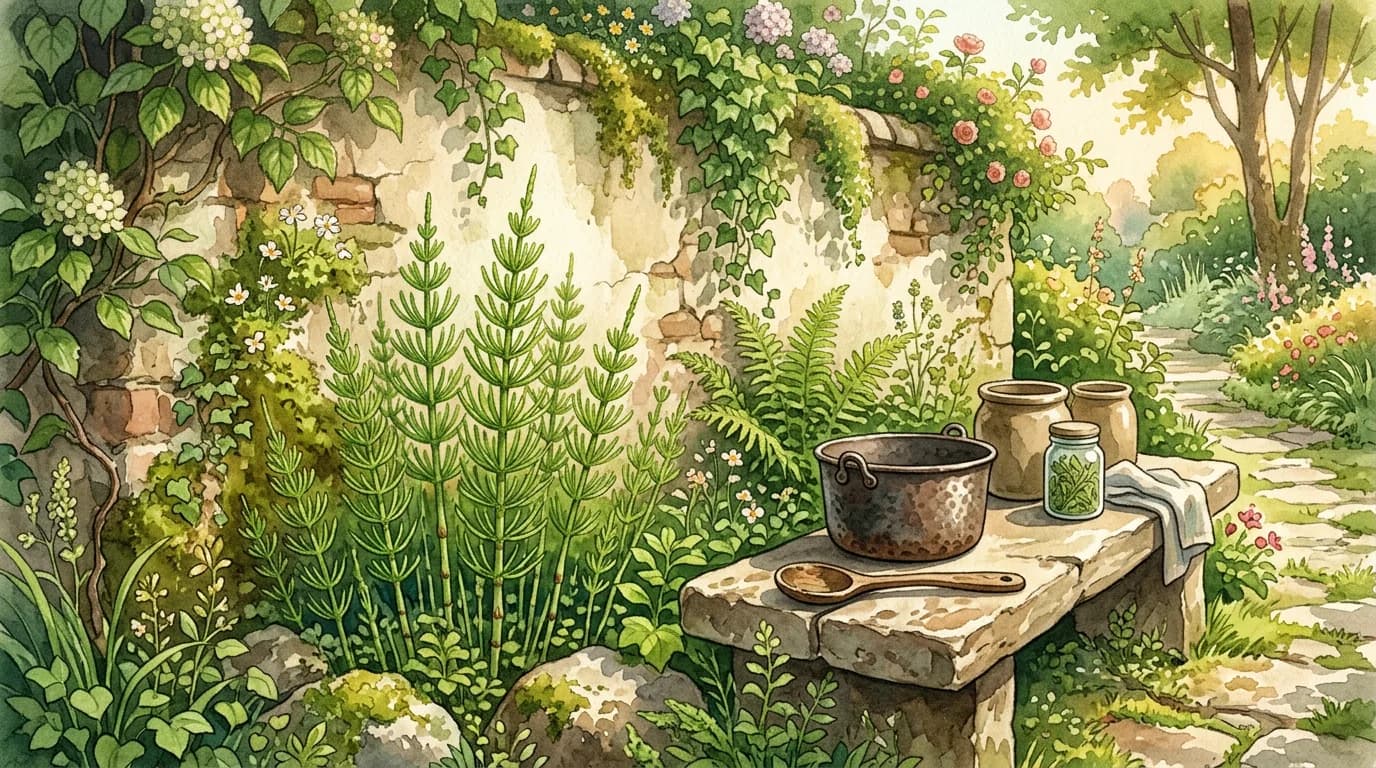
Horsetail decoction (equisetum)
A liquid rich in silica and saponins that is sprayed every week to make life harder for downy mildew, powdery mildew and botrytis.
Works in practice. It is a classic preparation in organic farming; Equisetum arvense is approved in the EU as a basic substance with fungicidal action, but the evidence is patchy (some study with crude extracts found no effect) and there is no single validated recipe. It works, if at all, as a preventive, before the disease appears.
Before you start, read the precautions
You will need
- horsetail
- water
- pot
- spray bottle
When to use it
As a weekly preventive treatment in damp springs and autumns, or from when the first spots are seen, always combined with ventilation and watering at the base.
Step by step
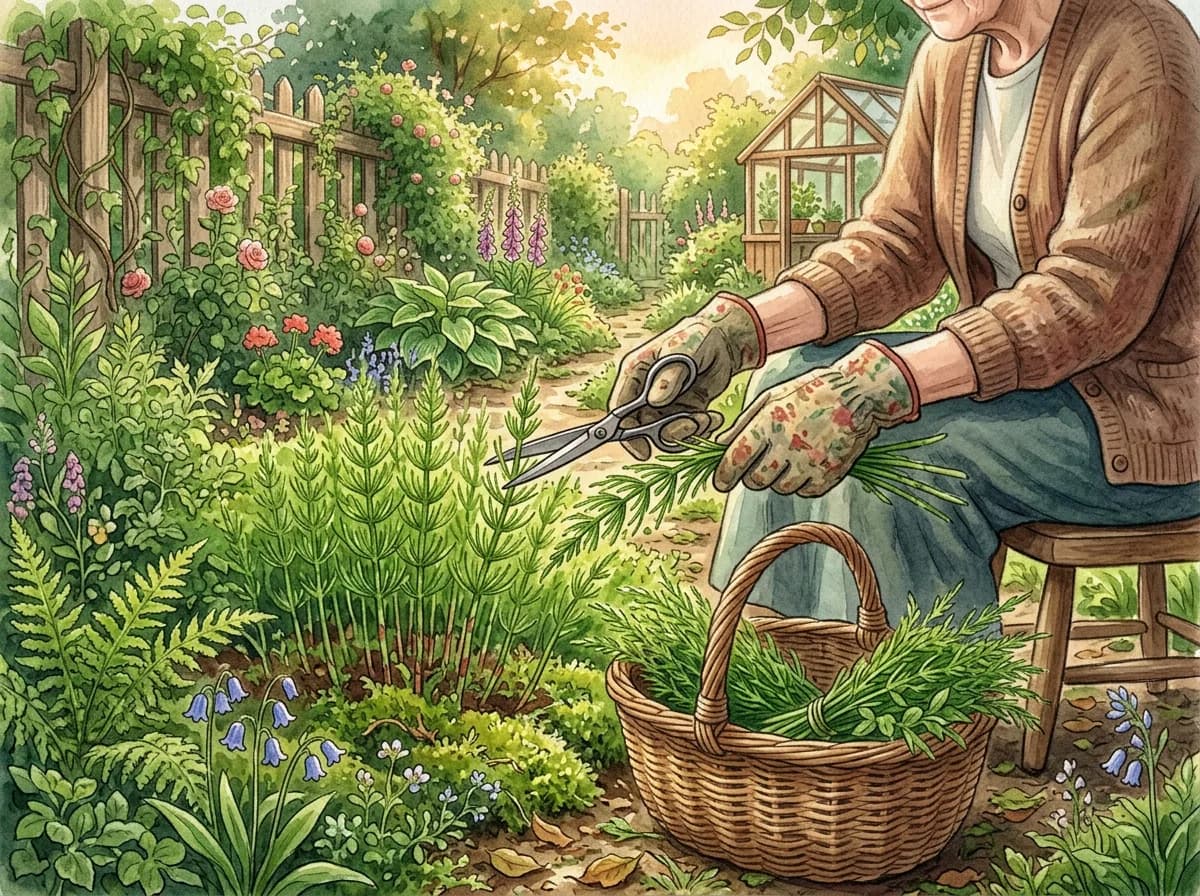
1Gather green stems of Equisetum arvense (common horsetail) from clean ground: 100–150 g (3.5–5.3 oz) dried or 1 kg (2.2 lb) fresh for 10 litres (about 2.6 US gal). Do not use other species from waterlogged areas.
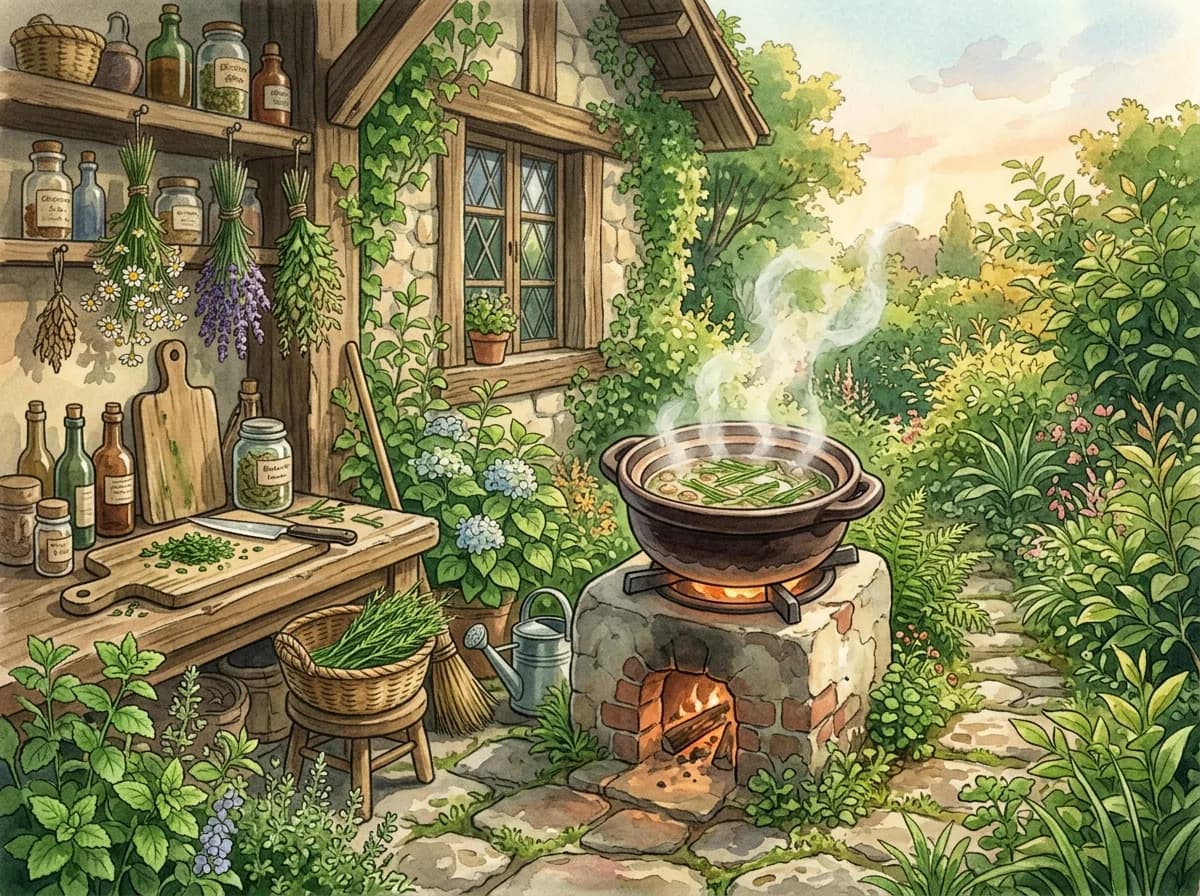
2Leave the stems to soak in the water for 24 h and then boil them for 20–30 minutes over a low heat, with the pot uncovered.
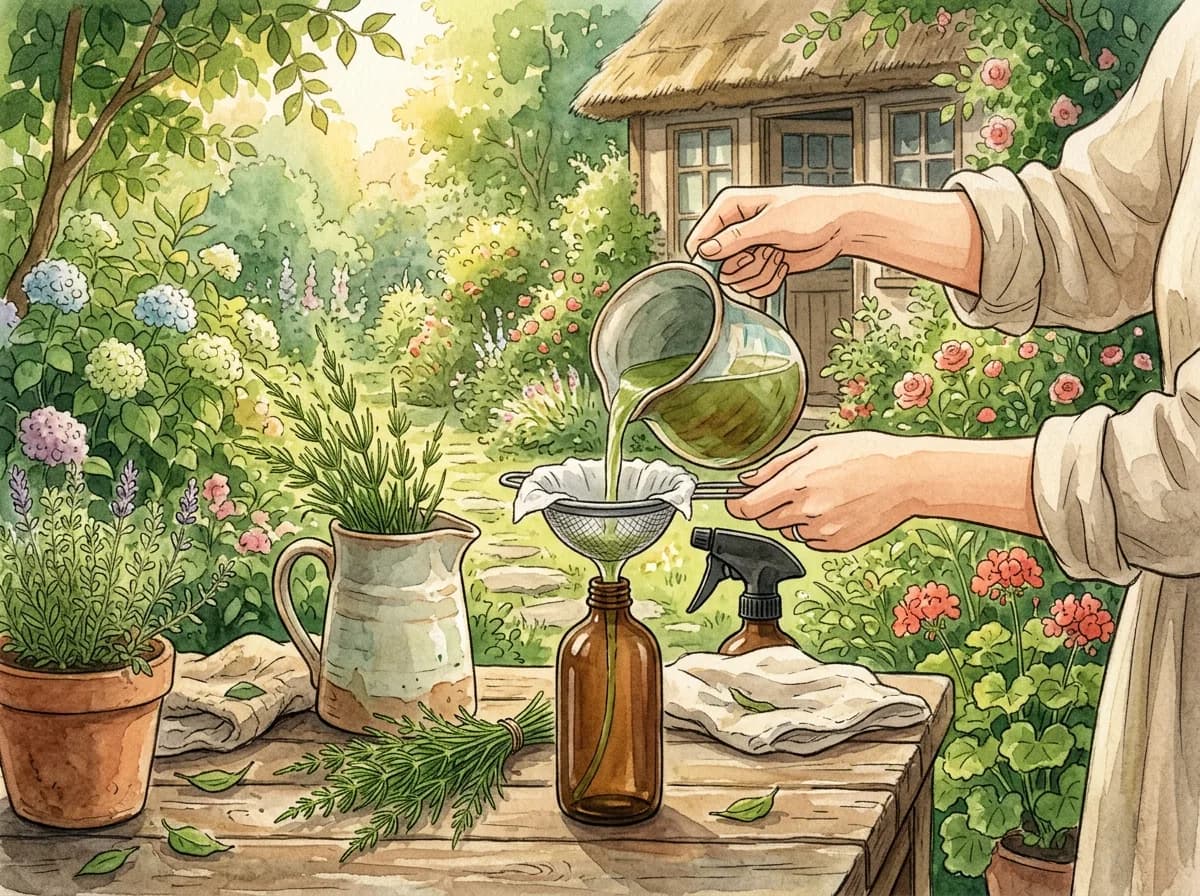
3Cool, strain through a fine cloth and dilute 1 part decoction in 5 of water. Spray in the morning, in the shade or gentle sun, on both sides of the leaf.
4Repeat once a week (3–5 applications in spring and summer) and after heavy rain. Use it the same day: it keeps for very little time.
Dose
As a guide (recipes vary a lot between sources): decoction diluted 1:5 (200 ml, 6.8 fl oz per litre of water), once a week. Prepare it and use it the same day; it keeps for about 2 hours.
Which plants
Tomato, potato, vine, strawberry, courgette, rose, fruit trees. No known risk for most vegetables.
Plants mentioned in this remedy
 cola de caballoA very ancient plant, related to ferns, with hollow, jointed stems.
 Tomato 'Marmande'Marmande tomato, flattened and ribbed, a good size for salads.
 Potato 'Kennebec'The 'Kennebec' potato is versatile in the kitchen, with pale skin.
 Italia table grapeA white grape with large, oval berries and a mild muscat flavour.
 Camarosa strawberryA strawberry with large, firm, deep red fruit, very productive and early.
 Courgette 'Nero di Milano'A cylindrical, very dark green courgette, productive and early, the classic bush type for continuous picking.
 Rugosa roseA very hardy rose with distinctive wrinkled leaves, extraordinarily resistant to cold, salt and disease.
Precautions
- Gather only field horsetail (Equisetum arvense); the horsetail of damp areas (E. palustre) is toxic to livestock.
- Do not expect it to cure plants that are already very diseased: it is preventive.
- It smells and ferments quickly: do not store it.
Why it works
The plant accumulates silica (silicic acid) and saponins. They are believed to physically reinforce the leaves and reduce the germination of spores of fungi such as downy mildew, powdery mildew or botrytis; the mechanism is not fully proven.
Sources
- Centro de Educación Ambiental El Retiro (Madrid): horsetail decoction (3–5 weekly applications, keeps for little time; the page could not be opened and we consulted its summary in a search engine)
- Implementing Regulation (EU) 462/2014: approval of Equisetum arvense L. as a basic substance