
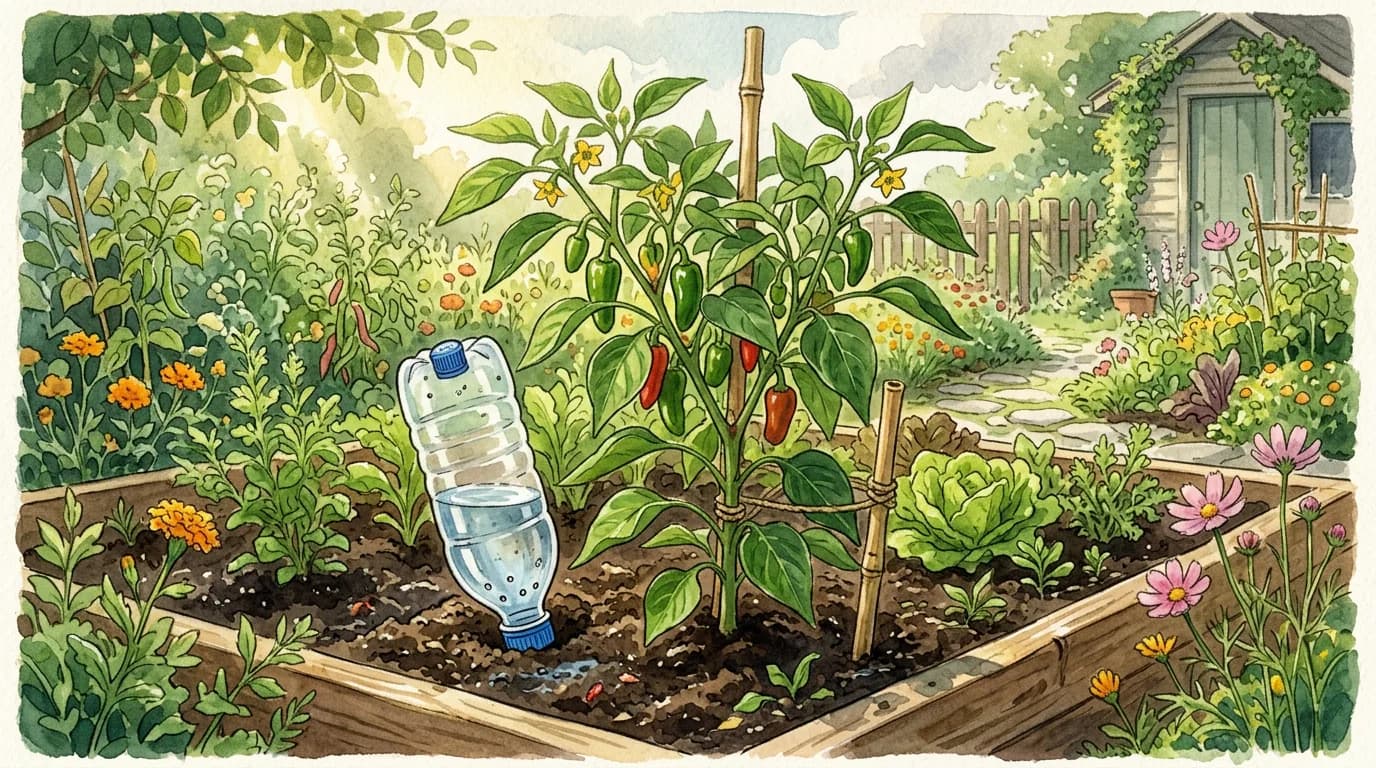
Homemade drip irrigation with a plastic bottle
An upturned bottle with a pierced cap, buried next to the plant, which waters slowly on holiday.
Works in practice. It is widely used and works well in soils with good water-holding capacity. The flow varies with the soil and you have to test before relying on it for a holiday.
Before you start, read the precautions
You will need
- plastic bottles
- water
- needle or hot nail
- small spade
When to use it
In summer or on holiday, for tomatoes, peppers, courgettes and plants in large pots with irregular watering.
Step by step
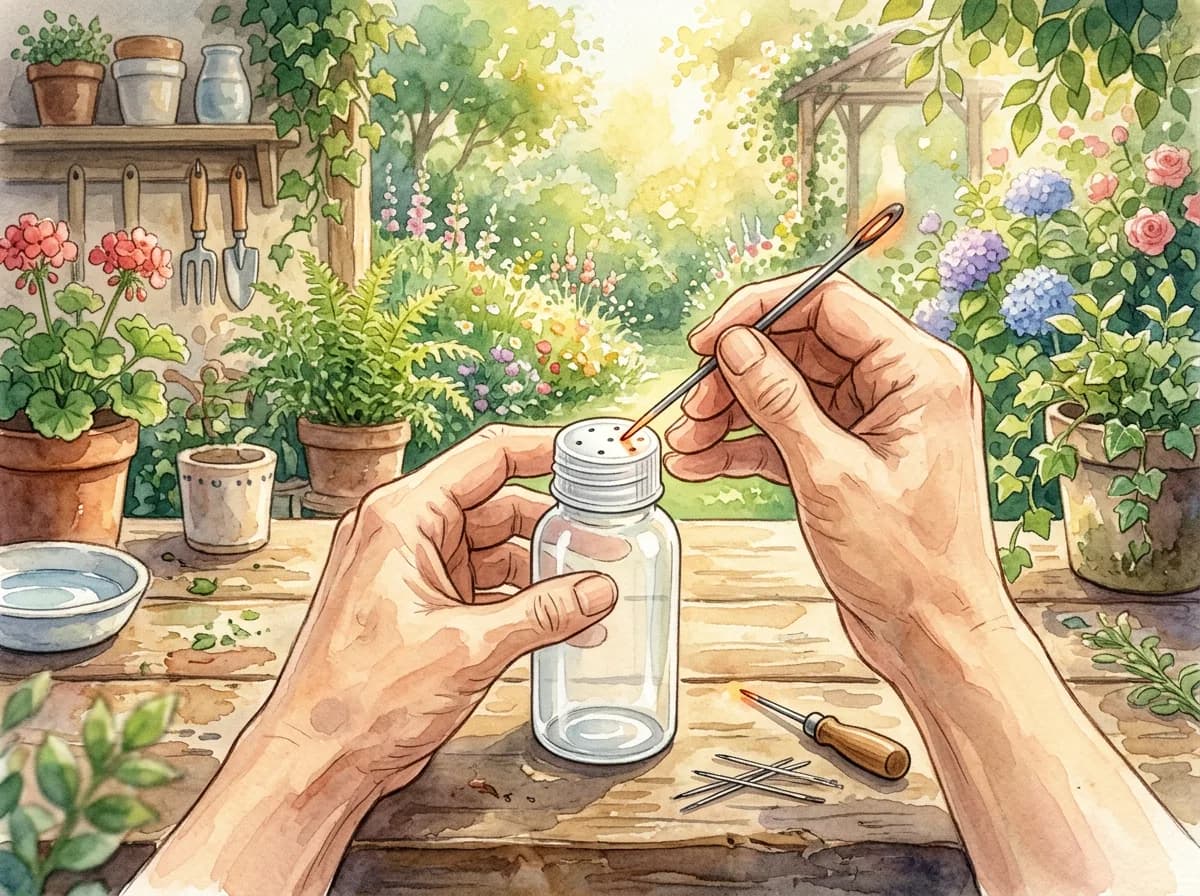
1Make 2–3 small holes (1–2 mm, 0.04–0.08 in) in the cap with a needle or heated nail. The fewer, the slower it will go.
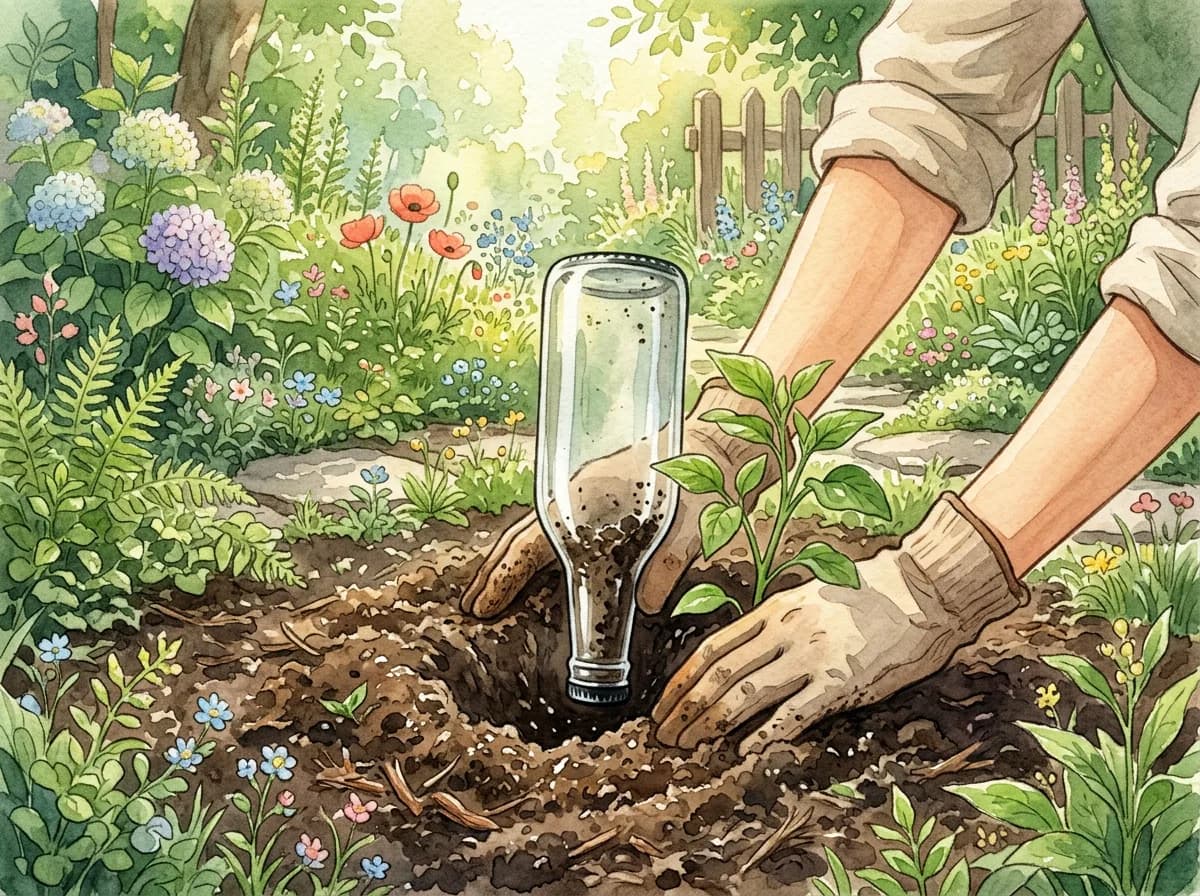
2Dig a hole 10–15 cm (3.9–5.9 in) from the plant, bury the bottle upside down with the cap about 5–10 cm (2–3.9 in) deep and firm the soil.
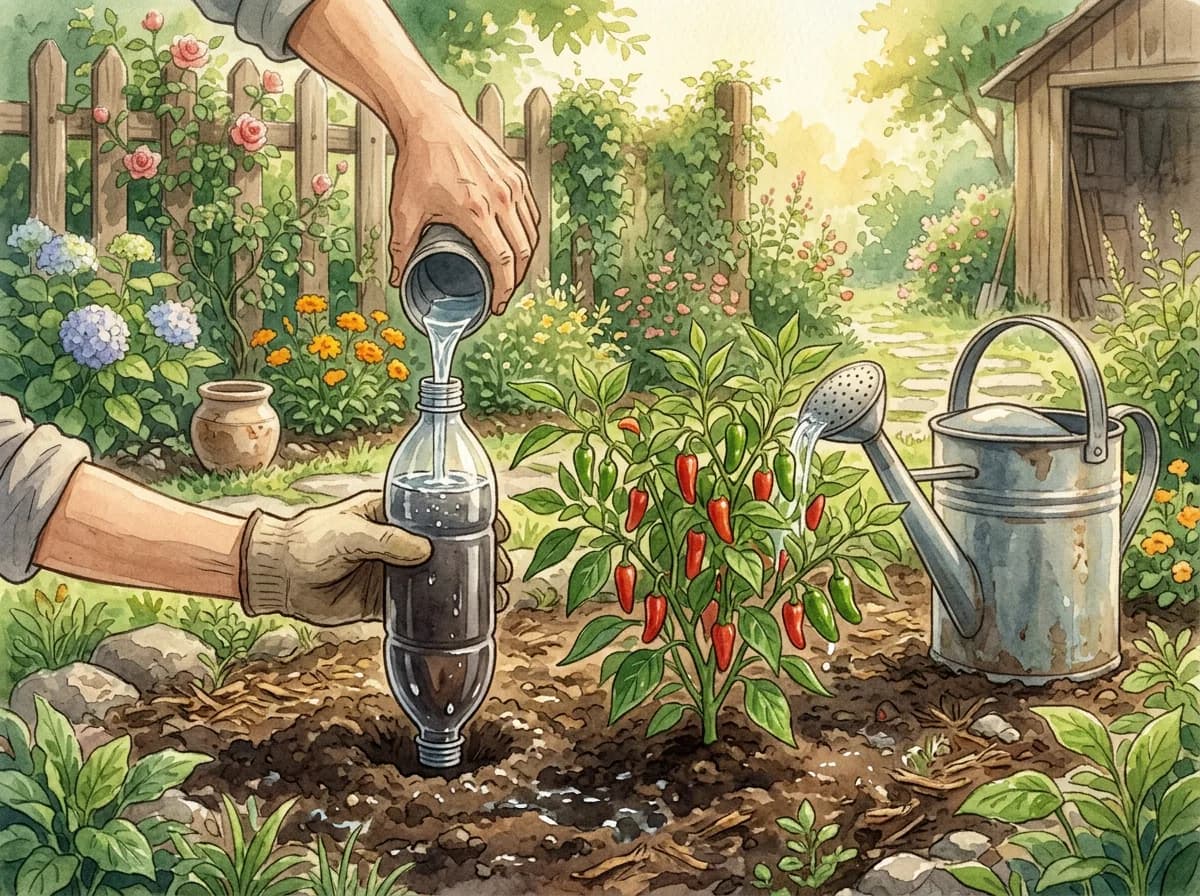
3Fill the bottle from the base (cut the base off or leave it uncut depending on the model) and check the moisture the next day.
4Adjust the number of holes if it empties in less than 24 h (too fast) or if nothing comes out (very clay soil).
Dose
One 1.5–2 L (about 1.6–2.1 quarts) bottle per large plant (tomato, courgette), 10–15 cm (3.9–5.9 in) from the stem; refill every 2–4 days depending on the heat.
Which plants
Tomato, pepper, aubergine, courgette, roses and large pots. Of little use on lettuces or very close-packed shallow-rooted crops.
Plants mentioned in this remedy
 Tomato 'Marmande'Marmande tomato, flattened and ribbed, a good size for salads.
 Sweet pepper 'California Wonder'California Wonder pepper, a blocky bell type with thick flesh, for stuffing or eating fresh.
 Long black aubergineAn aubergine with glossy black fruit, for warm climates.
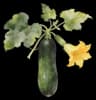 Courgette 'Nero di Milano'A cylindrical, very dark green courgette, productive and early, the classic bush type for continuous picking.
 Cos lettuce (romaine)Cos lettuce, with a long, crisp heart.
Precautions
- Test the system a week before you leave: in sandy soils it empties very quickly.
- Cover the top opening with cloth or a plug to keep out mosquitoes and dirt.
- Plastic exposed to the sun degrades and favours algae: better opaque or buried bottles.
- It is not a substitute for a real dripper for periods of more than 1–2 weeks.
Why it works
Water comes out as the soil dries (through surface tension and soil suction), wetting only the root zone and avoiding the evaporation of surface watering.
Sources
- No verified source: usual urban garden trick. The figures (holes, refill frequency) are indicative and must be tested in your soil.