
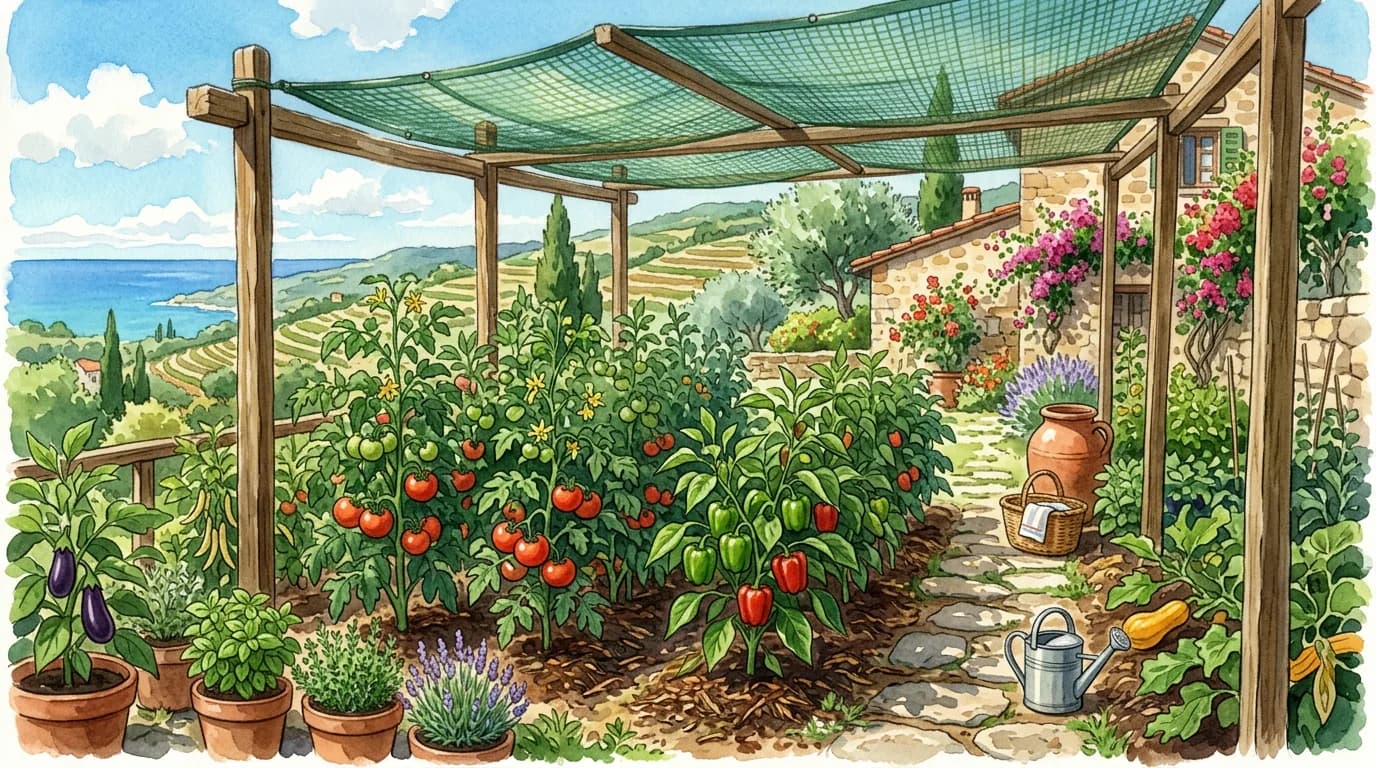
Heat stress in the garden: shade netting and lime in the greenhouse
How to take the edge off extreme summer heat with shade netting, early-morning watering and a light lime whitewash.
Works in practice. Shading and mulching are usual practices in warm climates and 30–50 % nets are what tomato guides cite; for lime whitewash we have not found a validated dose, so it is adjusted by testing.
Before you start, read the precautions
You will need
- shade netting (30–50 %)
- slaked lime
- water
- straw or mulch
- brush
When to use it
With a forecast of more than 35 °C (95 °F) or continued strong sun (July–August in the Mediterranean), especially if you see curled leaves, falling flowers or fruit with white patches.
Step by step
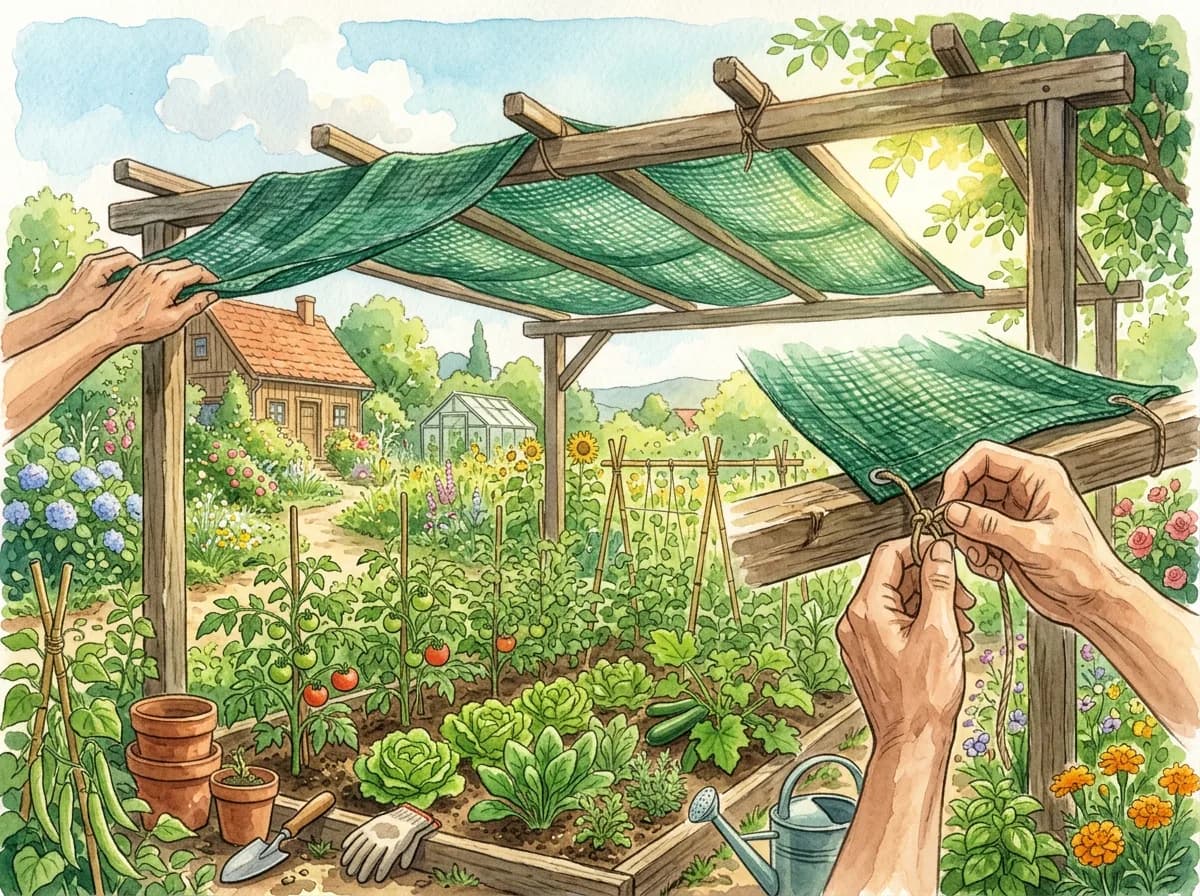
1Put a 30–50 % shade net over posts or canes, a metre above the plants, to block the sun from 12 to 17 h.
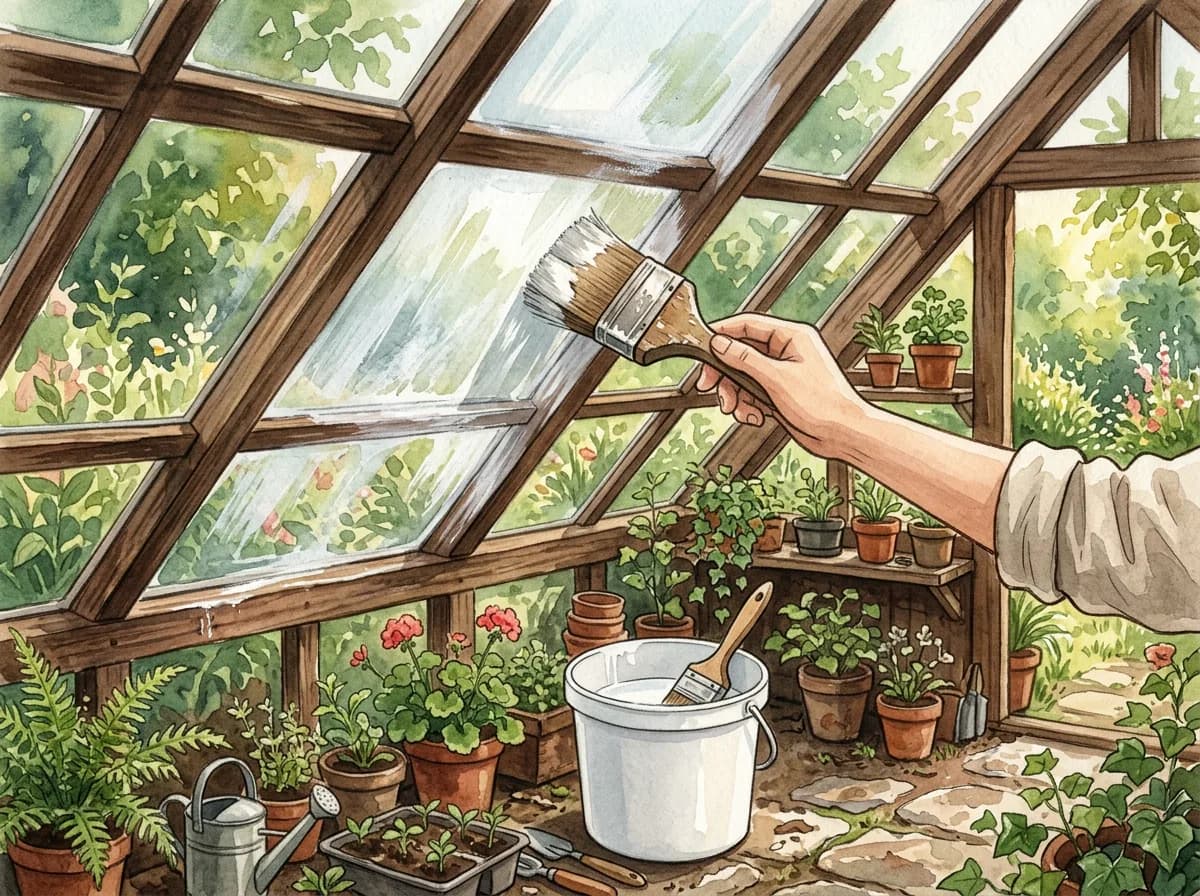
2In a greenhouse, apply on the outside of the roof a very thin wash of slaked lime (like watered-down milk) with a brush or spray bottle. It should end up translucent, not opaque.
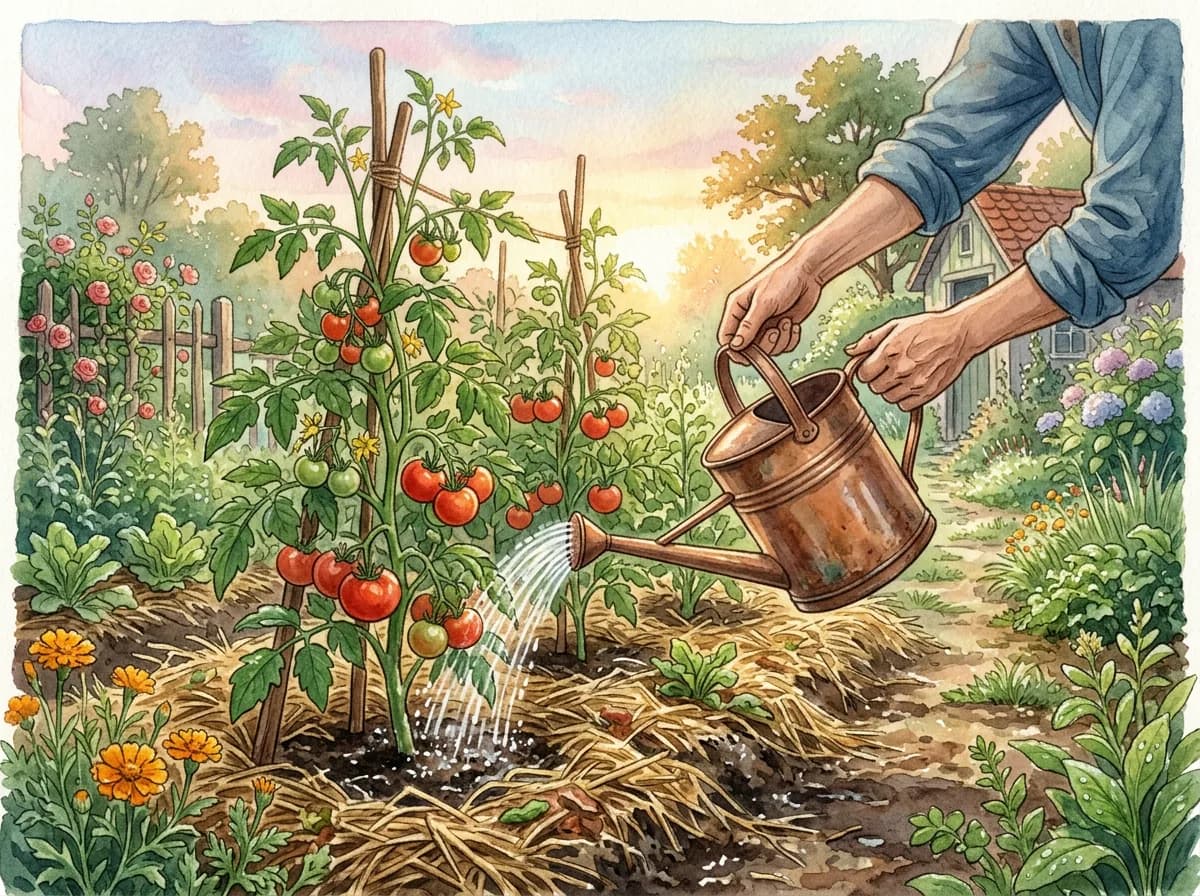
3Water first thing in the morning, deeply and onto the soil, and cover with 5–8 cm (2–3.1 in) of straw or mulch to keep the root cool.
4Do not remove leaves that shade the fruit and remove the net when normal weather returns; the lime washes off by itself with the autumn rains.
Dose
Shade netting: 30–50 %. Lime wash: no backed dose; as a guide, start with a very watery mix that leaves the plastic barely translucent and thicken it only if needed. Better a commercial whitewash product with its label.
Which plants
Tomato, pepper, aubergine, cucumber and lettuce (which bolts in heat). Less necessary on well-acclimatised pumpkin, melon or watermelon.
Plants mentioned in this remedy
 Tomato 'Marmande'Marmande tomato, flattened and ribbed, a good size for salads.
 Sweet pepper 'California Wonder'California Wonder pepper, a blocky bell type with thick flesh, for stuffing or eating fresh.
 Long black aubergineAn aubergine with glossy black fruit, for warm climates.
 Cucumber 'Marketmore'The 'Marketmore' cucumber is a classic salad cucumber resistant to several diseases.
 Cos lettuce (romaine)Cos lettuce, with a long, crisp heart.
 Butternut squashButternut squash: elongated, sweet and long-keeping.
 Piel de Sapo melonPiel de Sapo is the classic Spanish melon, one that keeps for a long time.
Precautions
- Slaked lime is caustic: wear gloves, goggles and a mask, do not spray it in wind and immediately wash off any splash on skin or eyes.
- Do not use quicklime without knowing how to handle it (it reacts with water giving off a lot of heat).
- Excessive shading (more than 50 %) on fruiting plants reduces the harvest and lengthens the stems.
- Do not water the leaves at midday in strong sun: it does not scorch, but it wastes water.
Why it works
In heat, tomato pollen becomes sticky and barely viable and flowers drop: the problem starts at daytime highs above about 29 °C (84 °F) and nights above about 21 °C (70 °F), and some sources speak of 32 °C (90 °F). The net and the lime reflect part of the radiation and lower the temperature.
Sources
- University of Missouri Integrated Pest Management: how tomatoes set fruit; day and night heat, ideal humidity 40–70 % for pollination (search summary). Shading and lime whitewash: no verified profile