
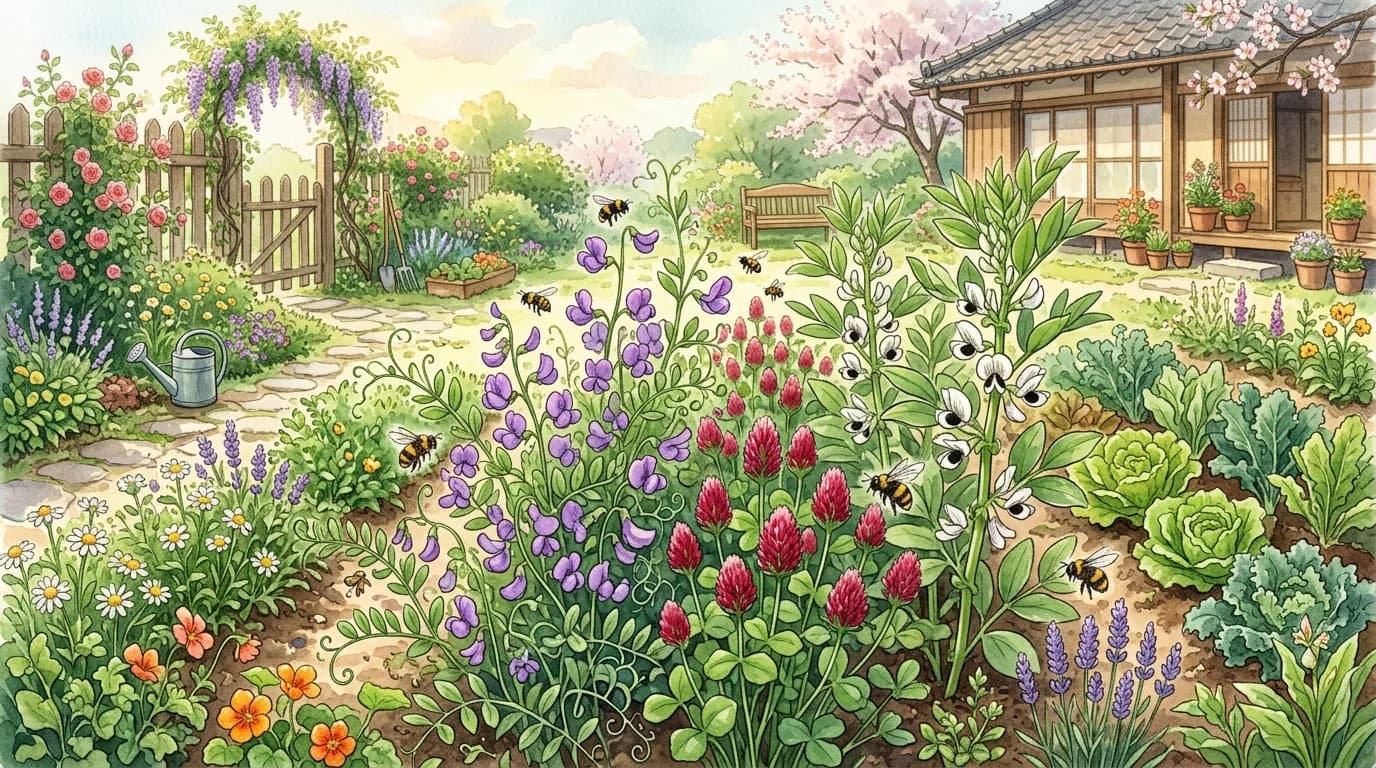
Cut green manure as mulch
Sow legumes in autumn, cut them in flower and leave the remains on the surface to feed the soil.
Well established. Green manures with legumes are widely documented in agronomy: they fix atmospheric nitrogen and supply organic matter. This profile deals with cutting them and leaving them as mulch; for the general technique see “Green manures: sowing to feed the soil”.
Before you start, read the precautions
You will need
- vetch, broad bean or clover seeds
- sickle or scissors
- rake
When to use it
Sow in autumn (October–November in a Mediterranean climate) and cut at the start of flowering, at the end of winter or in spring, before planting the summer crop.
Step by step
1Sow a mix of vetch, broad bean, field pea or crimson clover in the free bed in autumn.
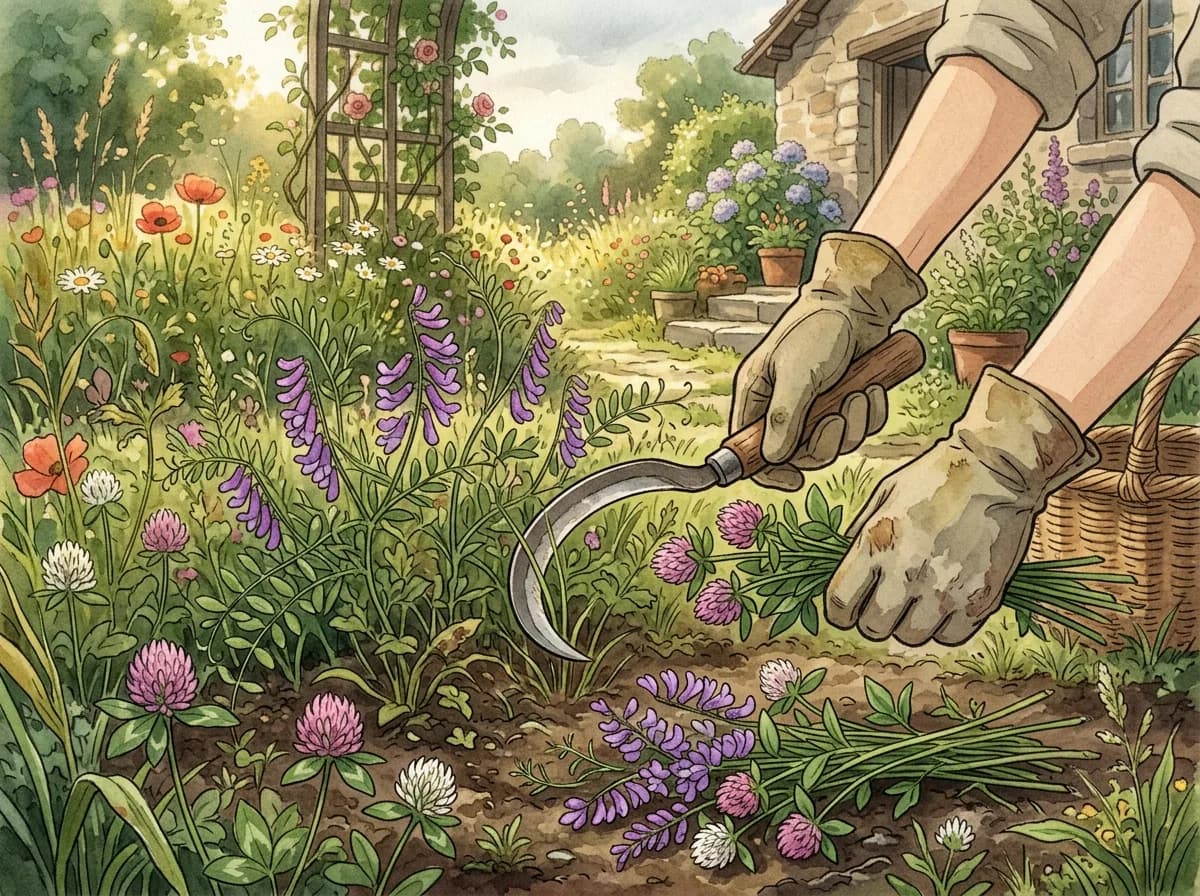
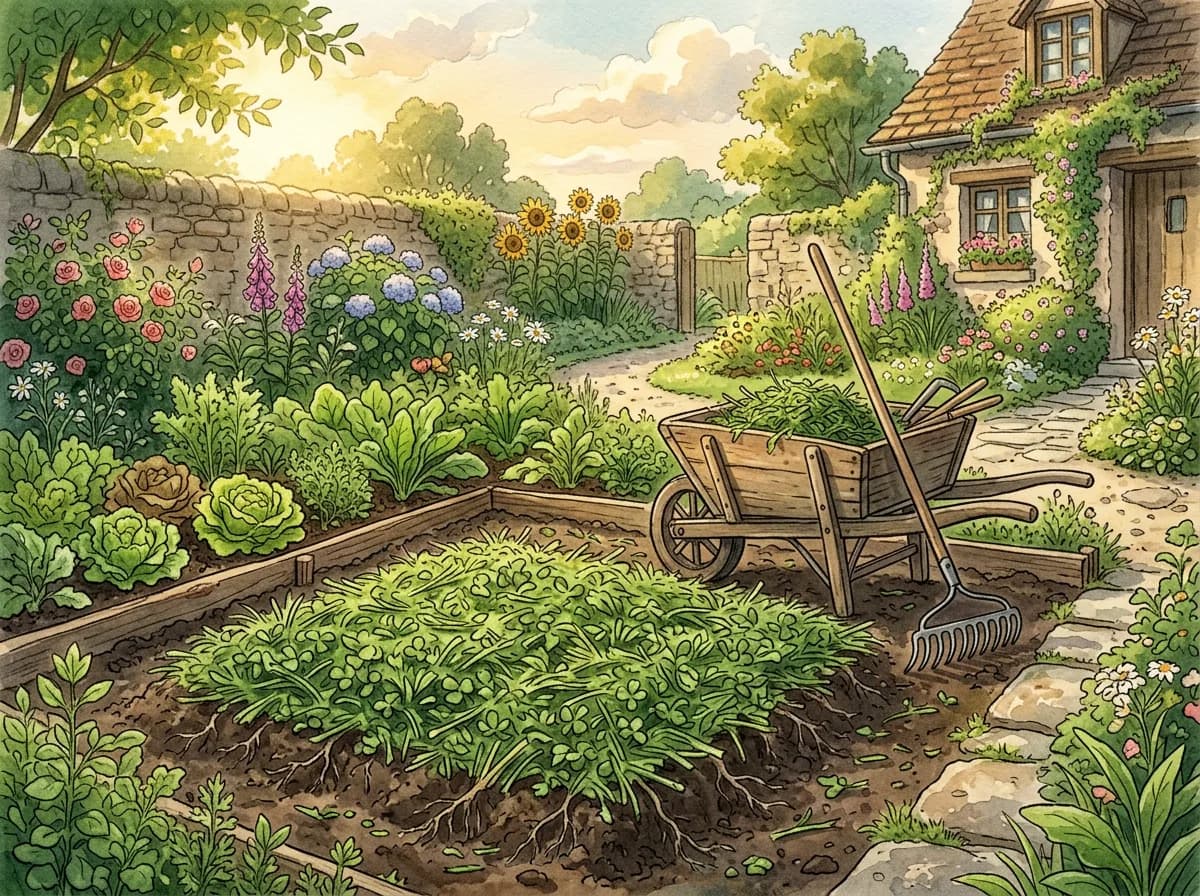
2When they begin to flower, and before they set seed, cut them at ground level with a sickle and leave the remains on the soil as mulch.
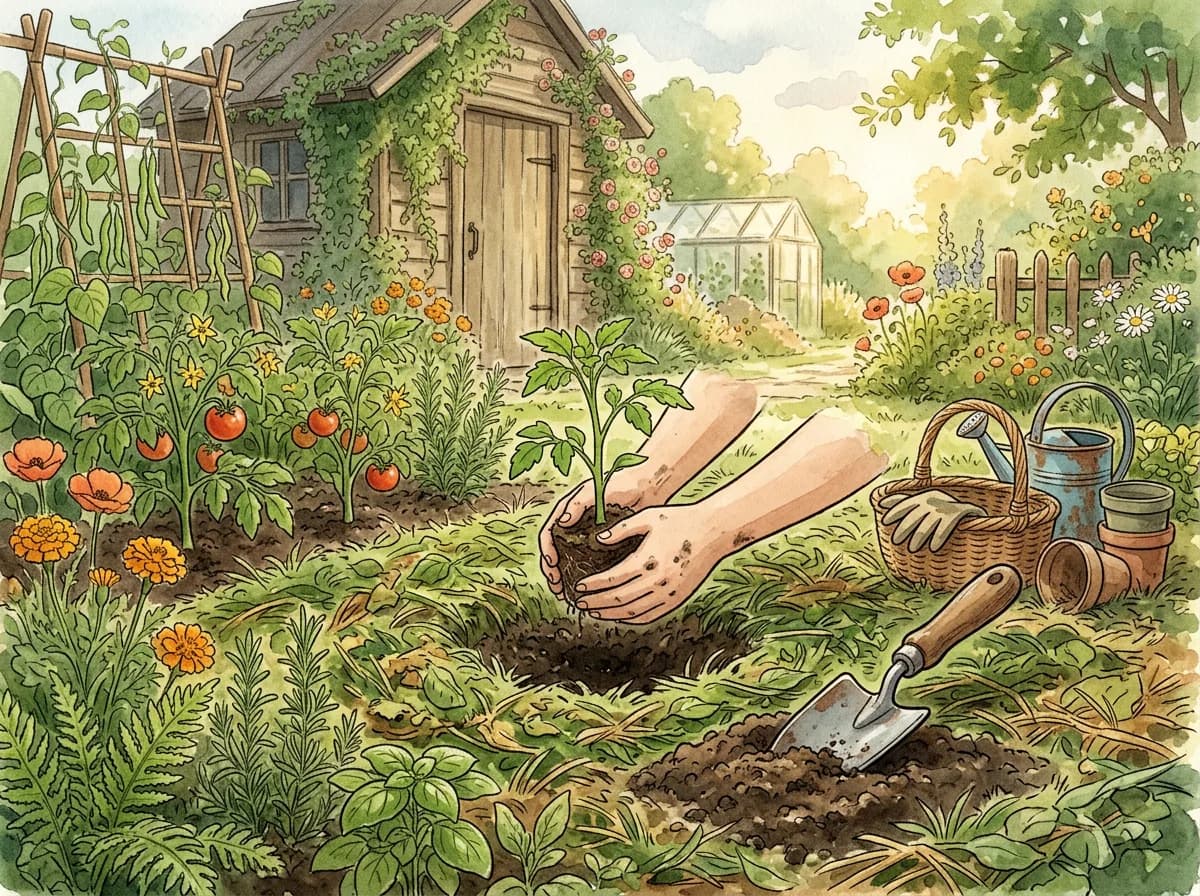
3Wait 2–3 weeks and transplant tomatoes, peppers or courgettes by opening holes in the cut layer.
Dose
Indicative sowing dose: vetch at around 5–10 g/m² (1 lb per 1000 square feet, ≈5 g/m², is the usual figure from seed sellers; more if you broadcast or sow late); broad bean more widely spaced. Cut when it reaches flowering (50 %), never with ripe seed.
Which plants
Excellent before nightshades, cucurbits, cabbage and maize. Less useful before legumes, which already fix their own nitrogen.
Plants mentioned in this remedy
 Savoy cabbageSavoy cabbage, with blistered, crinkled leaves, which grows sweeter with the cold; it does best in autumn…
 SweetcornMaize with tender, sugary kernels for eating on the cob.
Precautions
- If you let them set seed, they become weeds.
- Very abundant remains can lock up nitrogen for a few weeks if they are very woody: cut them early, in flower.
- Wait 2–3 weeks before sowing small seeds over them.
- In a dry summer, water lightly so the remains break down.
Why it works
Legumes live in symbiosis with bacteria (Rhizobium) that fix nitrogen from the air. When cut and broken down, that nitrogen and the organic matter become available to the next crop.
Sources
- University of Maine Extension: Cover crops and green manures (sowing tables and legumes)
- Purdue Extension: feeding the garden soil with cover crops