
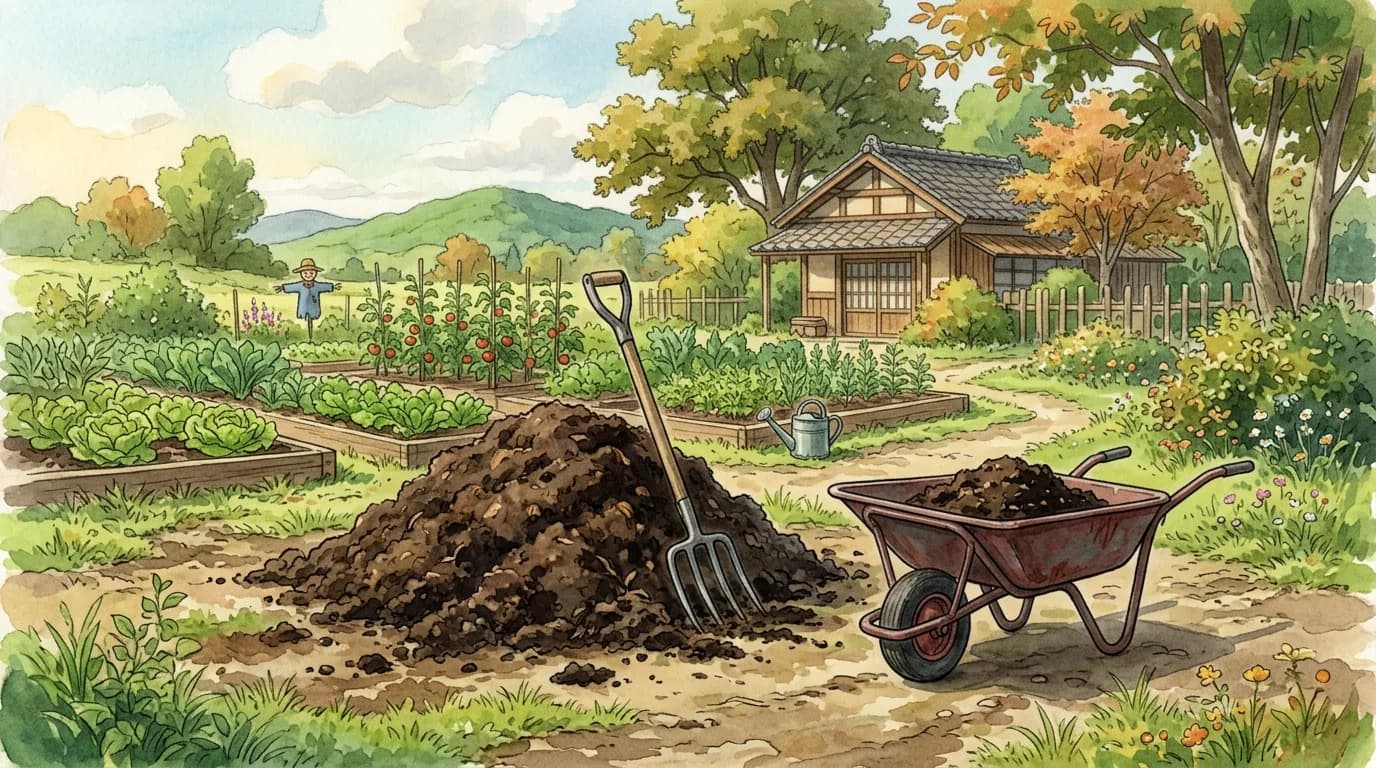
Composted manure
Well-matured manure is a balanced base fertiliser: it supplies nitrogen, phosphorus, potassium and plenty of organic matter.
Well established. Composted manure is a classic organic amendment that improves soil structure and supplies slow-release nutrients. Fresh, it burns roots and can carry pathogens; note that a home heap rarely reaches the temperatures needed (54–66 °C, 129–151 °F) to reduce them.
Before you start, read the precautions
You will need
- horse, cow, sheep or rabbit manure
- straw
- tarpaulin
- fork
When to use it
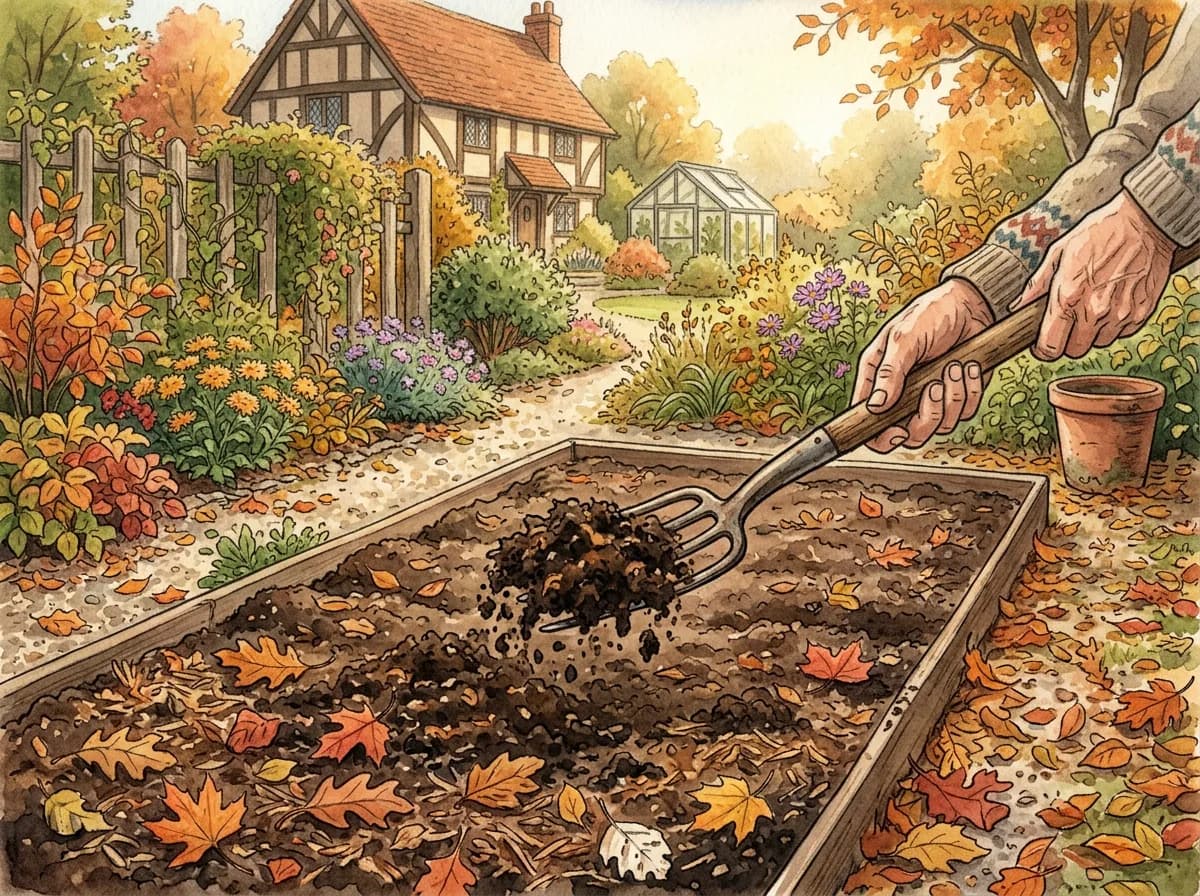
Apply it in autumn or at the end of winter, before planting. Never fresh on growing crops.
Step by step
1Heap the manure with straw or dry leaves, moisten it and cover it with a tarpaulin so it is not washed by rain.
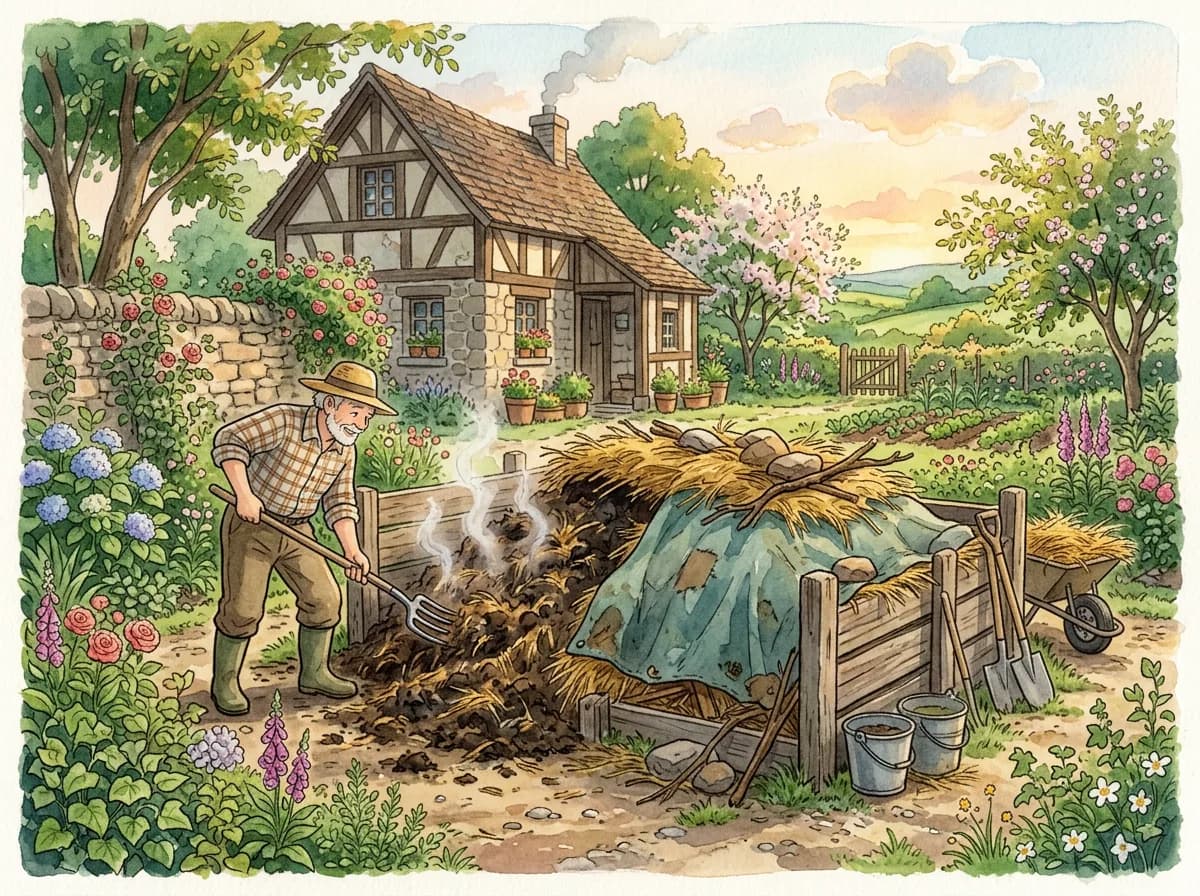
2Turn it regularly. It should heat up (ideally above 55 °C, 131 °F for several days) and then cool down. As a guide, it needs at least 6 months of maturing.
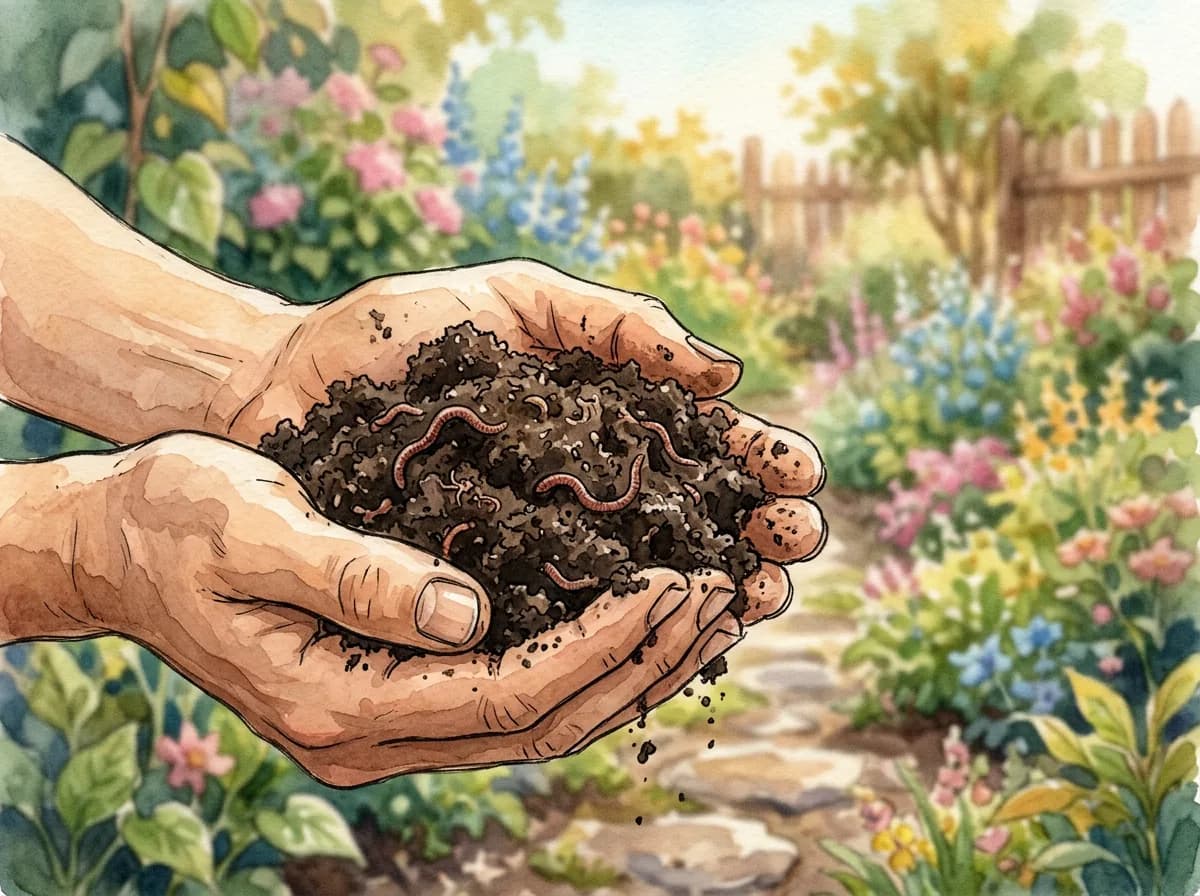
3When it is dark, crumbly and smells of earth, spread it 3–5 cm (1.2–2 in) deep on the bed and mix it lightly with the soil.
Dose
Indicative dose (common practice, no verified figure): 3–5 kg (6.6–11 lb) per square metre, once a year, in autumn or at the end of winter. In pots, no more than 20 % of the growing medium.
Which plants
Demanding vegetables (tomato, courgette, cabbage, potato, maize), fruit trees and roses. Do not use it on carrot in the same year (it forks).
Plants mentioned in this remedy
 Tomato 'Marmande'Marmande tomato, flattened and ribbed, a good size for salads.
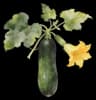 Courgette 'Nero di Milano'A cylindrical, very dark green courgette, productive and early, the classic bush type for continuous picking.
 Savoy cabbageSavoy cabbage, with blistered, crinkled leaves, which grows sweeter with the cold; it does best in autumn…
 Potato 'Kennebec'The 'Kennebec' potato is versatile in the kitchen, with pale skin.
 SweetcornMaize with tender, sugary kernels for eating on the cob.
Precautions
- Do not use fresh manure: it burns roots, contains weed seeds and can carry E. coli or Salmonella.
- If you cannot guarantee it was properly hot-composted, treat it as raw manure: the US organic standard (NOP) asks for 90 days between application and harvest for crops that do not touch the soil (tomato, pepper) and 120 days for those that do (leaf, root).
- Check that the hay or straw from the stable was not treated with persistent herbicides (such as aminopyralid), which damage tomatoes and beans.
- Chicken and pig manure are stronger: treat them separately (see composted chicken manure).
Why it works
Composting stabilises ammoniacal nitrogen, destroys pathogens and seeds and leaves humus. That humus holds water and nutrients and feeds soil life.
Sources
- University of Connecticut: compost, compost tea and manure and food safety (home heaps rarely reach 54–66 °C; 120 days after applying uncomposted manure)
- University of Nevada, Extension: chicken manure in the vegetable garden (90 days for crops with no contact with the soil and 120 days with contact)