
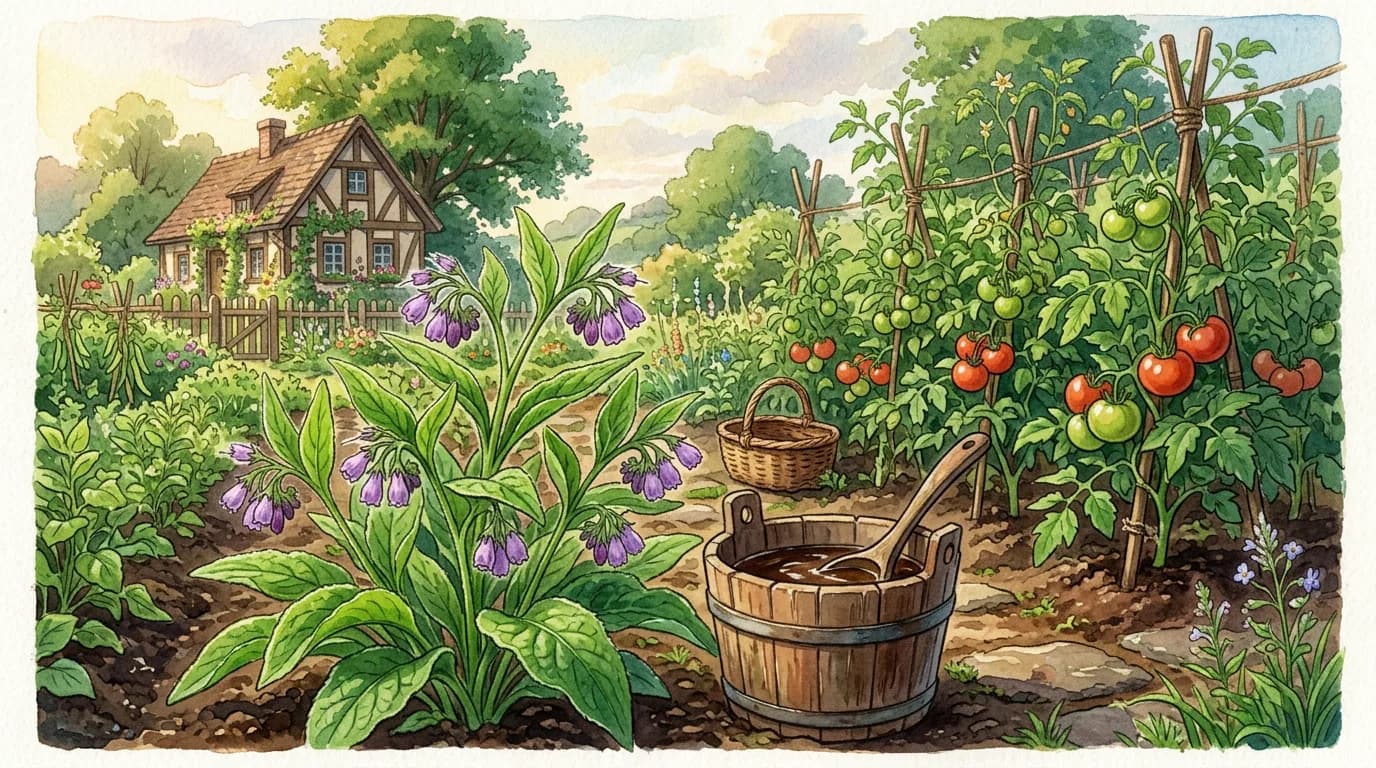
Comfrey feed
A homemade liquid fertiliser with more potassium than nitrogen, meant for plants that flower and set fruit.
Works in practice. It is a fertiliser of traditional use. It is recommended for flowers and fruit (tomato) and comfrey is usually rich in potassium, but in a citizen-science study the potassium difference with nettle was not significant and the concentration varied a lot between samples. There are no trials that set an exact dose.
Before you start, read the precautions
You will need
- comfrey leaves
- water
- bucket with a loose lid
- stone or brick
When to use it
When fruiting plants begin to flower and set fruit (tomato, pepper, aubergine, courgette, potato). Also on strawberries and flowering plants.
Step by step
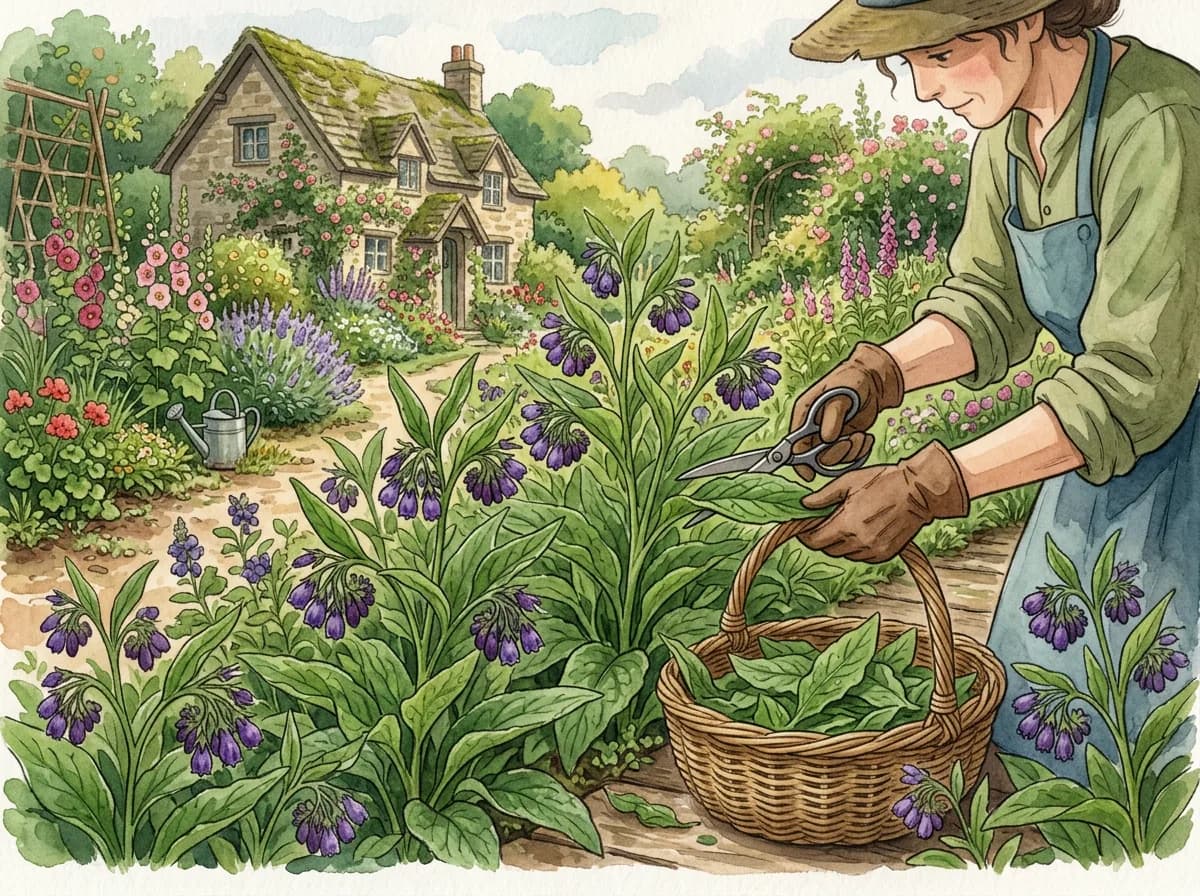
1Cut comfrey leaves wearing gloves (they are rough and hairy) and chop them with scissors. You can cut several times a year without destroying the plant.
2Fill a bucket with 1 kg (2.2 lb) of leaves for every 10 litres (about 2.6 US gal) of water without chlorine (rain or left to stand). Put a stone on top to keep them submerged and cover without closing fully.
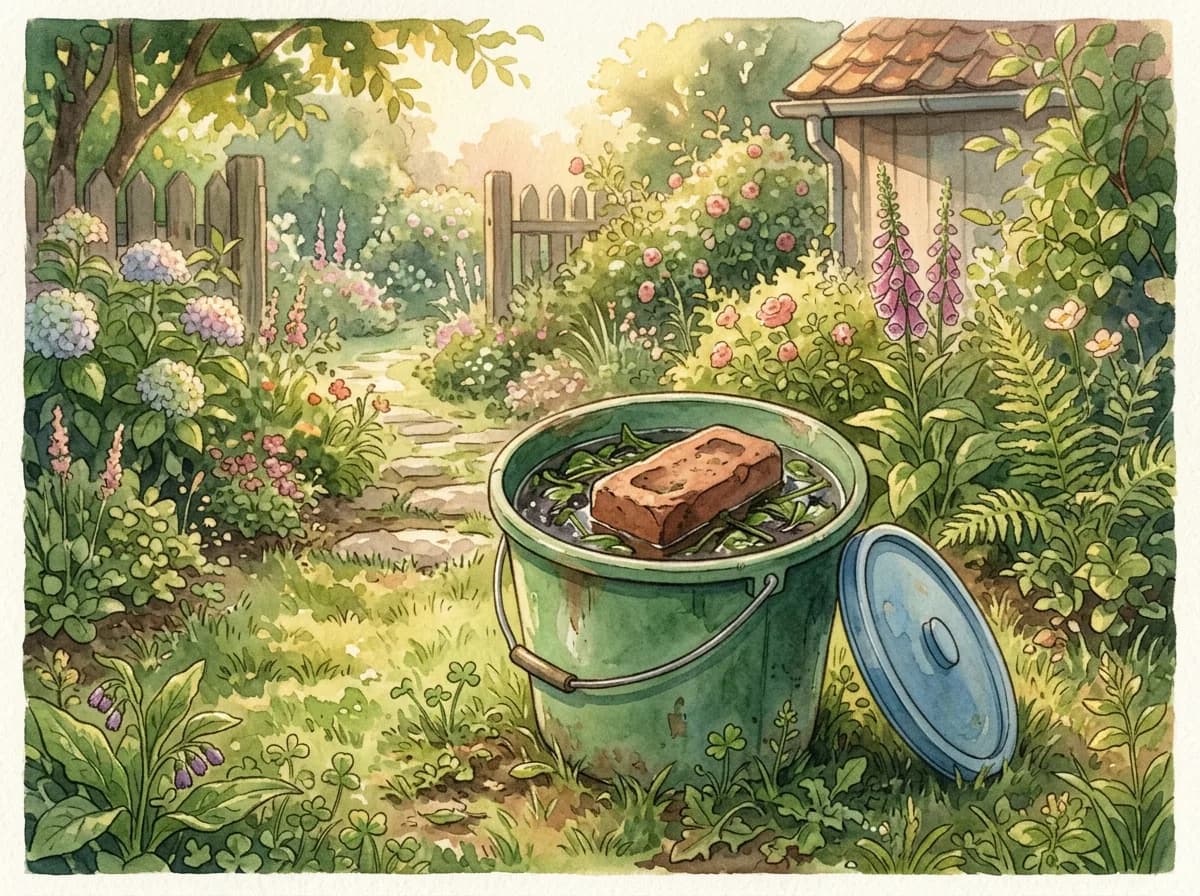
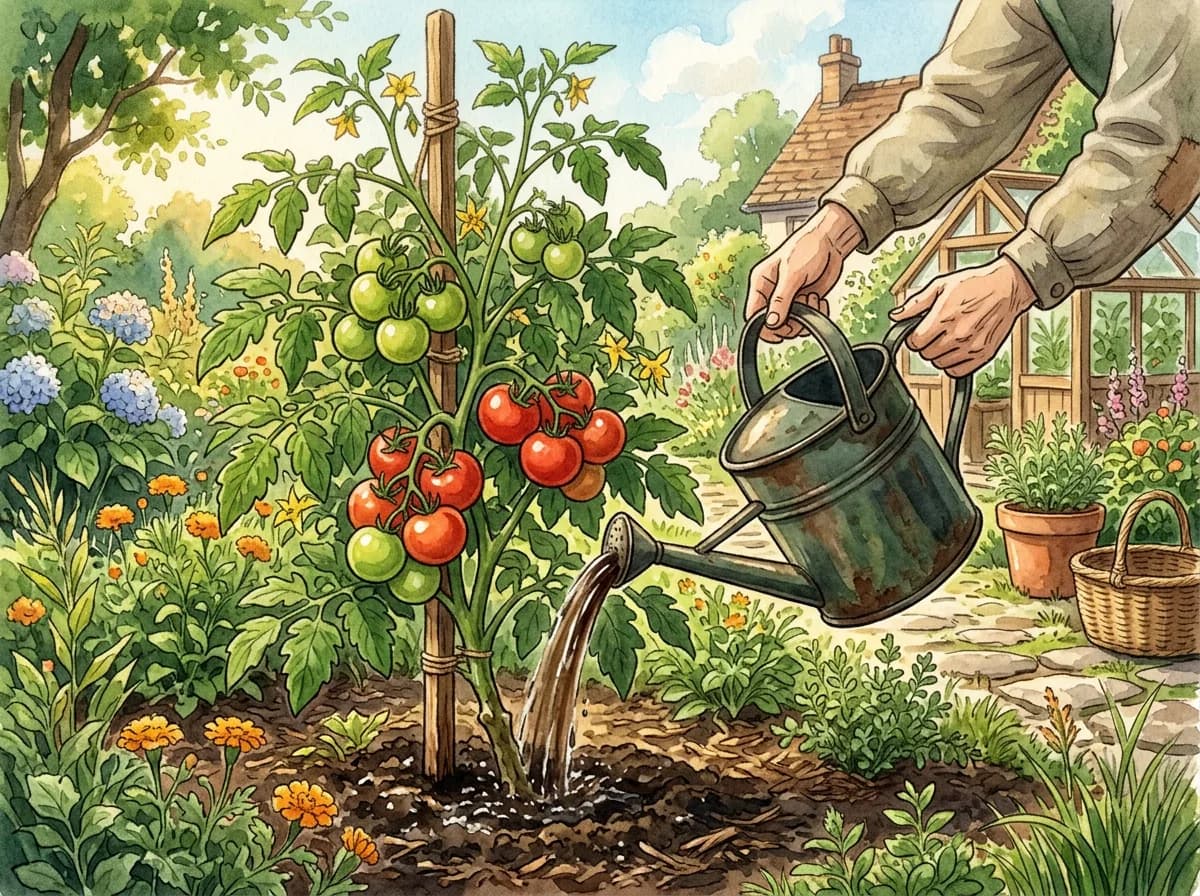
3Stir every few days. After 2–3 weeks (less in the heat) the liquid will be dark with a strong smell. Strain it, dilute it and water at the base of the plants.
Dose
Indicative dose: The usual guidance is 1 part of liquid to 10 of water (more if it is very dark), or 1:20 for the thick liquid. Apply at the base of the plant every 10–15 days during flowering and fruit set.
Which plants
Good for nightshades, cucurbits, strawberries and flowers. It does not supply what leaf vegetables need, which ask for more nitrogen (nettle feed is better).
Plants mentioned in this remedy

Precautions
- It smells very bad: put it away from windows and neighbours. A loose lid keeps flies out.
- Do not use it undiluted: it can burn roots.
- Comfrey spreads and is hard to remove if you plant it in the vegetable garden: sow it in a separate corner and do not let it set seed.
- Comfrey contains pyrrolizidine alkaloids, which are toxic to the liver: do not take it as an infusion or in salad, do not spray the feed on edible leaves or fruit and wash your hands after handling it.
- Too much liquid organic feed in a pot can make the growing medium salty; alternate with waterings of clean water.
Why it works
It is said that its deep root brings nutrients from lower layers of the soil up to the leaves (a common claim in popular articles, with no evidence cited). When steeped, some of the potassium and other minerals pass into the water.
Sources
- Gardeners' World: how to make a comfrey liquid feed (1 part to 10 of water; tomatoes)
- Garden Organic (UK): comparison of comfrey and nettle feeds
- Royal Horticultural Society: homemade fertilisers (comfrey; dilution 1:20)