

Chilli steeping for aphids and small caterpillars
A spicy repellent made from chillies, useful as an occasional help and with clear handling precautions.
Use with care. Reviews of homemade preparations with chilli and garlic indicate variable effectiveness and lower than commercial insecticides; in the garden the results are patchy and it is irritating for you, your pets and useful insects. There is no validated dose.
Before you start, read the precautions
You will need
- chillies
- water
- potassium soap
- gloves
- spray bottle
When to use it
When aphids or young caterpillars gather on tender shoots and you do not want to use bought products. It is not a shock treatment.
Step by step
1Wearing gloves (and without touching your face), chop 20–30 g (0.7–1.1 oz) of fresh chillies or 5 g (0.2 oz) of dried ones with their seeds.
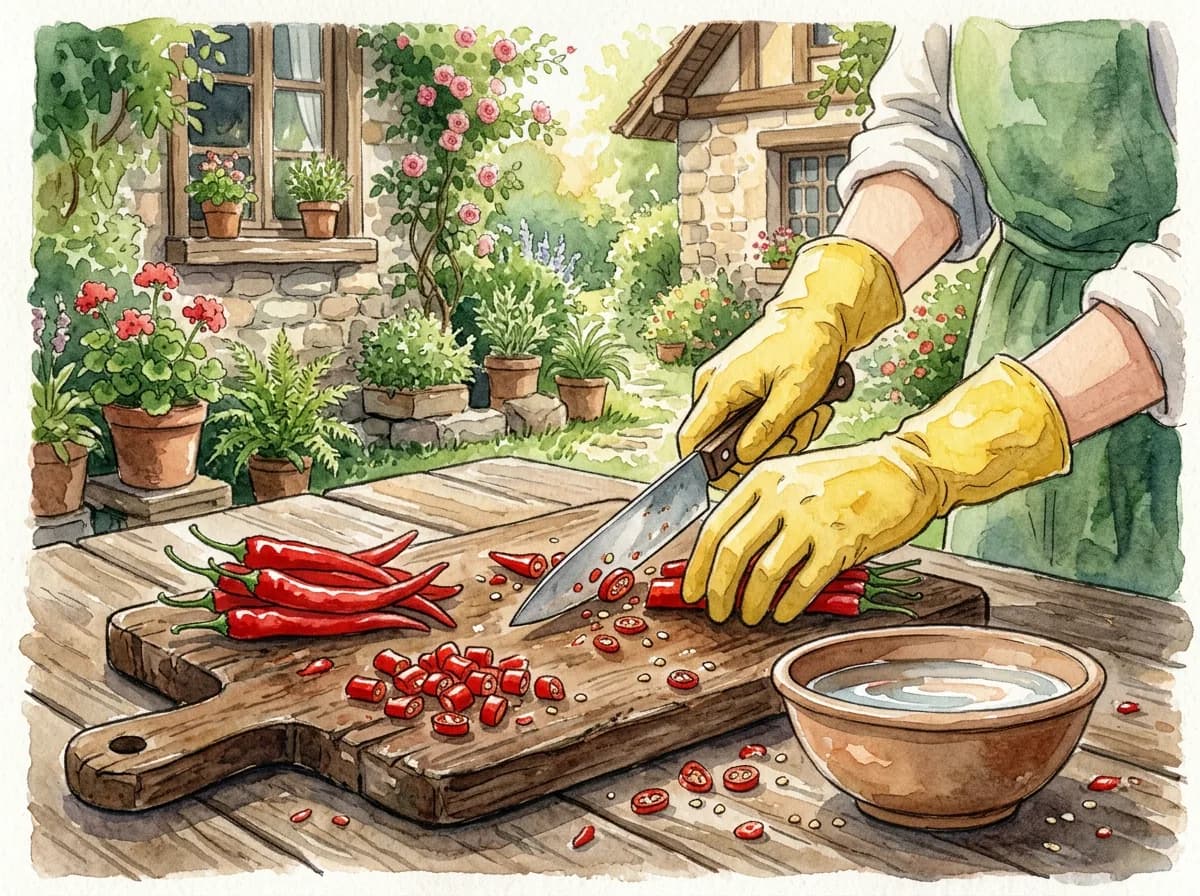
2Cover with 1 litre (about 1.1 quarts) of water and leave to steep for 24 h in a jar covered with a cloth, in a cool place and out of reach of children and pets.
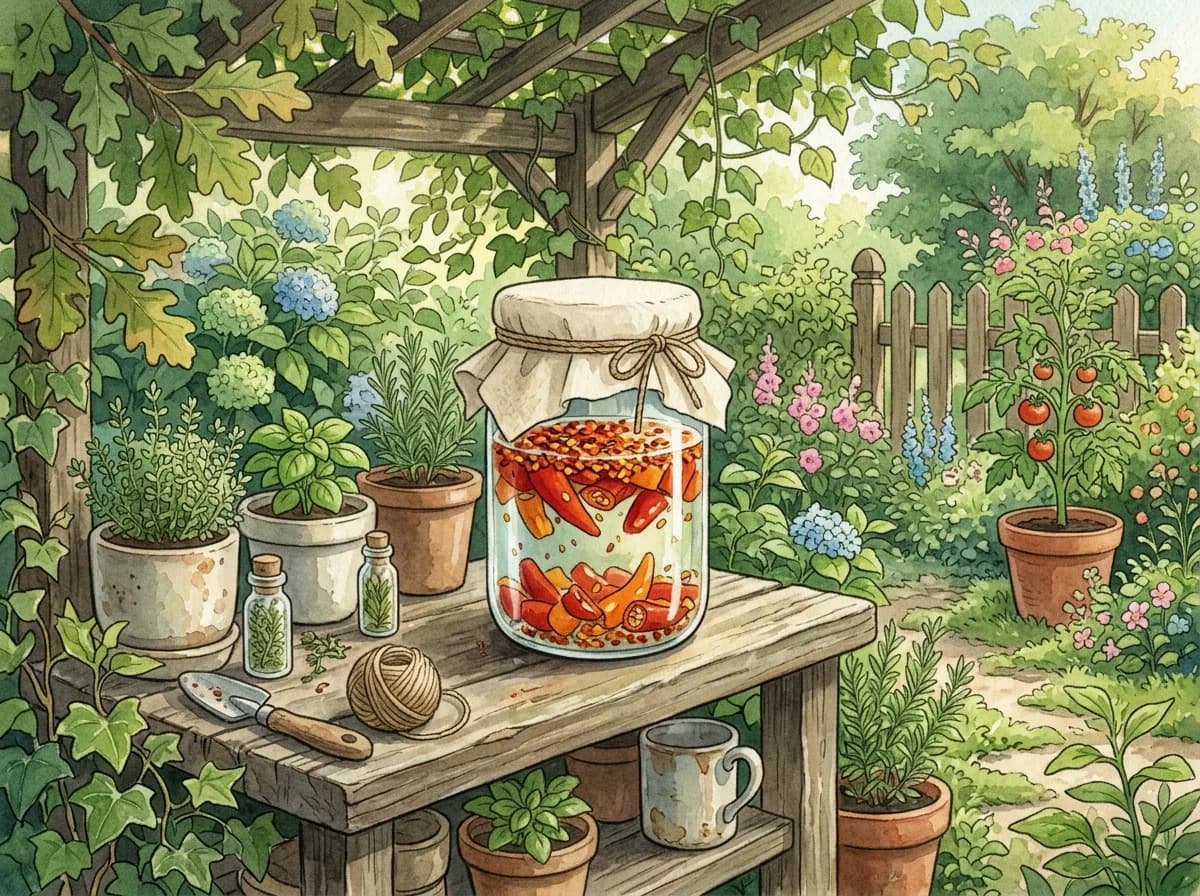
3Strain, add 1 g (0.04 oz) of potassium soap per litre so that it sticks, and spray the undersides of the leaves at dusk, wearing gloves.

Dose
As a guide, with no dose backed by trials: 20–30 g (0.7–1.1 oz) of fresh chilli per litre, with 1 g (0.04 oz) of potassium soap. Test first on a few leaves; apply every 5–7 days, at most 3 times in a row.
Which plants
Tomato, aubergine, courgette and rose on shoots that have already hardened. Avoid lettuces and tender leaves that you will later eat raw without washing well.
Plants mentioned in this remedy
 guindillasA thin, very hot red chilli that dries easily for flakes and powder.
 Tomato 'Marmande'Marmande tomato, flattened and ribbed, a good size for salads.
 Long black aubergineAn aubergine with glossy black fruit, for warm climates.
 Courgette 'Nero di Milano'A cylindrical, very dark green courgette, productive and early, the classic bush type for continuous picking.
 Rugosa roseA very hardy rose with distinctive wrinkled leaves, extraordinarily resistant to cold, salt and disease.
 Cos lettuce (romaine)Cos lettuce, with a long, crisp heart.
Precautions
- Wear gloves and goggles: capsaicin burns skin and eyes. Wash your hands and the spray bottle thoroughly afterwards.
- Do not spray in wind or near animals or children; it is very irritating to the airways.
- Do not apply it in flower or with bees present.
- Test first on a few leaves: it can scorch young plants or those with thin leaves.
- If it gets on skin or eyes, wash with plenty of water and soap; if discomfort persists, see a doctor.
Why it works
Capsaicin is believed to irritate insects and reduce their feeding or egg laying; the soap helps the liquid stick to the leaf. It does not get rid of established colonies.
Sources
- Review “Efficacy of homemade botanical insecticides based on traditional knowledge” (includes chilli): variable results, often lower than commercial insecticides. Only the abstract was consulted