
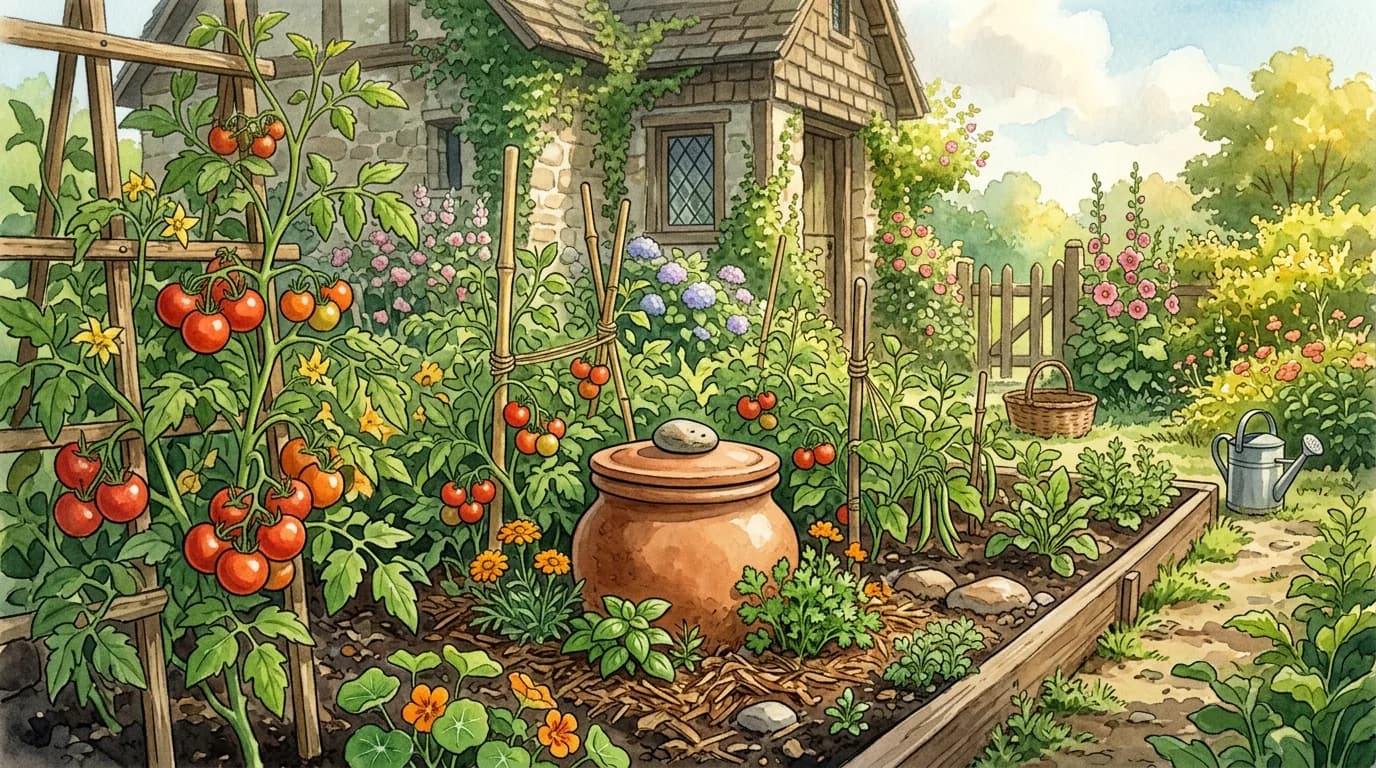
Buried clay pot irrigation
An unglazed terracotta pot, buried and filled with water, that releases moisture little by little towards the roots.
Works in practice. An ancient method. A study reports savings of 60–70 % compared with the watering can, but the evidence is limited and depends on the soil. Seedlings and transplants need separate watering until they reach the pot.
Before you start, read the precautions
You will need
- unglazed terracotta pot or plant pot
- water
- tile or silicone
- flat stone
When to use it
In summer, in beds or large pots, especially if you water rarely or water is scarce.
Step by step
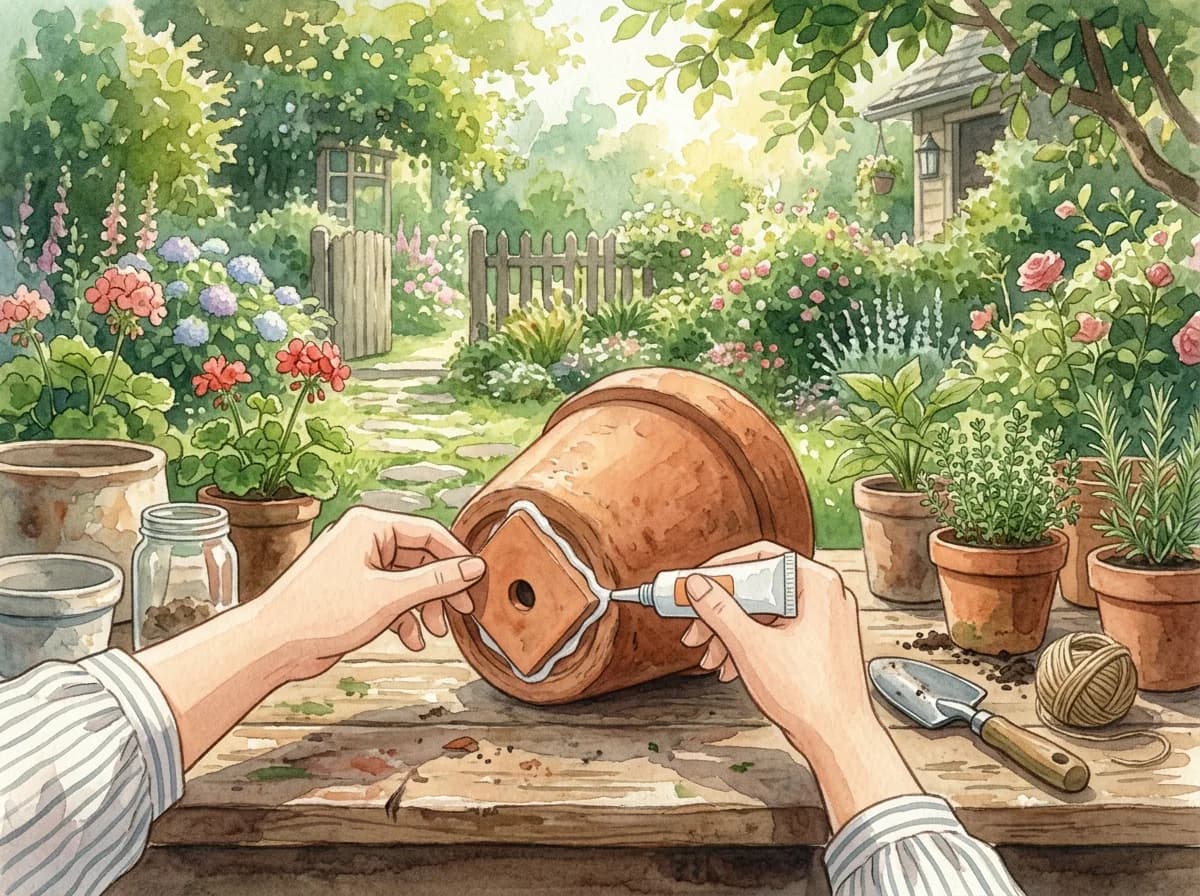
1Choose an unglazed clay pot or plant pot (2–5 L, about 0.5–1.3 US gal). Block the hole at the bottom with a flat tile or silicone.
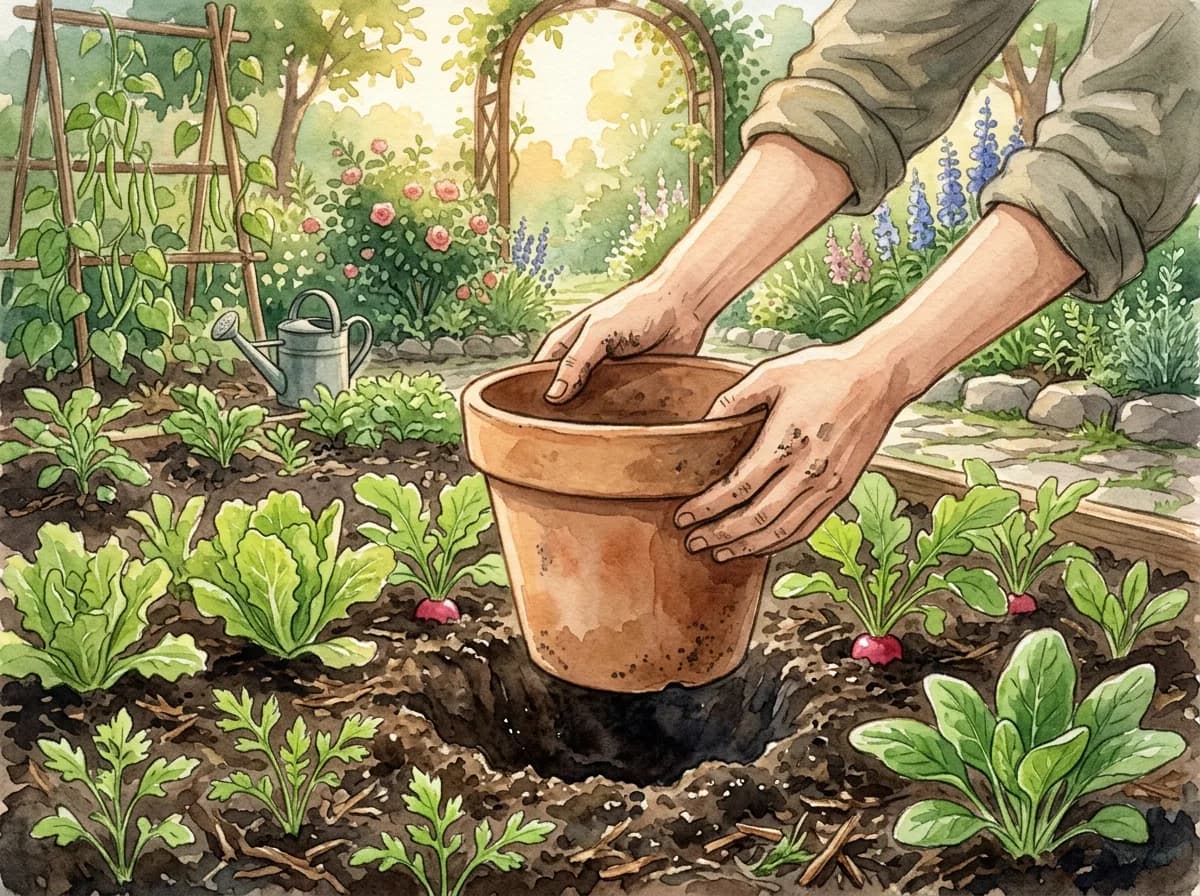
2Bury the pot upright in the bed, among the plants, leaving only the neck or 2–3 cm (0.8–1.2 in) above the ground.
3Fill it with water (with a watering can or hose) and put a lid or flat stone on top to prevent evaporation and mosquitoes.
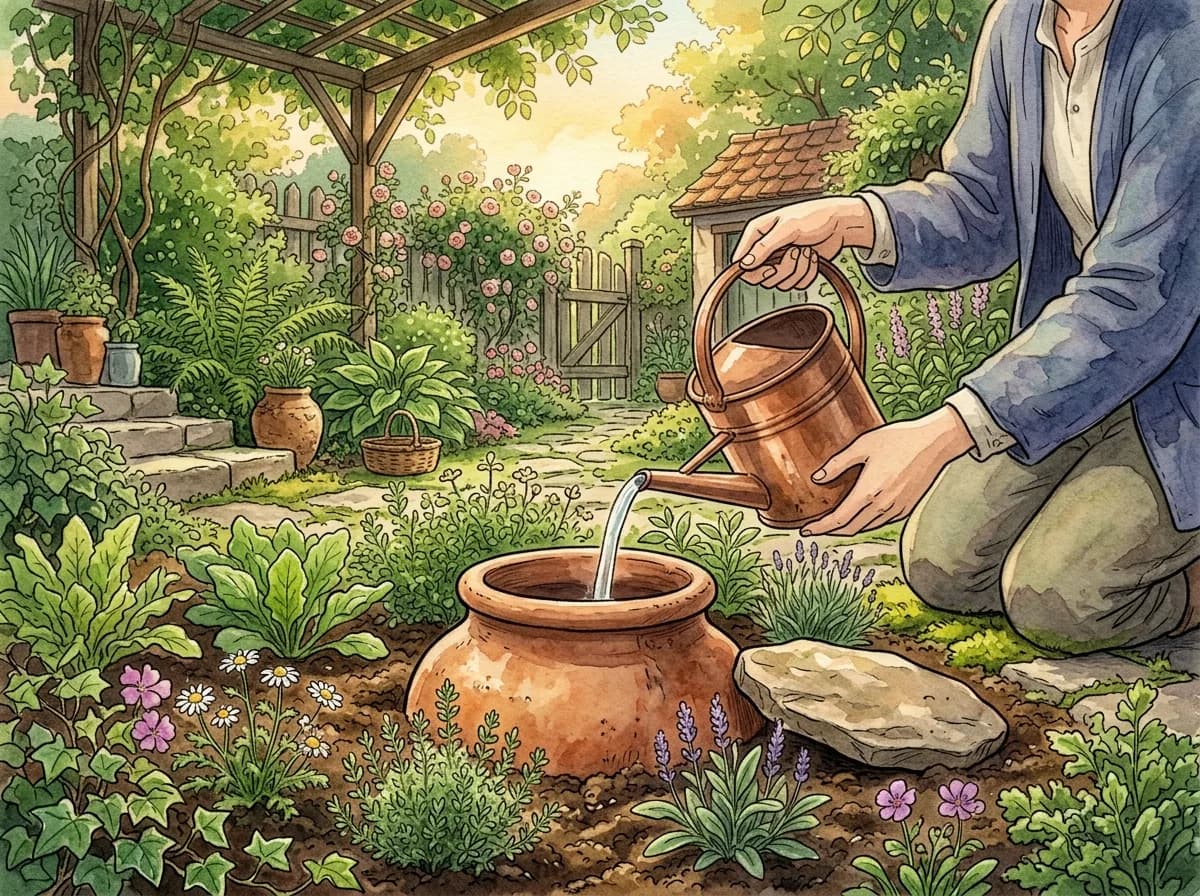
4Refill it when the level drops; there is no fixed frequency, it depends on the soil and the heat (as a guide: every few days in summer).
Dose
Plant at a distance of up to about twice the diameter of the pot ; a study with maize suggests 20–30 cm (7.9–11.8 in). Refill when the level drops: there is no fixed frequency, it depends on the soil and the heat.
Which plants
Tomato, pepper, aubergine, courgette, pumpkin, cucumber. Of little use on lettuces or radishes with very shallow roots.
Plants mentioned in this remedy
 Tomato 'Marmande'Marmande tomato, flattened and ribbed, a good size for salads.
 Sweet pepper 'California Wonder'California Wonder pepper, a blocky bell type with thick flesh, for stuffing or eating fresh.
 Long black aubergineAn aubergine with glossy black fruit, for warm climates.
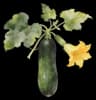 Courgette 'Nero di Milano'A cylindrical, very dark green courgette, productive and early, the classic bush type for continuous picking.
 Butternut squashButternut squash: elongated, sweet and long-keeping.
 Cucumber 'Marketmore'The 'Marketmore' cucumber is a classic salad cucumber resistant to several diseases.
 Cos lettuce (romaine)Cos lettuce, with a long, crisp heart.
Precautions
- Use unglazed porous clay; glazed ceramic does not let water through.
- Always cover the opening: standing water attracts mosquitoes.
- Water seedlings and freshly planted transplants normally, even for a month or more, until their roots reach the pot.
- Not recommended for trees and shrubs: their roots can break the pots. Salts can clog the pores over time.
- In winter with frost, empty the pots: frozen water can break them.
Why it works
Porous clay lets water through according to the soil's moisture tension: when the soil dries, it takes more water from the pot. That way only the root is watered, with very little evaporation.
Sources
- University of Arizona (Cooperative Extension): irrigation with ollas; unglazed clay, plants at about twice the diameter, saving of 60–70 % according to one study
- North Dakota State University Extension, “Dakota Gardener”: irrigation with ollas; the water spreads about twice the diameter, drawbacks of cost and space