
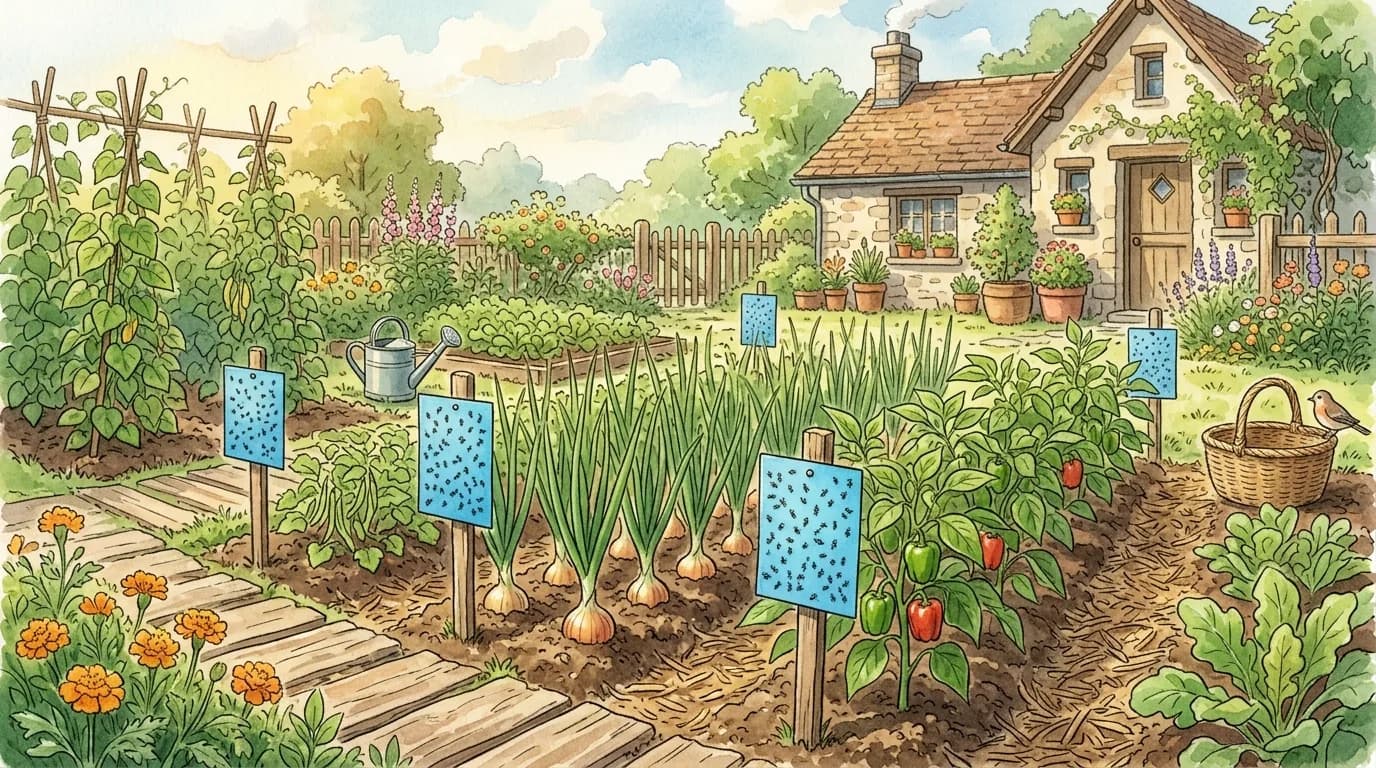
Blue sticky traps for thrips
Blue boards with glue to detect and reduce adult thrips on pepper, onion and flowers.
Works in practice. Thrips are attracted to blue; blue traps are sometimes used for thrips, but it is harder to count the insects on them and, in general, sticky traps are for monitoring, not for control. They catch only adults.
Before you start, read the precautions
You will need
- blue boards with glue
- bamboo canes
- string
- scissors
When to use it
From flowering on pepper, aubergine and onion, or when you see silvery leaves with black dots.
Step by step
1Have blue sticky boards to hand and check whether there are thrips in the flowers: tap a flower over a white sheet of paper and look for thin dark insects.
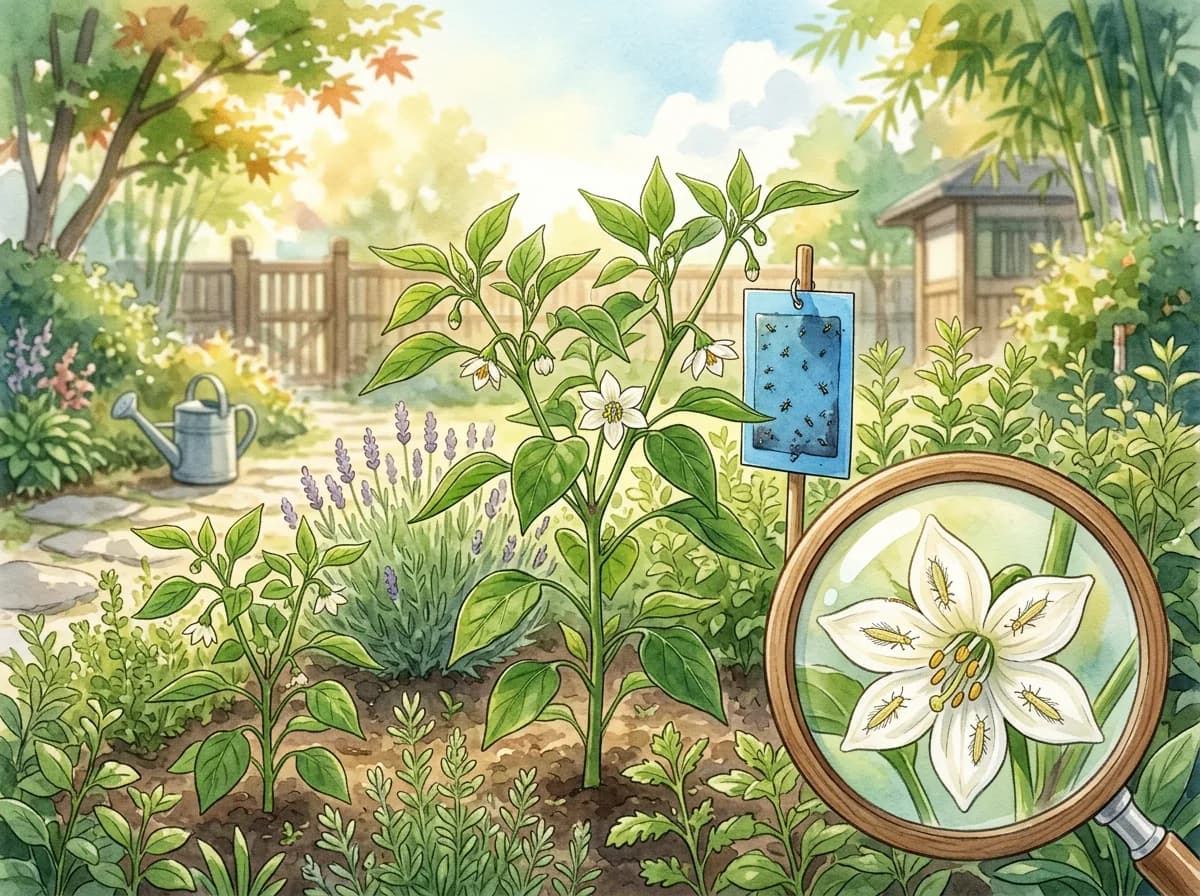
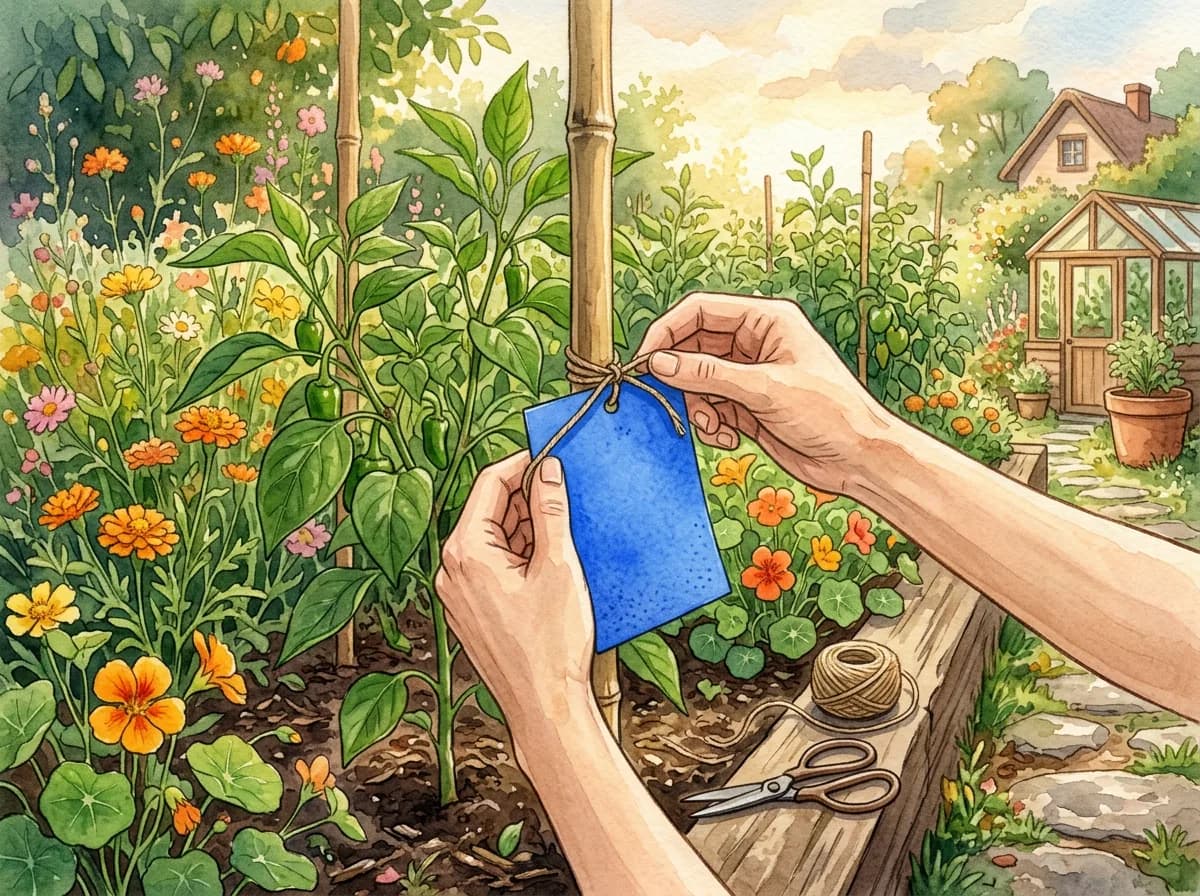
2Tie them to a cane at the height of the flowers, with the sticky side towards the plants and about 30 cm (11.8 in) from them.
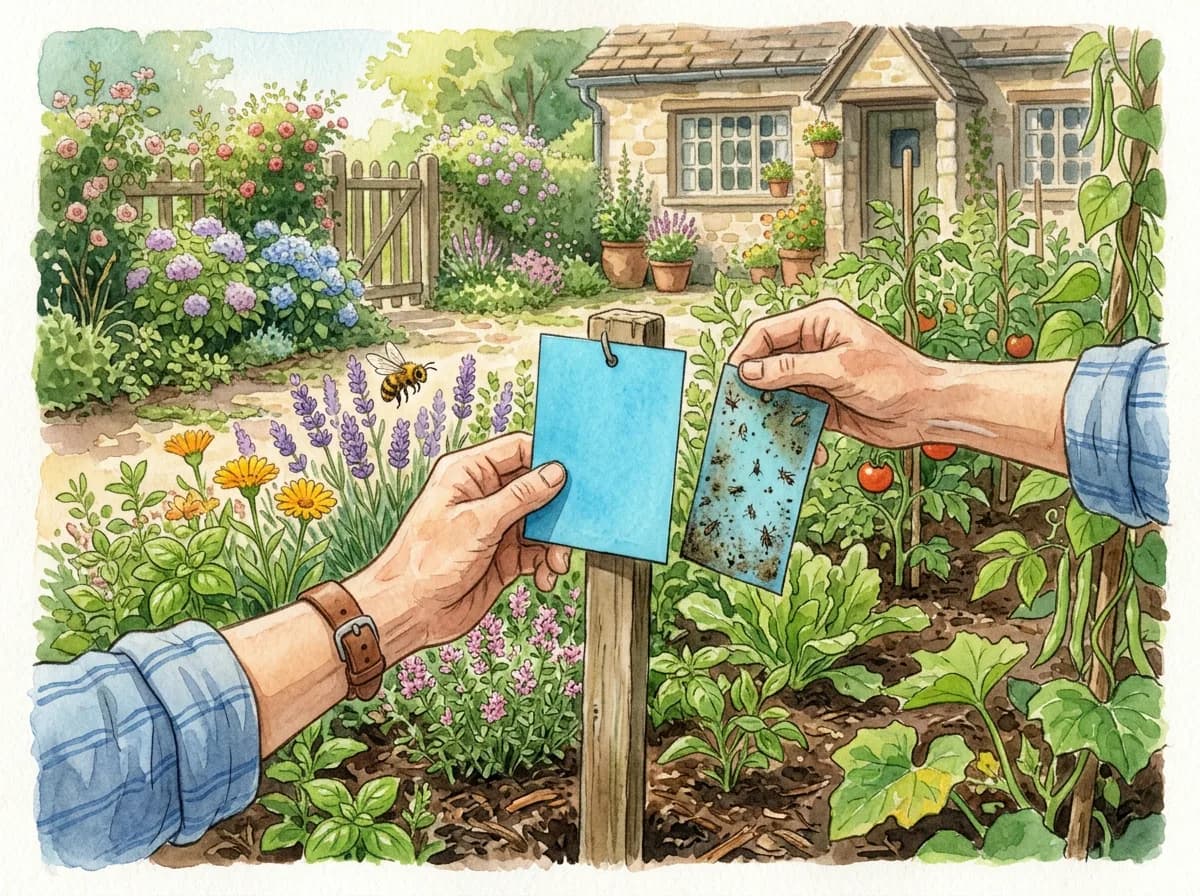
3Replace them every 2–3 weeks or when they are covered, and always remove used ones so they do not become waste.
Dose
As a guide, with no backed density: a few traps per bed or greenhouse for monitoring, at the height of the flowers. Do not use them as the only treatment.
Which plants
Pepper, aubergine, onion, garlic, strawberries and cut flowers. They are no use against visitors that do not fly, such as scale insects and mites.
Plants mentioned in this remedy
 Sweet pepper 'California Wonder'California Wonder pepper, a blocky bell type with thick flesh, for stuffing or eating fresh.
 Long black aubergineAn aubergine with glossy black fruit, for warm climates.
 Figueres onionThe Figueres onion is a sweet onion with purplish skin, typical of Catalonia in Spain.
 Las Pedroñeras purple garlicLas Pedroñeras purple garlic, with a purple, very aromatic bulb: the benchmark garlic of La Mancha, in…
 Camarosa strawberryA strawberry with large, firm, deep red fruit, very productive and early.
Precautions
- They also catch pollinators: do not put them next to flowers that bees visit a lot.
- Keep the traps away from tender young plants and from pets.
- They are not a treatment in themselves: if the numbers are high you need potassium soap, oil or biological controls.
- Replace them often: with dust they lose effectiveness.
Why it works
Adult thrips are attracted to the colour blue. When they land they stick, so their arrival is detected and some of the adults are caught.
Sources
- University of California Integrated Pest Management (ornamentals): sticky traps; blue is more attractive to thrips but harder to count, yellow is recommended in most cases and neither works for direct control (search summary)
- Utah State University Extension: blue and yellow traps for monitoring thrips in high tunnels