
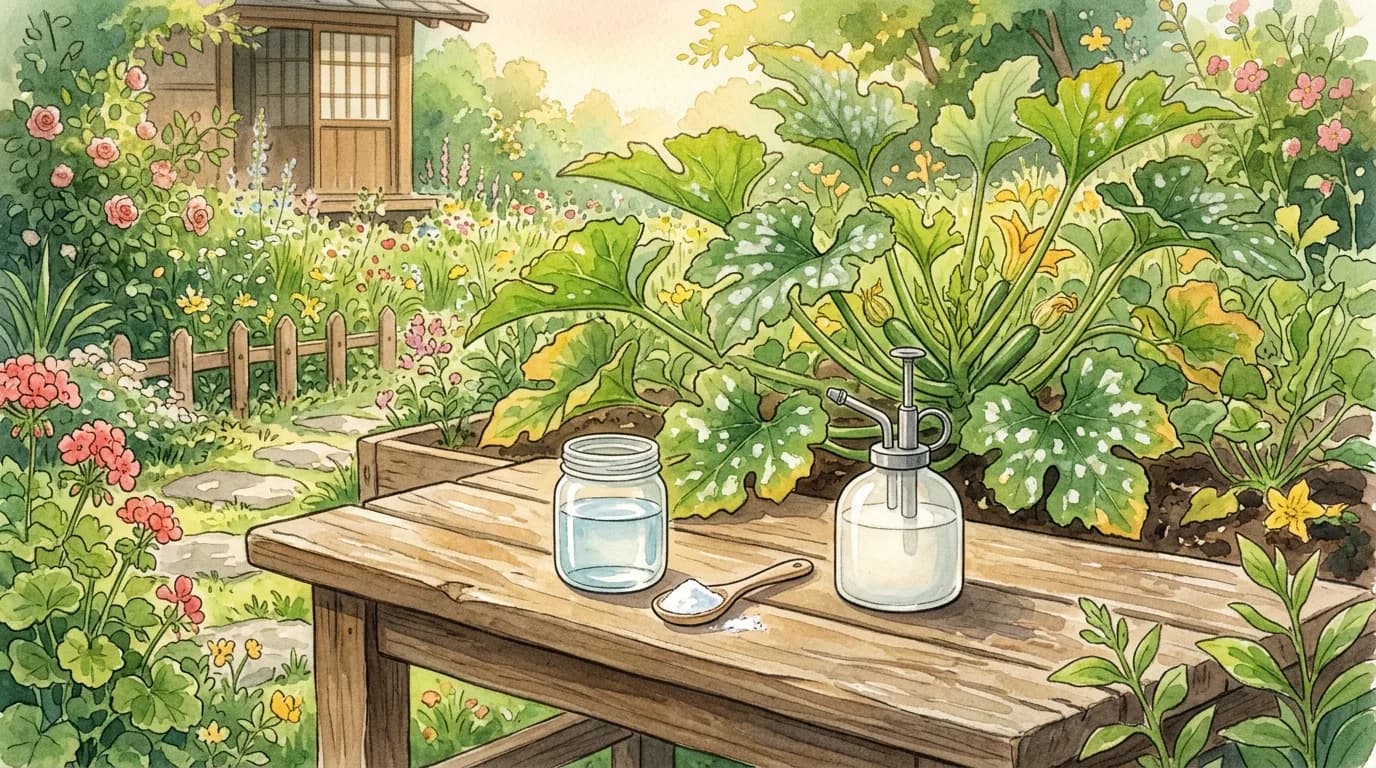
Bicarbonate of soda against powdery mildew
A spray of bicarbonate with a few drops of oil and soap to hold back the white powder, with a risk of building up sodium if overused.
Use with care. Horst's trials on rose combined bicarbonate (around 0.5 %) with fine horticultural oil (1 %) and reduced powdery mildew and black spot better than each component alone. There is no official formula: the researcher himself has said so, and homemade recipes vary. Bicarbonate alone is weak, can scorch leaves and the sodium builds up if repeated a lot; potassium bicarbonate works better.
Before you start, read the precautions
You will need
- bicarbonate of soda
- vegetable oil
- washing-up liquid
- water
- spray bottle
When to use it
At the first white spots on courgette, cucumber, rose or vine, or as occasional prevention in weeks of heat with humid nights. It is no use for curing a plant covered in powder.
Step by step
1Dissolve 1 level teaspoon (about 5 g, 0.2 oz) of bicarbonate in 1 litre (about 1.1 quarts) of lukewarm water until no crystals remain.
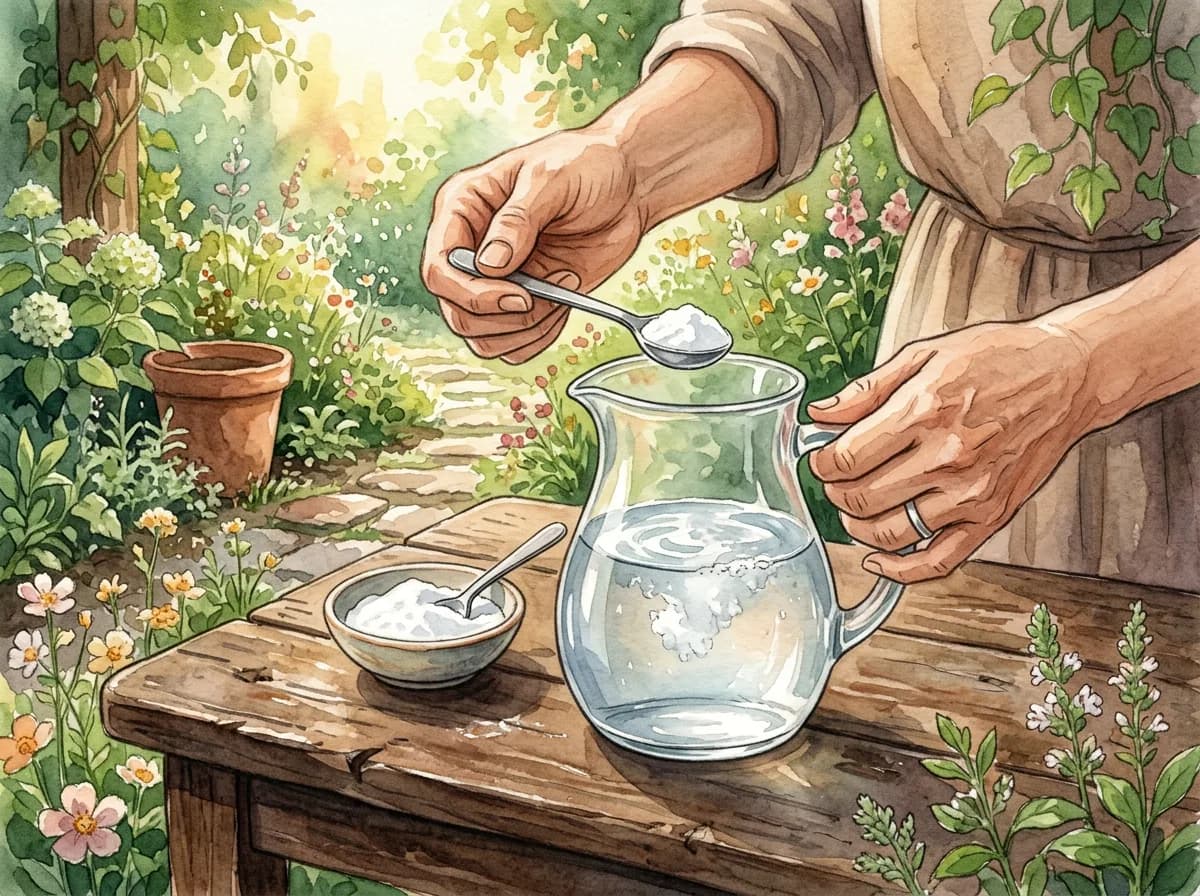
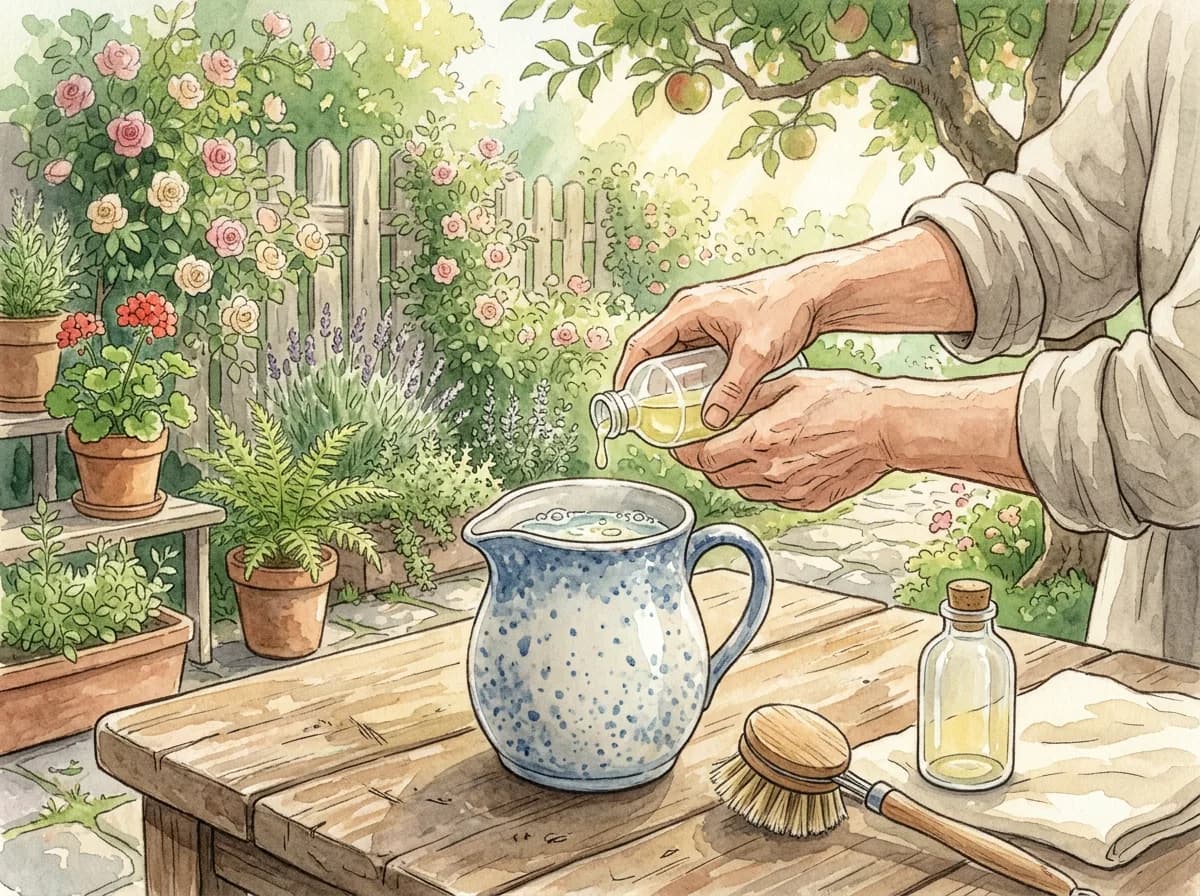
2Add 5 ml (0.17 fl oz) (a teaspoon) of oil and 2–3 drops of mild washing-up liquid, and shake. The oil helps the bicarbonate stay stuck to the leaf; without it, it hardly works.
3Test first on 2–3 leaves and wait 24–48 h. If there are no spots or scorched edges, spray the rest in gentle sun, on both sides, until it drips slightly.
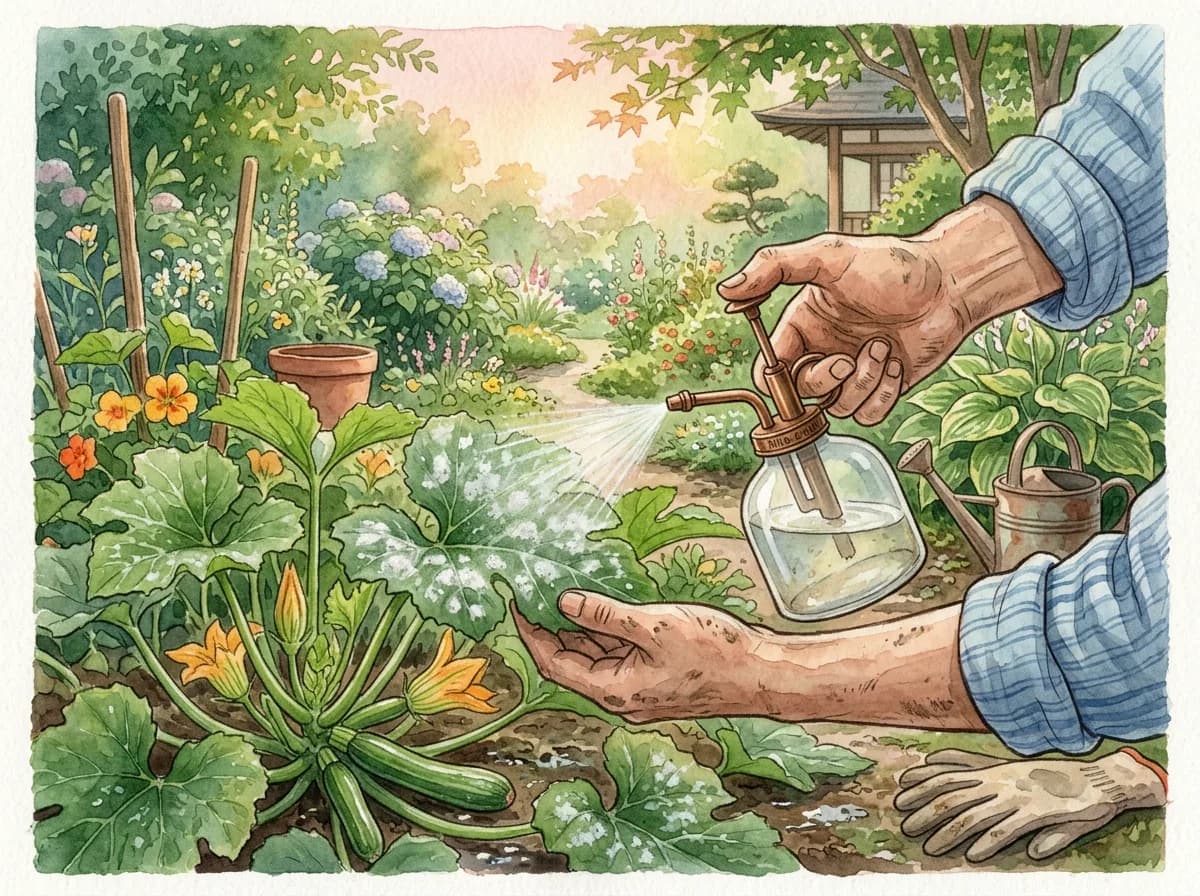
4Repeat every 7–10 days a maximum of 3–4 times. Remove heavily affected leaves and do not compost them.
Dose
As a guide (there is no official dose): 5 g (0.2 oz) of bicarbonate (1 level teaspoon, ≈0.5 %) + 5 ml (0.17 fl oz) of oil per litre of water. Do not exceed 3–4 applications in a row.
Which plants
Courgette, cucumber, melon, rose, vine, strawberry. Avoid on plants with very hairy or waxy sensitive leaves and in small pots that are already salty. It does not work against downy mildew.
Plants mentioned in this remedy
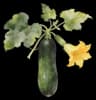 Courgette 'Nero di Milano'A cylindrical, very dark green courgette, productive and early, the classic bush type for continuous picking.
 Cucumber 'Marketmore'The 'Marketmore' cucumber is a classic salad cucumber resistant to several diseases.
 Piel de Sapo melonPiel de Sapo is the classic Spanish melon, one that keeps for a long time.
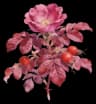 Rugosa roseA very hardy rose with distinctive wrinkled leaves, extraordinarily resistant to cold, salt and disease.
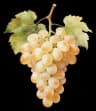 Italia table grapeA white grape with large, oval berries and a mild muscat flavour.
 Camarosa strawberryA strawberry with large, firm, deep red fruit, very productive and early.
Precautions
- Sodium builds up in the growing medium and can make pots and heavy or chalky soils with hard water salty: do not use it all year or on the same plant over and over.
- Young leaves, sensitive plants and strong heat (more than 28–30 °C, 82–86 °F) can get scorched: test first and apply first thing in the morning or at dusk.
- Household oil is cruder than horticultural oil and scorches sooner: do not exceed 5 ml (0.17 fl oz) per litre.
- Wet the soil as little as possible; if a lot falls at the base, water abundantly a few days later.
Why it works
Bicarbonate raises the pH on the leaf surface and alters the walls of the fungus's hyphae; the oil helps adhesion and smothers some of the mycelium. It is a contact effect and short-lived.
Sources
- Gardenmyths (L. Hodgson): “Baking soda, a home remedy fungicide – the Cornell formula”; summarises Horst's trials, the absence of an official formula, the sodium risk and that potassium bicarbonate is more effective (later results come from a company with a commercial product)