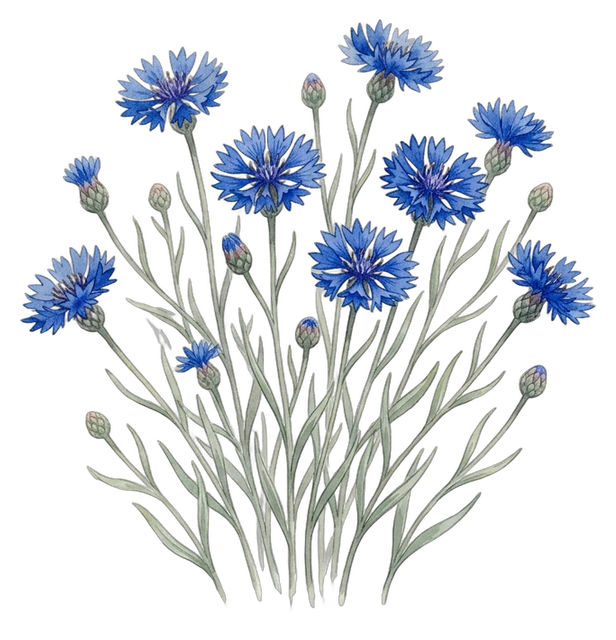
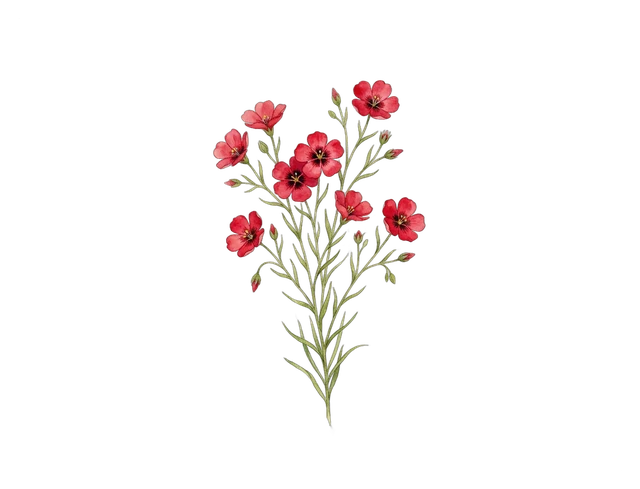
Credits and licences
- #1 — vueltaalhuerto illustration
- #2 — vueltaalhuerto illustration
- #3 — vueltaalhuerto illustration
- #4 — vueltaalhuerto illustration
- #5 — vueltaalhuerto illustration
- #6 — vueltaalhuerto illustration
- #7 — vueltaalhuerto illustration
- #8 — vueltaalhuerto illustration
- #9 — vueltaalhuerto illustration
- #10 — vueltaalhuerto illustration
Summer pheasant's eye
and 1 more names
blood dropsSummer pheasant's eye is sown directly outdoors in March and from October to November. It flowers from April to June. Grow it in full sun, 15 cm apart, with little watering. Dates are for a mild temperate climate in the northern hemisphere; the calendar below adjusts them to your zone.
What else to sow in March, October and November
An annual 20 to 50 cm tall, with branching stems and leaves finely divided into thin segments, like those of fennel. In spring and early summer, from May to July, it bears cup-shaped, bright scarlet flowers about 3 cm across with an almost black centre. It is a typical plant of cereal field margins that has declined because of herbicide use, and it is grown for its wild-looking flowers in beds and flower meadows. It prefers chalky, loose, sunny soils. SERIOUS WARNING: the whole plant is highly toxic, because it contains glycosides that act on the heart, and it is dangerous to people, pets and livestock.
Family and origin: Buttercup family (Ranunculaceae) · native to Europe, the Mediterranean and western Asia · More plants from Mediterranean basin
01In your area
How will it do in your garden?
Year calendar
| Task | J | F | M | A | M | J | J | A | S | O | N | D |
|---|---|---|---|---|---|---|---|---|---|---|---|---|
| Direct sowingMar, Oct–Nov | no | no | yes | no | no | no | no | no | no | yes | yes | no |
| HarvestMay–Jul | no | no | no | no | yes | yes | yes | no | no | no | no | no |
| FloweringApr–Jun | no | no | no | yes | yes | yes | no | no | no | no | no | no |
Its life cycle at a glance
Swipe and tap a stage to see its details.
02Planting
Where and how to plant it
Sow the seed 5 mm deep; leave 15 cm between plants and 25 cm between rows.
15 cm between plants · 25 cm between rows
Seed at a depth of 5 mm.
- Direct sowing
- Mar, Oct–Nov
- Germination
- ~30 days
- TipFor a good show, sow in groups or mixed with cornflowers and poppies.
- TipAvoid placing it near play areas or near grass or hay that animals eat: the dried plant is still toxic.
- Common mistakeSowing out of season: many need warmth or a cold spell beforehand to sprout.
03Care
Care through the year
Sun and aspectFull sun · 8 h of sun · South or south-west, with nothing casting shade at midday
- Too little sun
- Ideal range
- Plenty of sun
South or south-west, with nothing casting shade at midday
Strong sun: Loves full midday sun and high temperatures.
Full sun. In shade it gets leggy and produces few flowers.
WateringLet it dry out between waterings · summer: every 5-7 days
- Summerevery 5-7 days0.6 L per plant/week
- Spring / Autumnevery 10-14 days0.2 L per plant/week
- Winteronly in extreme drought (once a month)0.1 L per plant/week
Let it dry out between waterings: A Mediterranean favourite: better thirsty than overwatered.
Very little watering: just enough for it to germinate and settle. Excess water and heavy soil rot the roots. In winter, rain is enough.
When to water? Push your finger 5 cm into the soil next to the base of the plant:
- Damp: soil sticks to your finger. Do not water yet. It has more than enough; wait for it to dry out more.
- Cool but clean, no mud. Wait another 1-2 days before watering.
- Dry and dusty. Water now, but moderately. Do not overdo it: it prefers thirst to excess.
Soil and feedingpH 6.5–8.5 · Loose soil with organic matter and good drainage
Loose soil with organic matter and good drainage.
50 % topsoil · 30 % well-rotted compost · 20 % sand or perlite.
Medium/high.
This plant prefers a pH between 6.5 and 8.5 (neutral to alkaline).
- Overfeeding gives lots of leaf and few flowers.
- Compacted, poorly drained soil rots the roots in winter.
- TipSow in loose, chalky, well-drained soil in full sun, scattering the seed and barely covering it with a thin layer of sand or soil.
- Common mistakeOverfeeding gives lush leaves but few flowers.
Pruning
- TipRemove faded flowers to prolong flowering.
Common mistakes and tips
- TipThin the seedlings to about 15 cm.
- TipWear gloves when handling it.
- TipThe dates and figures are approximate, and germination is erratic.
04Harvest
Harvesting and storing
Harvest in May–Jul; the first, about 180 days after sowing.
05Propagation
Make new plants
It is propagated only by seed. Sow it directly where it is to grow, preferably in autumn, from October to November, or at the end of winter; the seed germinates slowly and erratically after the winter cold. It does not transplant well because of its taproot. You can save seed from the dried seed heads, but the plant is toxic and must be handled with gloves.
Seeds: how to germinate them~30 days
06Uses and health
What it is used for, and with what care
SERIOUS WARNING: the whole plant, fresh or dried, contains cardiotonic glycosides (cardenolides such as adonitoxin and cymarin), which act on the heart and can cause vomiting, diarrhoea, heart rhythm disturbances and potentially fatal poisoning. It is toxic to people, dogs, cats and livestock, and remains so in dried hay. Do not eat it, drink it as a herbal tea or use it as a remedy. Keep the plant and seeds out of reach of children and pets, wear gloves when handling it and wash your hands. After any ingestion, call the poison information service (91 562 04 20 in Spain) or the emergency services.
- Properties
- An ornamental arable wildflower that brings colour to borders and flower meadows and attracts some pollinating insects. It has no safe food or medicinal use.
- Uses
- It is not edible: no part of the plant is eaten, drunk as a herbal tea or used as a remedy.
For guidance only; this is not medical treatment and does not replace advice from a doctor or vet.
07Companions and related plants