Credits and licences
- #1 — vueltaalhuerto illustration
- #2 — vueltaalhuerto illustration
- #3 — vueltaalhuerto illustration
- #4 — vueltaalhuerto illustration
- #5 — vueltaalhuerto illustration
- #6 — vueltaalhuerto illustration
- #7 — vueltaalhuerto illustration
- #8 — vueltaalhuerto illustration
- #9 — vueltaalhuerto illustration
- #10 — vueltaalhuerto illustration
Melaleuca linariifolia (snow-in-summer)
and 3 more names
Melaleuca linariifolia, Melaleuca 'Snowstorm', Melaleuca 'Claret Tops'Melaleuca linariifolia (snow-in-summer) is sown in seed trays from March to April, and planted out from March to April and from October to November. It flowers from May to July. Grow it in full sun, 300 cm apart, with moderate watering. Dates are for a mild temperate climate in the northern hemisphere; the calendar below adjusts them to your zone.
What else to sow in March and April
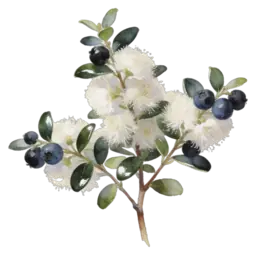
A small tree or large shrub, 4 to 10 m tall in the wild and 3 to 6 m in gardens, with a rounded crown and thick, spongy, whitish bark that peels off in papery sheets. The leaves are linear, very narrow, 2 to 5 cm long, greyish green, and smell of essential oil when crushed. In summer it is covered in cylindrical spikes of creamy white flowers made up of many fine stamens, like fluffy brushes that give it a snowy look, and they attract bees and other insects. These are followed by tiny woody capsules, in rings along the branches, which hold very fine seeds. There are dwarf cultivars and cultivars with reddish leaves or shoots. It is an easy, adaptable plant: it grows in sun and in poor or damp soils, and tolerates moderate frosts once established, but young plants suffer in the cold. It is not edible. The oil from the leaves, similar to that of the tea tree, is not for home use.
Family and origin: Myrtle family (Myrtaceae) · native to Eastern Australia (New South Wales and Queensland, on riverbanks, floodplains and damp soils) · More plants from Oceania
01In your area
How will it do in your garden?
Year calendar
| Task | J | F | M | A | M | J | J | A | S | O | N | D |
|---|---|---|---|---|---|---|---|---|---|---|---|---|
| Seed trayMar–Apr | no | no | yes | yes | no | no | no | no | no | no | no | no |
| Plant / transplantMar–Apr, Oct–Nov | no | no | yes | yes | no | no | no | no | no | yes | yes | no |
| FloweringMay–Jul | no | no | no | no | yes | yes | yes | no | no | no | no | no |
| PruningJul–Aug | no | no | no | no | no | no | yes | yes | no | no | no | no |
| CuttingsJul–Sep | no | no | no | no | no | no | yes | yes | yes | no | no | no |
Its life cycle at a glance
Swipe and tap a stage to see its details.
02Planting
Where and how to plant it
Leave 3 m between plants and 3 m between rows.
3 m between plants · 3 m between rows
Seedlings are planted with the root ball level with the soil.
- Transplanting
- Mar–Apr, Oct–Nov
- Seed tray
- Mar–Apr
- Germination
- ~21 days
- TipThe foliage is aromatic and burns easily: do not plant it next to houses in areas at risk of wildfire.
- Common mistakePlanting too deep smothers the crown of the plant.
03Care
Care through the year
Sun and aspectFull sun · 8 h of sun · South or south-west, with nothing casting shade at midday
- Too little sun
- Ideal range
- Plenty of sun
South or south-west, with nothing casting shade at midday
Strong sun: Loves full midday sun and high temperatures.
Full sun: this is what produces abundant flowering. In partial shade it flowers little and becomes sparse. It copes with heat and wind, but young plants need a spot sheltered from frost, and the tips can be scorched by late frosts.
WateringMoist but never waterlogged · summer: one deep watering a week in the first summer; after that, only during long droughts
- Summerone deep watering a week in the first summer; after that, only during long droughts6 L per plant/week
- Spring / Autumnevery 4-5 days3 L per plant/week
- Winteronly if it does not rain0.9 L per plant/week
Moist but never waterlogged: Water before the surface is completely dry. Never puddles. Mulch: straw or dry plant material cuts watering by 30-50 %.
Water regularly for the first two years. Once established, it copes well with moderate drought and tolerates soils that are temporarily waterlogged, which is unusual; but it flowers better with moisture in the dry summer months. In a pot, do not let the root ball dry out completely.
When to water? Push your finger 5 cm into the soil next to the base of the plant:
- Damp: soil sticks to your finger. Do not water today. The moisture is fine.
- Cool but clean, no mud. Water early tomorrow if it stays like this, or this evening.
- Dry and dusty. Water now, and deeply. This is not where it likes to be.
- TipWater deeply the first summer and protect young plants from the cold.
- TipAbroad, several melaleucas have become invasive in wetlands and warm, humid areas; this species is not on the Catálogo español de especies exóticas invasoras (Spanish Catalogue of Invasive Alien Species) or on the EU list, but it is best not to let it naturalise or to plant it next to watercourses or natural areas.
- TipWater generously in the first year until it is established; after that it looks after itself.
Soil and feedingpH 5.5–7.5 · Deep soil with good drainage
Deep soil with good drainage.
Medium/high.
This plant prefers a pH between 5.5 and 7.5 (slightly acidic to slightly alkaline).
- Water generously in the first year until it is established.
- A thick mulch all year round, not touching the trunk.
- TipPlant it in autumn or early spring, in full sun and in well-drained soil, although it tolerates heavy, damp soils.
- TipFeed it sparingly; like many Australian plants, it does not tolerate fertilisers that are very rich in phosphorus (a rough guide).
PruningWhen: Jul–Aug
Pruning time for this plant: Jul–Aug.
- TipPrune lightly after flowering to keep its shape and encourage dense foliage, without cutting into old wood that has no leaves.
- TipFormative pruning after flowering keeps the shape compact.
- Common mistakePruning at the wrong time removes the year's flower buds.
Common mistakes and tips
- TipHeights, temperature limits and timings are only a guide.
04Propagation
Make new plants
It is propagated from its very fine seed, which is taken from the woody capsules by leaving them to dry in a paper bag until they open; it is sown on the surface of a fine, moist potting mix, uncovered, with light and warmth, and comes up in two to four weeks. Cultivars are propagated from semi-ripe cuttings 8 to 10 cm long, taken in late summer, which root in a light, sandy potting mix in one to two months; success rates are only a guide and vary a great deal between cultivars. The usual approach is to buy it in a pot from a nursery.
Seeds: how to germinate them~21 days
05Uses and health
What it is used for, and with what care
WARNING: the leaves contain essential oils, similar to those of the tea tree, which can cause irritation or contact dermatitis in sensitive people; wear gloves and long sleeves when pruning. Do not swallow the leaves or the oil. In dogs and cats, the concentrated oil can be very harmful if they lick it or it is applied to their skin: never use it on pets, and consult the vet if they chew the leaves. The pollen can cause allergies in sensitive people. The foliage is aromatic and flammable: do not plant it next to houses in areas at risk of wildfire. This species is not on the Spanish Catalogue of Invasive Alien Species or the EU list, but other melaleucas have become invasive in wetlands in other countries: do not let it naturalise.
- Properties
- It is a very decorative small tree, with abundant white flowers in summer, which attracts bees and other insects and copes well with poor, damp soils. It works as a specimen plant, in informal hedges and in low-maintenance gardens.
- Uses
- It is not grown for food and is not used in cooking or home remedies. It is not suitable for herbal teas or home-made oils: the essential oil from the leaves is for external, professional use.
For guidance only; this is not medical treatment and does not replace advice from a doctor or vet.
06Companions and related plants