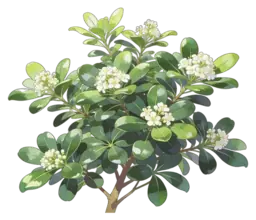
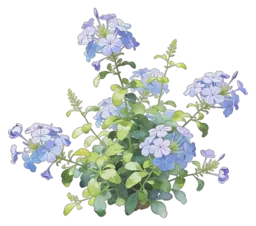
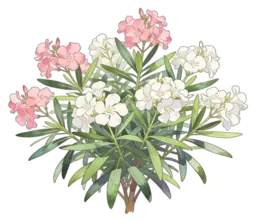
Credits and licences
- #1 — vueltaalhuerto illustration
- #2 — vueltaalhuerto illustration
- #3 — vueltaalhuerto illustration
- #4 — vueltaalhuerto illustration
- #5 — vueltaalhuerto illustration
- #6 — vueltaalhuerto illustration
- #7 — vueltaalhuerto illustration
- #8 — vueltaalhuerto illustration
- #9 — vueltaalhuerto illustration
- #10 — vueltaalhuerto illustration
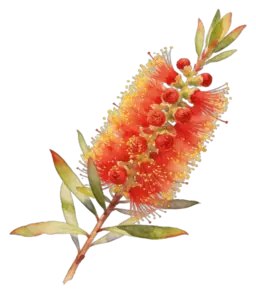
Metrosideros excelsa (pohutukawa)
and 2 more names
metrosideros, Metrosideros tomentosaMetrosideros excelsa (pohutukawa) is sown in seed trays from February to April, and planted out from April to May and from September to October. It flowers from June to July. Grow it in full sun, 500 cm apart, with little watering. Dates are for a mild temperate climate in the northern hemisphere; the calendar below adjusts them to your zone.
What else to sow in February, March and April
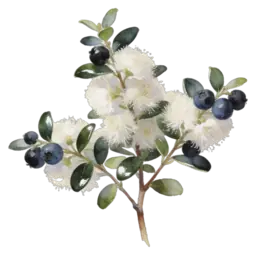
The pohutukawa is an evergreen tree with a broad crown and a twisted trunk which in cultivation usually stays at 6 to 12 m (in its homeland it exceeds 15). It has thick, leathery, oval leaves, dark green on top and covered in a dense white down underneath. In late spring and summer it is smothered in fluffy flower clusters made up of many crimson stamens, which attract bees and other pollinators. It is a coastal plant: it withstands wind, salt air and drought once established, but it cannot tolerate hard frosts, so in Spain it is grown mainly on the Mediterranean coast, in the Canary Islands and on the mildest parts of the Atlantic and Cantabrian (northern) coasts. Away from its homeland it can naturalise in warm climates (see the health notice).
Family and origin: Myrtle family (Myrtaceae) · native to North Island of New Zealand, especially on cliffs and coasts · More plants from Oceania
01In your area
How will it do in your garden?
Year calendar
| Task | J | F | M | A | M | J | J | A | S | O | N | D |
|---|---|---|---|---|---|---|---|---|---|---|---|---|
| Seed trayFeb–Apr | no | yes | yes | yes | no | no | no | no | no | no | no | no |
| Plant / transplantApr–May, Sep–Oct | no | no | no | yes | yes | no | no | no | yes | yes | no | no |
| HarvestJun–Jul | no | no | no | no | no | yes | yes | no | no | no | no | no |
| FloweringJun–Jul | no | no | no | no | no | yes | yes | no | no | no | no | no |
| PruningAug–Sep | no | no | no | no | no | no | no | yes | yes | no | no | no |
| CuttingsJun–Aug | no | no | no | no | no | yes | yes | yes | no | no | no | no |
Its life cycle at a glance
Swipe and tap a stage to see its details.
02Planting
Where and how to plant it
The seed goes on the surface, uncovered; leave 5 m between plants.
5 m between plants
Seed at ground level; seedlings go in with the root ball level with the soil.
- Transplanting
- Apr–May, Sep–Oct
- Seed tray
- Feb–Apr
- Germination
- ~21 days
- TipIn a pot it stays smaller but needs shelter in winter.
- TipIf you see young leaves with yellow pustules or strange spots, consult your nursery or the plant health service of your autonomous community (regional government in Spain).
- Common mistakePlanting too deep smothers the crown of the plant.
03Care
Care through the year
Sun and aspectFull sun · 8 h of sun · South or south-west, with nothing casting shade at midday
- Too little sun
- Ideal range
- Plenty of sun
South or south-west, with nothing casting shade at midday
Strong sun: Loves full midday sun and high temperatures.
Full sun and an open site. Plant it where frost cannot reach it: on a mild coast it withstands a brief, light frost, but below about -2 °C it suffers and may lose its crown.
WateringLet it dry out between waterings · summer: every 5-7 days
- Summerevery 5-7 days3 L per plant/week
- Spring / Autumnevery 10-14 days1.2 L per plant/week
- Winteronly in extreme drought (once a month)0.5 L per plant/week
Let it dry out between waterings: A Mediterranean favourite: better thirsty than overwatered.
Water regularly for the first year or two until it roots, and after that only in long droughts. It is very sensitive to waterlogging and root rot (Phytophthora), so it needs soil that drains. In a pot, water when the potting mix is dry a few centimetres down.
When to water? Push your finger 5 cm into the soil next to the base of the plant:
- Damp: soil sticks to your finger. Do not water yet. It has more than enough; wait for it to dry out more.
- Cool but clean, no mud. Wait another 1-2 days before watering.
- Dry and dusty. Water now, but moderately. Do not overdo it: it prefers thirst to excess.
- TipWater generously in the first year until it is established; after that it looks after itself.
Soil and feedingpH 5.5–7.5 · Deep soil with good drainage
Deep soil with good drainage.
Medium/high.
This plant prefers a pH between 5.5 and 7.5 (slightly acidic to slightly alkaline).
- Water generously in the first year until it is established.
- A thick mulch all year round, not touching the trunk.
- TipPlant it in spring or autumn in light, free-draining, sandy or volcanic soil; in very chalky soil it may turn yellow from chlorosis.
PruningWhen: Aug–Sep
Pruning time for this plant: Aug–Sep.
- TipPrune it lightly, in summer after flowering, only to thin out crossing branches or to shape it; it regrows poorly if cut back into old wood.
- TipFormative pruning after flowering keeps the shape compact.
- Common mistakePruning at the wrong time removes the year's flower buds.
Common mistakes and tips
- TipGive it room: its roots are strong and shallow, so keep it several metres away from walls, pipes, swimming pools and paving.
- TipThe figures for height, cold hardiness and germination are a rough guide.
04Harvest
Harvesting and storing
Harvest in Jun–Jul.
05Propagation
Make new plants
It is propagated by seed and cuttings. The seed is tiny, like fine dust: scatter it on the surface, without covering, on a light, damp potting mix, with gentle warmth and plenty of light; it comes up irregularly in about three to six weeks. It is best sown fresh, because it loses vigour over time. Seed-grown plants may differ somewhat from one another. Semi-ripe cuttings 10 to 15 cm long, taken in summer, do root, but at a low rate and slowly (sometimes taking months), so it is worth putting in several and using rooting hormone. Nurseries also graft it or propagate it in the laboratory.
Seeds: how to germinate them~21 days
06Uses and health
What it is used for, and with what care
There are no reliable data on toxicity for people, dogs and cats. As a precaution, do not eat the leaves, flowers or capsules and stop animals chewing them. ENVIRONMENTAL WARNING: it is a New Zealand species that naturalises in some warm, coastal climates around the world (for example, in South Africa). It is not listed in the Spanish Catalogue of Invasive Alien Species or on the European Union list, but if you live near the coast or natural areas, do not dump prunings or seeds outside the garden and pull up any seedlings that come up on their own. Its pollen can bother some people with allergies.
- Properties
- A very showy coastal tree, with abundant nectar for bees and other insects in high summer; useful as a windbreak and for stabilising banks in sunny, salty sites.
- Uses
- It is not grown for food. There are no culinary uses to recommend in gardening.
For guidance only; this is not medical treatment and does not replace advice from a doctor or vet.
07Companions and related plants