Credits and licences
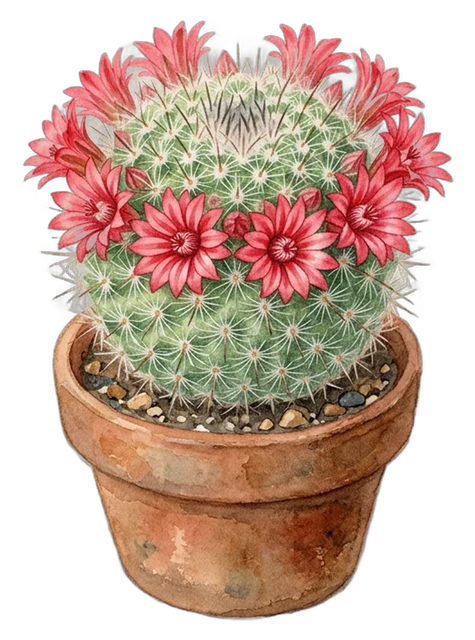
- #1 — vueltaalhuerto illustration
- #2 — vueltaalhuerto illustration
- #3 — vueltaalhuerto illustration
- #4 — vueltaalhuerto illustration
- #5 — vueltaalhuerto illustration
- #6 — vueltaalhuerto illustration
- #7 — vueltaalhuerto illustration
- #8 — vueltaalhuerto illustration
- #9 — vueltaalhuerto illustration
- #10 — vueltaalhuerto illustration
Mexican giant cardón (Pachycereus pringlei)
and 2 more names
giant columnar cactus, Pachycereus pringleiMexican giant cardón (Pachycereus pringlei) is sown in seed trays from March to May, and planted out from April to June. Grow it in full sun, 60 cm apart, with little watering. Dates are for a mild temperate climate in the northern hemisphere; the calendar below adjusts them to your zone.
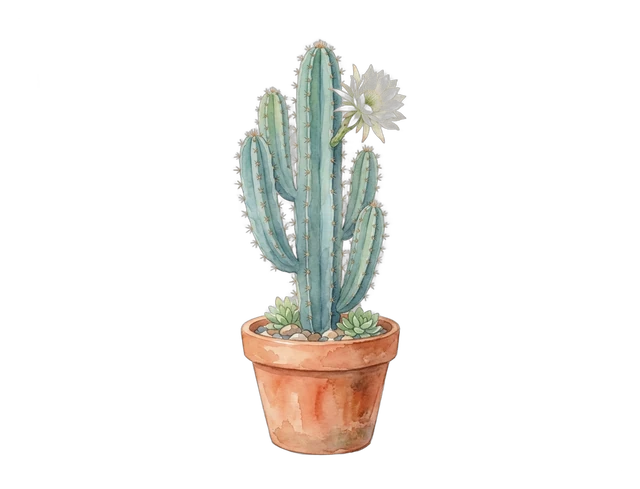
A columnar cactus that in the wild is the tallest in the world: it can exceed 10 m in height, and its oldest specimens branch like a candelabra. In pots it is sold young, as a bluish-green cylinder 20 to 40 cm tall, with 12 to 15 straight ribs and areoles bearing short grey spines, and it grows very slowly, a few centimetres a year. It flowers only when it is very large and very old, so in cultivation it hardly ever does; the flowers are white, large and nocturnal, and produce a round, spiny fruit with red flesh and many very small black seeds. It needs full sun, a very mineral potting mix and almost no water in winter. It does not withstand hard frosts when young. Do not confuse it with other bluish columnar cacti sold as "cereus": check the label. In its native region the fruit has been a traditional food, but in gardening it is a purely ornamental plant and eating it is not recommended. LEGAL AND SAFETY NOTICE: all cacti (family Cactaceae) are included in CITES (the Washington Convention), almost all of them in Appendix II, and in the European Union in Regulation (EC) No 338/97. It is prohibited to remove wild specimens from their habitat and to trade them between countries without CITES permits; breaching this can lead to administrative and even criminal penalties. What to do: buy only nursery plants, with an invoice or a label of origin; do not collect cacti from the wild; and if you are going to travel with them or send them abroad, check first with the CITES service of Spanish Customs. In addition, the spines can injure: handle it with thick gloves or tongs and keep it out of reach of children and pets.
Family and origin: Cactus family (Cactaceae) · native to Mexico, in the Sonoran Desert: the Baja California peninsula and the coast of Sonora, on arid, stony plains and slopes · More plants from Mesoamerica
01In your area
How will it do in your home?
Year calendar
| Task | J | F | M | A | M | J | J | A | S | O | N | D |
|---|---|---|---|---|---|---|---|---|---|---|---|---|
| Seed trayMar–May | no | no | yes | yes | yes | no | no | no | no | no | no | no |
| Plant / transplantApr–Jun | no | no | no | yes | yes | yes | no | no | no | no | no | no |
Its life cycle at a glance
Swipe and tap a stage to see its details.
02Care
Care through the year
Sun and aspectFull sun · 8 h of sun · South or south-west, with nothing casting shade at midday
- Too little sun
- Ideal range
- Plenty of sun
South or south-west, with nothing casting shade at midday
Strong sun: Loves full midday sun and high temperatures.
Direct sun all year round, with as much light as possible; indoors, at the sunniest window. If it has spent the winter in the shade, accustom it to the sun gradually so that it does not scorch. Young plants suffer in frost: protect it below about 5 °C.
WateringLet it dry out between waterings · summer: every 10 to 15 days
- Summerevery 10 to 15 days0.2 L per plant/week
- Spring / Autumnevery 10-14 days0.1 L per plant/week
- Winternone, or once a month at most0 L per plant/week
Let it dry out between waterings: A Mediterranean favourite: better thirsty than overwatered.
Water thoroughly and let the potting mix dry out completely before watering again. In winter, almost no water. Always empty the saucer.
When to water? Push your finger 6 cm into the soil next to the base of the plant:
- Damp: soil sticks to your finger. Do not water yet. It has more than enough; wait for it to dry out more.
- Cool but clean, no mud. Wait another 1-2 days before watering.
- Dry and dusty. Water now, but moderately. Do not overdo it: it prefers thirst to excess.
- TipA soft, dark base indicates overwatering, and a stem that stretches and thins indicates lack of light.
- TipWatering, temperatures and timings are a guide only.
- TipA dry winter rest: with hardly any water they flower better in spring.
- Common mistakeWatering in cold winter weather is the fast track to rot.
Potting mix and feedingpH 6–7.5 · Mineral mix with almost no organic matter
Mineral mix with almost no organic matter.
20 % multi-purpose compost · 40 % silica sand · 40 % pumice or lava rock.
Extreme.
This plant prefers a pH between 6.0 and 7.5 (slightly acidic to slightly alkaline).
- Rich, compact mix: certain rot within a few months.
- Watering in cold winter weather: the first step towards rot.
- TipPlant it in a terracotta pot with drainage holes, deep enough for its main root, with a very free-draining mix: for example, one third cactus compost and two thirds coarse sand, pumice or fine gravel.
- TipFeed sparingly, with cactus fertiliser at half strength once or twice between spring and summer.
- TipPlenty of light and a free-draining mineral mix.
- Common mistakeA mix that holds water drowns the roots.
Common mistakes and tips
- TipRepot every two or three years, in spring.
03Propagation
Make new plants
It is propagated from seed, which is small, black and shiny and is obtained from the ripe fruit of well-developed plants. Sow it in spring, on the surface of a fine, moist mineral mix, at 22 to 30 °C and with plenty of light, and it comes up in two to four weeks. The seedlings grow very slowly and need protection from the strongest sun in the first few years. It is not propagated from offsets, and wild specimens must not be cut.
Seeds: how to germinate them~14 days
04Uses and health
What it is used for, and with what care
There is no reliable toxicity data for this species. The real risk is the spines: they injure and stick into skin, mouths and paws; handle it with thick gloves or tongs and keep it out of reach of children and pets. WARNING: it is a CITES-listed plant; buy only nursery-grown specimens and do not collect wild plants or seeds.
- Properties
- A large ornamental cactus. It has no home medicinal uses.
- Uses
- We do not recommend it as a food. In its native region the fruit has traditionally been eaten, but in gardening it is an ornamental plant and harvesting wild specimens is regulated (CITES).
For guidance only; this is not medical treatment and does not replace advice from a doctor or vet.
05Companions and related plants