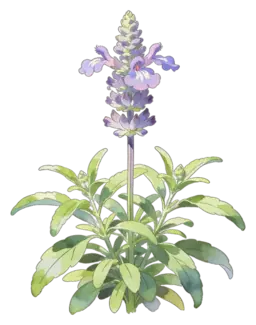
Credits and licences
- #1 — vueltaalhuerto illustration
- #2 — vueltaalhuerto illustration
- #3 — vueltaalhuerto illustration
- #4 — vueltaalhuerto illustration
- #5 — vueltaalhuerto illustration
- #6 — vueltaalhuerto illustration
- #7 — vueltaalhuerto illustration
- #8 — vueltaalhuerto illustration
- #9 — vueltaalhuerto illustration
- #10 — vueltaalhuerto illustration
Foxtail lily (Eremurus)
and 2 more names
Eremurus 'Ruiter Hybrids', Eremurus Shelford hybridsFoxtail lily (Eremurus) is sown directly outdoors from October to November. It flowers from May to June. Grow it in full sun, 60 cm apart, with moderate watering. Dates are for a mild temperate climate in the northern hemisphere; the calendar below adjusts them to your zone.
What else to sow in October and November
A spectacular perennial 1.2 to 1.8 m tall which, in late spring or early summer, sends up an upright, narrow spike 50 to 80 cm long, covered in hundreds of small, star-shaped flowers in warm colours (orange, yellow, pink or white), with long stamens; the flowers open from the bottom upwards over two or three weeks. Before the spike it forms a rosette of long, narrow, bluish-green leaves, which dies back and disappears in summer, when the plant goes dormant. It has no bulb: it grows from a ‘crown’, a central bud from which fleshy, brittle roots radiate like a star. It needs sun, very well-drained soil and a dry summer rest, as well as winter cold to flower, and its young spring shoots are sensitive to late frosts. It is a plant for cut flowers and the back of the border. It is not listed in the Spanish Catalogue of Invasive Alien Species or on the EU list.
Family and origin: Asphodel family (Asphodelaceae) · native to A garden hybrid of species from Central and Western Asia (Eremurus olgae × E. stenophyllus), raised in Europe · More plants from Central Asia
01In your area
How will it do in your garden?
Year calendar
| Task | J | F | M | A | M | J | J | A | S | O | N | D |
|---|---|---|---|---|---|---|---|---|---|---|---|---|
| Direct sowingOct–Nov | no | no | no | no | no | no | no | no | no | yes | yes | no |
| Plant / transplantSep–Nov | no | no | no | no | no | no | no | no | yes | yes | yes | no |
| HarvestMay–Jun | no | no | no | no | yes | yes | no | no | no | no | no | no |
| FloweringMay–Jun | no | no | no | no | yes | yes | no | no | no | no | no | no |
| Divide the clumpAug–Sep | no | no | no | no | no | no | no | yes | yes | no | no | no |
Its life cycle at a glance
Swipe and tap a stage to see its details.
02Planting
Where and how to plant it
Sow the seed 5 cm deep; leave 60 cm between plants and 80 cm between rows; give it a stake from the start.
60 cm between plants · 80 cm between rows
Seed at a depth of 5 cm; seedlings go in with the root ball level with the soil.
- Transplanting
- Sep–Nov
- Direct sowing
- Oct–Nov
- Germination
- ~80 days
- Support
- Needs a stake
- TipLeave about 60 cm between plants.
- TipIn very windy areas, add a stake.
- TipDates, planting depth, spacing and cold tolerance are approximate.
- Common mistakeSowing out of season: many need warmth or a cold spell beforehand to sprout.
03Care
Care through the year
Sun and aspectFull sun · 8 h of sun · South or south-west, with nothing casting shade at midday
- Too little sun
- Ideal range
- Plenty of sun
South or south-west, with nothing casting shade at midday
Strong sun: Loves full midday sun and high temperatures.
Full sun and a spot sheltered from the wind. Avoid hollows where frost collects: the spring shoots get scorched by late cold.
WateringLet it dry out between waterings · summer: every 2-3 days
- Summerevery 2-3 days1.2 L per plant/week
- Spring / Autumnevery 4-5 days0.6 L per plant/week
- Winterevery 2-3 weeks0.2 L per plant/week
Let it dry out between waterings: A Mediterranean favourite: better thirsty than overwatered. Mulch: straw or dry plant material cuts watering by 30-50 %.
Water moderately in spring, while the leaves and spike are growing, and stop watering when the foliage dies back; during the summer rest the crown rots if there is moisture. It needs very well-drained soil, ideally with gravel or sand.
When to water? Push your finger 5 cm into the soil next to the base of the plant:
- Damp: soil sticks to your finger. Do not water yet. It has more than enough; wait for it to dry out more.
- Cool but clean, no mud. Wait another 1-2 days before watering.
- Dry and dusty. Water now, but moderately. Do not overdo it: it prefers thirst to excess.
Soil and feedingpH 6–8 · Loose soil with organic matter and good drainage
Loose soil with organic matter and good drainage.
50 % topsoil · 30 % well-rotted compost · 20 % sand or perlite.
Medium/high.
This plant prefers a pH between 6.0 and 8.0 (slightly acidic to alkaline).
- Overfeeding gives lots of leaf and few flowers.
- Compacted, poorly drained soil rots the roots in winter.
Pruning
- TipRemove faded flowers to prolong flowering.
Common mistakes and tips
- TipThe roots are fragile: handle them carefully and do not let them dry out.
- TipIf winters are very mild, it flowers less.
04Harvest
Harvesting and storing
Harvest in May–Jun.
05Propagation
Make new plants
It is propagated mainly by dividing the crown. When the clump is mature and has flowered, once the foliage has died back (August or September), lift it carefully and separate the crowns with their fleshy roots, which break easily, and replant them straight away. The plants take one or two years to flower again. Seed is possible but slow: it needs a warm, moist period of several weeks followed by cold (outdoors in autumn, for example), germinates erratically in about two or three months, and the plants take three to five years to flower; hybrids do not come true.
Seeds: how to germinate them~80 days
06Uses and health
What it is used for, and with what care
There is no reliable data on the toxicity of Eremurus to people, dogs or cats. In some Central Asian countries the shoots of wild species have been eaten, but this is not a safe or advisable practice with garden varieties. As a precaution, do not eat it, and keep children and pets from chewing the plant or the crown. If vomiting, diarrhoea or irritation appear after eating any part of it, consult the doctor or the vet. Wear gloves when handling the roots if you have sensitive skin.
- Properties
- An ornamental and cut-flower plant, much visited by honeybees and bumblebees. It has no known health uses.
- Uses
- In Spain it is not used in cooking or home remedies. Do not eat it or use it in infusions.
For guidance only; this is not medical treatment and does not replace advice from a doctor or vet.
07Companions and related plants