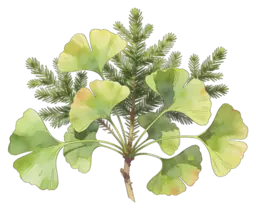
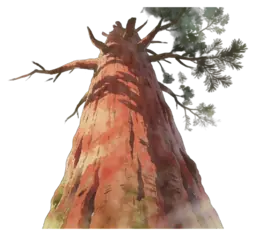
Credits and licences
- #1 — vueltaalhuerto illustration
- #2 — vueltaalhuerto illustration
- #3 — vueltaalhuerto illustration
- #4 — vueltaalhuerto illustration
- #5 — vueltaalhuerto illustration
- #6 — vueltaalhuerto illustration
- #7 — vueltaalhuerto illustration
- #8 — vueltaalhuerto illustration
- #9 — vueltaalhuerto illustration
- #10 — vueltaalhuerto illustration
Dawn redwood (Metasequoia)
and 2 more names
water fir, dawn redwood bonsaiDawn redwood (Metasequoia) is sown in seed trays from February to March, and planted out from November to March. Grow it in full sun, 600 cm apart, with plenty of watering. Dates are for a mild temperate climate in the northern hemisphere; the calendar below adjusts them to your zone.
What else to sow in February and March
A deciduous conifer, something unusual among conifers: in autumn the leaves turn orange, bronze or reddish-brown and fall, and in spring they come out a tender green. It is a fast-growing tree, reaching 25 to 35 m in the ground over the years, with a conical or narrow crown and a straight, fluted trunk with a flared base and reddish-brown bark that peels off in strips. The leaves are soft, flat needles 1.5 to 2.5 cm long, in opposite pairs on shoots that also fall. It bears rounded cones about 2 cm across, hanging from a long stalk. It was thought to have been extinct for millions of years, until it was found alive in China in the nineteen-forties. It needs deep, moist, damp soil in full sun, and suffers in dry heat and in dry or very chalky soils. It is also sold as a bonsai, small and pruned, but it is a large outdoor tree. It is not edible.
Family and origin: Cypress family (Cupressaceae) · native to Central China (valleys of Sichuan, Hubei and Hunan, where small wild populations survive, listed as endangered); widely planted as an ornamental around the world · More plants from Far East
01In your area
How will it do in your garden?
Year calendar
| Task | J | F | M | A | M | J | J | A | S | O | N | D |
|---|---|---|---|---|---|---|---|---|---|---|---|---|
| Seed trayFeb–Mar | no | yes | yes | no | no | no | no | no | no | no | no | no |
| Plant / transplantNov–Mar | yes | yes | yes | no | no | no | no | no | no | no | yes | yes |
| PruningJan–Feb | yes | yes | no | no | no | no | no | no | no | no | no | no |
| CuttingsJun–Jul, Dec–Feb | yes | yes | no | no | no | yes | yes | no | no | no | no | yes |
Its life cycle at a glance
Swipe and tap a stage to see its details.
02Planting
Where and how to plant it
Sow the seed 3 mm deep; leave 6 m between plants and 6 m between rows.
6 m between plants · 6 m between rows
Seed at a depth of 3 mm; seedlings go in with the root ball level with the soil.
- Transplanting
- Nov–Mar
- Seed tray
- Feb–Mar
- Germination
- ~30 days
- TipIn autumn it loses its leaves: that does not mean the plant is ill.
- Common mistakePlanting in a small hole limits rooting.
03Care
Care through the year
Sun and aspectFull sun · 8 h of sun · South or south-west, with nothing casting shade at midday
- Too little sun
- Ideal range
- Plenty of sun
South or south-west, with nothing casting shade at midday
Moderate sun: Copes with full sun, but give it some shade during heatwaves.
Full sun, with its feet in moist soil. It is very cold-hardy (it withstands winters of −20 °C or lower), but late frosts can scorch the new shoots. In southern and inland Spain, with hot, dry summers, the tips scorch and the tree suffers; plant it where it will get water in summer.
WateringConstantly moist · summer: deep watering 1 or 2 times a week while young; later, in droughts
- Summerdeep watering 1 or 2 times a week while young; later, in droughts14 L per plant/week
- Spring / Autumnevery 3-4 days6.5 L per plant/week
- Winteronly if it does not rain1.6 L per plant/week
Constantly moist: The soil should always feel cool and damp. Ideal with mulch and drip irrigation. Mulch: straw or dry plant material cuts watering by 30-50 %.
It is a riverside tree: it needs damp soil throughout the summer and does not tolerate prolonged drought. In the wild it grows in soils that flood seasonally, and it appreciates a thick mulch. In a pot or as a bonsai, do not let the rootball dry out: it dries out in a few hours in hot weather.
When to water? Push your finger 3 cm into the soil next to the base of the plant:
- Damp: soil sticks to your finger. Do not water, although for this plant it is just right — check again tomorrow.
- Cool but clean, no mud. Water today: it likes to stay constantly moist.
- Dry and dusty. Water urgently and add mulch to hold in moisture.
- TipWater it in well in the first year; after that they are very tough.
Soil and feedingpH 5–7.5 · Free-draining, slightly acidic soil
Free-draining, slightly acidic soil.
High.
This plant prefers a pH between 5.0 and 7.5 (acidic to slightly alkaline).
- TipPlant it in autumn or at the end of winter, while the plant is dormant, in deep, moist, rich soil in full sun, and leave plenty of room: it is a large tree, not suitable for small gardens.
- TipKeep the soil damp all summer, with a thick mulch, and do not plant it near buildings, walls, pipes or paving: in damp soil the base flares and it puts out surface roots.
- TipFree-draining soil: they cope badly with prolonged waterlogging.
PruningWhen: Jan–Feb
Pruning time for this plant: Jan–Feb.
- TipIt hardly needs pruning: just remove dead or crossing branches in winter.
- TipAs a bonsai it is kept small by pruning shoots and roots, but it needs to spend the winter outside, in the open, dormant, and never indoors.
- Common mistakePruning back into old wood with no green does not regrow: it leaves bare patches.
Common mistakes and tips
- TipThe heights, temperature limits and timings are a rough guide.
04Propagation
Make new plants
It is propagated from seed, collected from ripe cones in autumn; the seed is small, flat and winged, and often some of it is empty and will not germinate, so it is worth sowing plenty. Give it a cold, moist stratification for a few weeks and sow at the end of winter; it comes up in one to two months. It can also be propagated from cuttings: hardwood cuttings in winter, 15 to 20 cm long, with buds, which root in sand and peat, and softwood cuttings in summer, which need more care. Almost all cultivated trees descend from a few wild specimens.
Seeds: how to germinate them~30 days
05Uses and health
What it is used for, and with what care
WARNING: there are no reliable data on the toxicity of this species, so as a precaution do not eat it and stop children and pets chewing the leaves, cones or seeds. In the wild it is listed as endangered (IUCN) and the natural populations are small: buy only nursery-grown plants. It is a very large tree: do not plant it near houses, walls or pipes, because the flared base and surface roots can lift paving and damage services.
- Properties
- It is a very decorative, fast-growing tree of elegant habit, with foliage that changes from light green to orange every autumn. It gives light shade and suits parks, large gardens and pond edges, and is also grown as a bonsai.
- Uses
- It is not grown for food and is not used in cooking or in home remedies. It is not suitable for infusions.
For guidance only; this is not medical treatment and does not replace advice from a doctor or vet.
06Companions and related plants