
Rust
Also known as: rust, plant rust, rust fungus, leek rust, bean rust, Puccinia
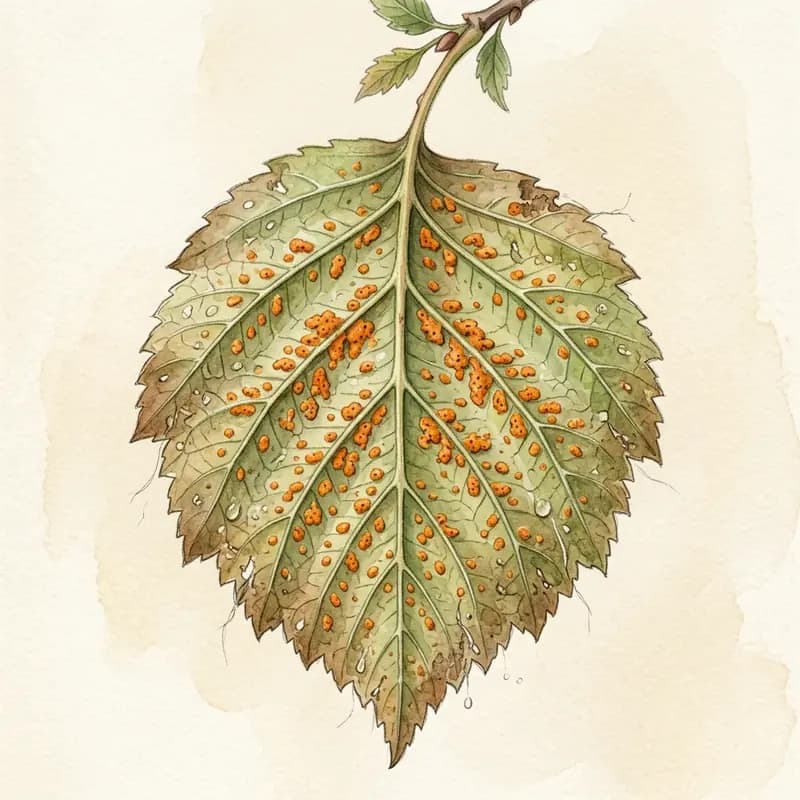
A fungus that forms rust-coloured pustules (orange, brown or yellow) on the undersides of the leaves. It weakens the plant and makes the leaves drop early. The first step is to remove and dispose of affected leaves and improve air flow around the crop.

How to recognise it (symptoms)
- Rust-coloured pustules or small raised spots on the leaves, especially on the underside (on garlic and onion, on both sides)
- Yellow patches on the upper surface, directly above the pustules
- Orange powder that stains your fingers when touched: these are the spores of the fungus
- Leaves that yellow and drop prematurely
Crops affected
 GarlicLas Pedroñeras purple garlic, with a purple, very aromatic bulb: the benchmark garlic of La Mancha, in…
 OnionThe Figueres onion is a sweet onion with purplish skin, typical of Catalonia in Spain.
 LeekA thick, hardy leek from Carentan that copes well with cold.
 BeansA dwarf green bean that does not need a support and is easy to grow in a bed.
 Broad beans'Muchamiel' broad bean, a traditional Mediterranean variety eaten both as shelled beans and in the pod.
 MintPeppermint is very aromatic, great for infusions, and invasive.
What favours it
- High humidity, dew and leaves that stay wet for many hours
- Mild temperatures, with no extremes of heat or cold
- Dense foliage and poor ventilation, which stop the inner leaves drying
Prevention
- Improve air flow and do not crowd plants: without moving air, the foliage does not dry
- Water at the base without wetting the leaves, ideally first thing in the morning
- Rotate crops and remove infected debris to break the cycle in the same soil
- Choose resistant varieties where available
Organic treatment
Always start here: these remedies are kind to the garden, the soil and pollinators.
- First: remove affected leaves and put them in the rubbish bin (not on the compost heap), and thin the crop so that air can flow through
- If the disease keeps spreading, apply wettable sulphur (2.5-3 g per litre, below 30 °C) or a copper preparation in moderation, according to the label. Both work best as a preventive or in the early stages
- Horsetail decoction diluted 1:5, once a week, helps as a plant tonic, but its effect is modest
Chemical treatment (with caution)
There are specific fungicides for rust, registered for each crop. Use them as a last resort and respect the safety interval.
Don't confuse it with…
The orange powder is characteristic. Do not confuse it with yellowing from nutrient deficiencies, which does not form pustules.
In-depth guide — rust
Rust appears mainly in spring and autumn, with high humidity and mild temperatures. Rotation and ventilation are the keys.
Strict rotation
Do not grow the same family (garlic, onion and leek, or legumes) in the same bed for about 3 years. The spores can survive in crop debris.
Ventilation and watering
- Generous spacing, so that air circulates between plants.
- Water at the base and in the morning, never with sprinklers or in the evening.
- Remove the lowest leaves to let air reach the base of the plant.
Home-made preparations (the same as for powdery and downy mildew)
- Horsetail: 1 kg fresh in 10 litres of water, boiled for about 20-30 minutes and diluted 1:5. Spray once a week as a preventive.
- Bicarbonate of soda with oil (5 g and 5 ml per litre): of little help against rust, and do not repeat it more than 3-4 times because the sodium builds up.
- Wettable sulphur or copper: below 30 °C, and never on open flowers.
Use plant protection products responsibly, even organic ones. Always read and follow the label, the doses and the harvest interval, and never treat plants in flower or while bees are flying, in order to protect pollinators. If in doubt, put prevention and organic methods first.

In the plant catalogue you'll see what to plant, how and when: a well-tended plant resists pests much better.