
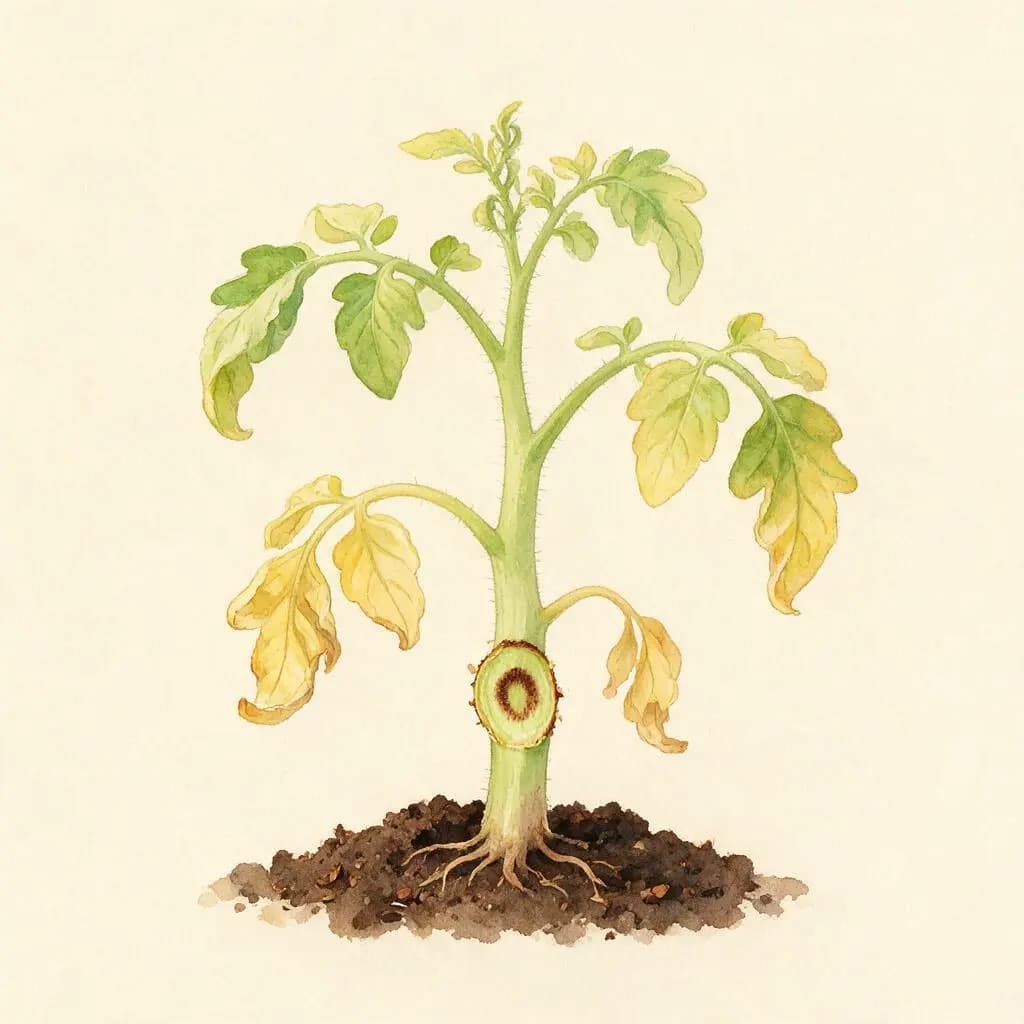
Fusarium wilt
Also known as: fusarium wilt, Fusarium, fusarium, vascular wilt, Fusarium oxysporum
A soil fungus that blocks the plant's water-conducting vessels. It causes wilting that does not recover even when the soil is well watered. The first step is to pull up affected plants with their roots and not repeat the crop in that soil.

How to recognise it (symptoms)
- Progressive wilting that starts with the lower leaves and often on just one side of the plant
- Yellowing of the leaves that moves upwards
- When you cut the stem, you see a reddish-brown ring inside
- The plant eventually dies despite watering
Crops affected
 TomatoMarmande tomato, flattened and ribbed, a good size for salads.
 PepperCalifornia Wonder pepper, a blocky bell type with thick flesh, for stuffing or eating fresh.
 WatermelonA large watermelon with a green rind striped in dark green and very sweet red flesh.
 MelonPiel de Sapo is the classic Spanish melon, one that keeps for a long time.
 BeansA dwarf green bean that does not need a support and is easy to grow in a bed.
 StrawberryA strawberry with large, firm, deep red fruit, very productive and early.
What favours it
- Warm soils (around 25-28 °C)
- Monoculture and lack of rotation, which concentrate the fungus in the same soil
- Seed or plug plants of doubtful origin, which can bring the fungus in from the start
Prevention
- A rotation of at least 4 years without the same crop family
- Certified seed and plug plants with resistance to Fusarium where available
- Soil solarisation in summer
- Grafting onto resistant rootstocks for Solanaceae and cucurbits
Organic treatment
Always start here: these remedies are kind to the garden, the soil and pollinators.
- First: pull up affected plants with their roots and put them in the rubbish bin. Do not compost them: the fungus survives in the heap and comes back to the garden
- Solarise the soil in high summer, with clear plastic for 4-6 weeks and the soil very moist
- Add Trichoderma harzianum at transplanting: it colonises the roots and competes with the fungi that damage the plant
- Increase well-composted organic matter to improve soil structure and soil life
Don't confuse it with…
With verticillium wilt, which has similar symptoms. Fusarium wilt is more common in warm soil, and verticillium wilt in cooler soils.
In-depth guide — fusarium wilt
These are soil fungi that block the plant's vascular system: part of the plant turns yellow and wilts, and foliar products cannot cure it. They persist in the soil for years.
Diagnosis
Cut the stem near the base: if the vascular tissue is discoloured, it is a vascular wilt. It often affects only one side of the plant.
- Do not confuse it with underwatering, which affects the whole plant evenly and recovers when you water.
- Choose resistant varieties where available (for example, tomatoes whose label states resistance to Fusarium).
Solarisation
In July and August: water the soil well, cover it with clear plastic for 4-6 weeks and bury the edges.
- Pull up diseased plants, roots and all, and put them in the rubbish bin.
- Use a long rotation and avoid repeating Solanaceae in the same place.
Use plant protection products responsibly, even organic ones. Always read and follow the label, the doses and the harvest interval, and never treat plants in flower or while bees are flying, in order to protect pollinators. If in doubt, put prevention and organic methods first.

In the plant catalogue you'll see what to plant, how and when: a well-tended plant resists pests much better.