
Fire blight
Also known as: fire blight, fireblight, Erwinia amylovora, pear fire blight
A highly virulent bacterium that scorches the leaves and branches of pear, apple and loquat trees as if fire had swept through them. In Spain it is a notifiable disease. The first step is to report it to your autonomous community's agricultural authority and cut out the affected branch, with disinfected tools.

How to recognise it (symptoms)
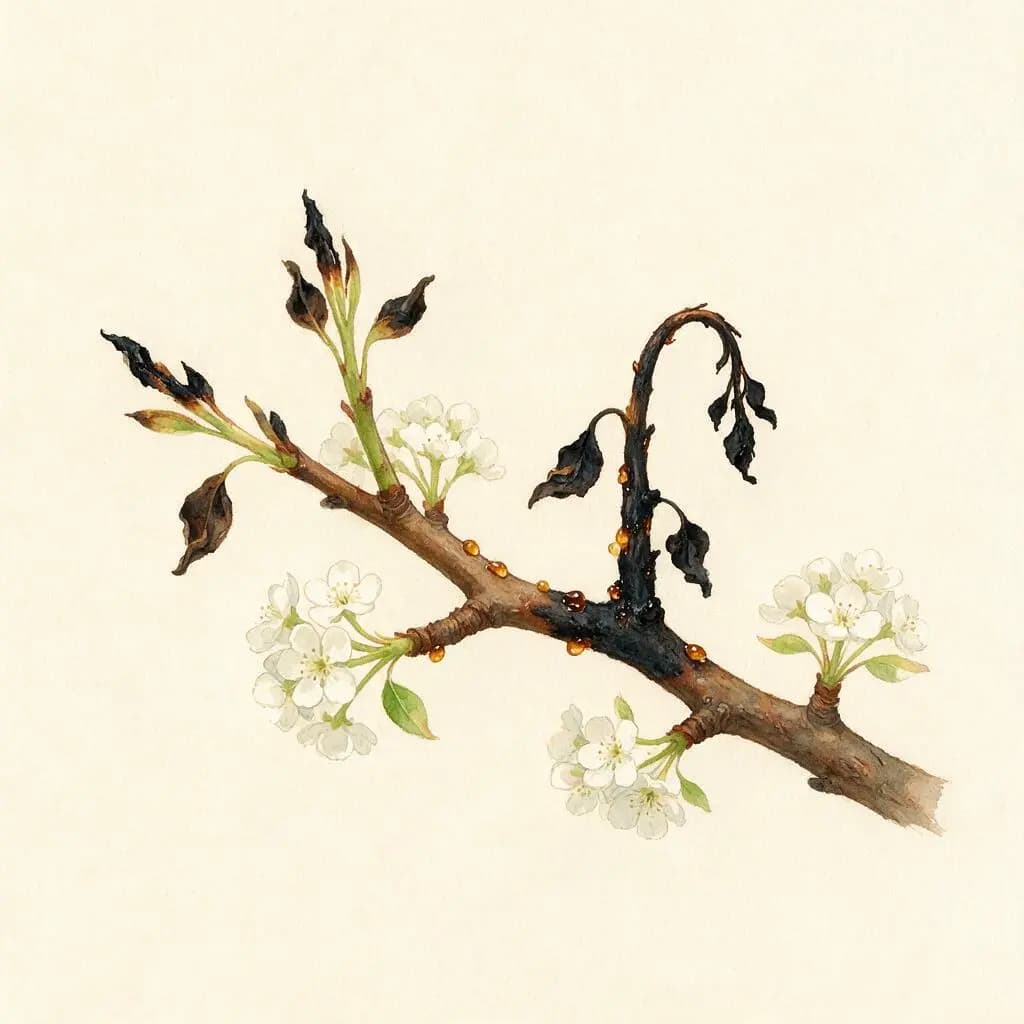
- Flowers and shoots that suddenly turn black, as if burnt
- Twigs bent into a hook or shepherd's crook at the tip
- Dark, sunken cankers on branches and trunk, which eventually kill the branch
- Sticky amber ooze in warm, humid weather
Crops affected
 PearThe 'Ercolini' pear is early, small and very aromatic, ideal for a Mediterranean climate.
 AppleThe Fuji apple is crisp, sweet and juicy, and highly prized for eating fresh.
 QuinceA quince tree with hard, fragrant fruit, the basis of quince paste and jellies.
 Loquat'Tanaka' is a loquat with large, fleshy fruit, a late variety that ripens in spring, after 'Algerie'.
 HawthornA thorny shrub of wild hedgerows, with white spring flowers and red fruits.
 PyracanthaA thorny shrub widely used as a defensive hedge, covered in very decorative orange or red berries in autumn…
What favours it
- Warm, damp springs during flowering
- Hard summer pruning, leaving open wounds while the tree is in full growth
- Hailstorms, which leave wounds through which the bacterium enters
Prevention
- Buy certified, healthy plants
- Prune in dry weather and disinfect your secateurs with alcohol or 10 % bleach between cuts
- Do not overdo nitrogen fertiliser: soft new growth is more susceptible
- Keep watch, and in Spain report it to your autonomous community's plant health authority if you suspect fire blight
Organic treatment
Always start here: these remedies are kind to the garden, the soil and pollinators.
- First: report it to your autonomous community's agricultural authority and cut the branch 40-50 cm below the last symptom, in dry weather, disinfecting the secateurs after every cut. Seal the debris in a bag and follow the plant health service's instructions for disposing of it
- Copper at the swollen-bud stage and at petal fall, using a registered product and according to the label; it helps as a preventive, but does not cure
- Bacillus subtilis or other registered biological agents can be used as a preventive during flowering
Don't confuse it with…
With late frost damage (which affects only the flowers) or with Nectria cankers (which progress more slowly).
In-depth guide — fire blight
Erwinia amylovora mainly affects pome fruit trees and some ornamentals. In a home garden, scorched shoots must be removed as soon as possible and the authorities informed.
Symptoms
- Black shoot tips, as if burnt, bent into a hook.
- Amber ooze in humid weather.
- Flowers and young branches that wither in clusters.
Sanitary pruning
Cut 40-50 cm below the visible symptom, in dry weather. Disinfect the tool between cuts with 10 % bleach or alcohol. Dispose of the debris as instructed by the authorities, without composting it.
Preventing spread
- Avoid pruning when the leaves are wet or during damp flowering periods.
- Do not compost infected debris.
- Disinfect boots and tools when leaving an area with outbreaks.
Varieties and climate
In damp mountain areas, choose less susceptible varieties, after asking at a nursery in your area, and avoid too much nitrogen, which produces soft, susceptible shoots.
Use plant protection products responsibly, even organic ones. Always read and follow the label, the doses and the harvest interval, and never treat plants in flower or while bees are flying, in order to protect pollinators. If in doubt, put prevention and organic methods first.

In the plant catalogue you'll see what to plant, how and when: a well-tended plant resists pests much better.